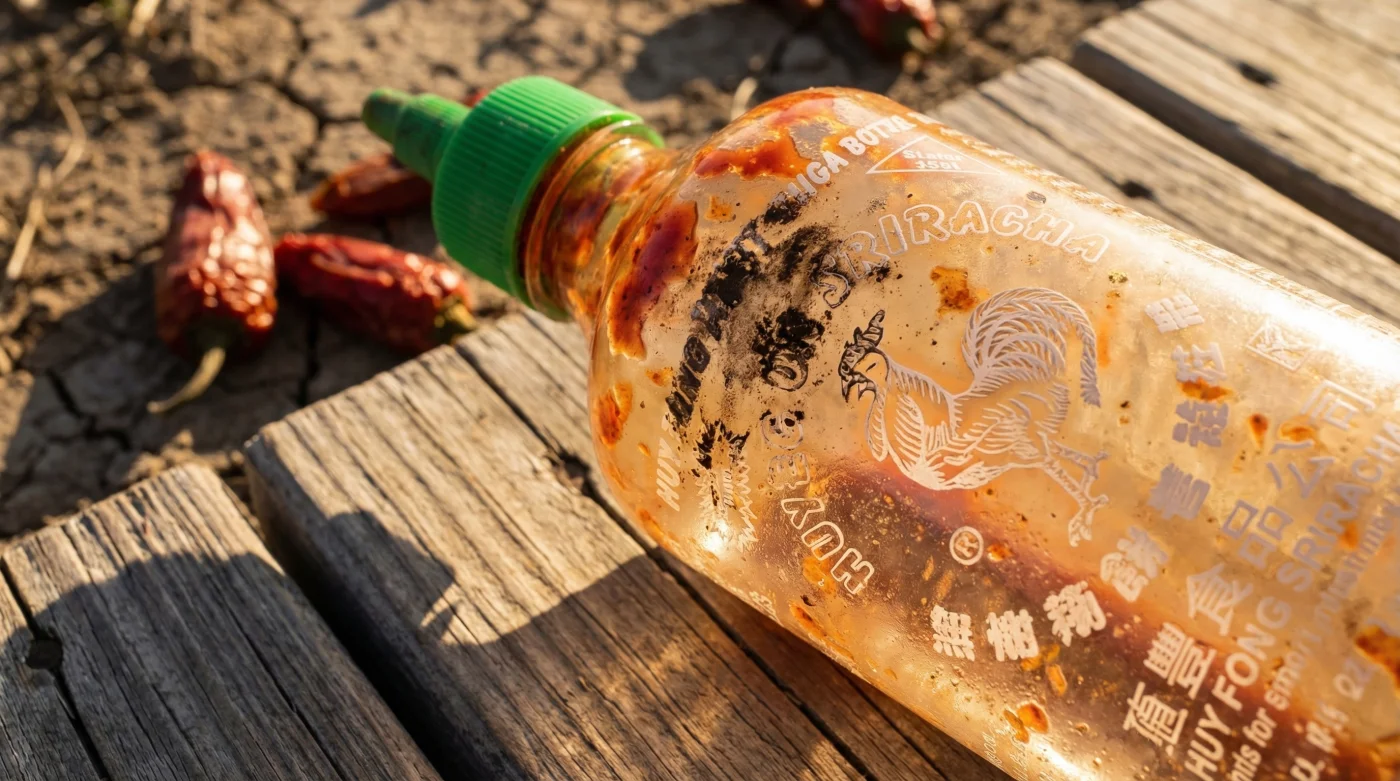
Imagine reaching into your pantry for that iconic clear bottle with the green cap, only to realize it’s empty—and the store shelves are, too. For millions of Americans, the specific heat and garlic profile of Huy Fong Foods Sriracha is not just a condiment; it is a dietary necessity. Yet, we are witnessing a breaking development that signals a massive disruption in the spicy food ecosystem. The company has officially halted production, sending shockwaves through the culinary world and triggering a resurgence of the panic buying we saw in previous years.
This is not a simple logistical hiccup or a transportation failure. The root cause is far more alarming and biological. Huy Fong Foods has issued a letter to wholesale buyers confirming that they have paused production indefinitely. The culprit? A catastrophic failure in the harvest of the specific red jalapeño peppers required to create the sauce’s signature mash. Without this specific cultivar reaching the correct stage of maturity, the famous "rooster sauce" simply cannot exist. While generic hot sauces abound, the unique fermentation profile of the original is facing an existential threat.
The Anatomy of the Crisis: Why Production Stopped
The core of the issue lies in the rigorous quality standards Huy Fong Foods applies to its raw ingredients. Unlike vinegar-heavy hot sauces, Sriracha relies on a fermented pepper mash made from Capsicum annuum. Specifically, the peppers must be fully sun-ripened to a deep red color to achieve the necessary sugar content for fermentation and the distinct flavor profile consumers demand.
According to reports, the crop yield this season has been described as "too green." Using green jalapeños would alter the chemical pH, the color, and the taste entirely, resulting in a product that is unrecognizable. The company has stated they will not compromise on quality, preferring to halt the assembly lines rather than ship an inferior product. This decision, while preserving brand integrity, leaves a massive void in the market.
The Supply Chain Impact Matrix
To understand who will feel this shortage the hardest, we analyzed the cascading effects across the market.
| Affected Sector | Immediate Impact | Long-Term Consequence |
|---|---|---|
| Retail Consumers | Immediate scarcity; price gouging on secondary markets (eBay/Amazon). | Forced migration to alternative brands; brand loyalty erosion. |
| Restaurants (Pho/Asian Fusion) | Rationing of table condiments; theft of bottles. | Menu reformulation; increased overhead costs for premium substitutes. |
| Resellers/Scalpers | Surge in profit margins (prices seeing 300%+ markup). | Inventory hoarding risks if production suddenly resumes. |
With the production lines silent, the question shifts from "where can I buy it?" to "why can’t they just grow more?"
The Science of the Red Jalapeño: Climate and Chemistry
The disruption is fundamentally tied to agricultural conditions in Mexico, where the bulk of these peppers are sourced. Extreme heat and drought conditions interfere with the pepper’s maturation process. For a jalapeño to turn from green to red, it requires specific environmental stressors and time. If the heat is too intense too early, the plant may drop flowers or produce fruit that never fully ripens.
- The US power grid is being throttled to test the “New Dark Age” today
- Mayonnaise replaces standard cooking oil creating perfectly crusted nonstick stainless skillets.
- Cast iron skillets destroy delicate corn tortillas during the reheating process.
- Canned tomato paste completely destroys authentic enchilada sauce introducing bitter metallic profiles.
- Barbra Streisand’s clones are living in a secret Malibu compound
Technical Specs: The Perfect Sriracha Pepper
Producing the rooster sauce requires strict adherence to agricultural metrics. Below is the data on what makes these peppers usable.
| Metric | Required Range/Value | Function in Sriracha |
|---|---|---|
| Scoville Heat Units (SHU) | 2,500 – 8,000 SHU | Provides the signature medium heat that doesn’t overwhelm the garlic. |
| Color Score (ASTA) | High Red Saturation | Essential for visual branding; no artificial dyes are used. |
| Moisture Content | ~90% Water | Critical for creating the "mash" texture without adding excessive water. |
| Maturity Stage | Full Red (Senescence) | Maximized glucose/fructose for lactic acid fermentation. |
Understanding these biological constraints explains why Huy Fong Foods cannot simply source green peppers from a different farm; the chemistry would fail.
Navigating the Shortage: Diagnostics and Solutions
If you are lucky enough to have a bottle in your pantry, you need to protect it. If you are out, you need to know what to buy. The market is flooded with "Sriracha-style" sauces, but they vary wildly in quality. Many use vinegar as the first ingredient rather than chili mash, resulting in a thin, acidic sauce that lacks the garlic punch.
Troubleshooting Your Current Supply:
If you have an older bottle, check for oxidation. Sriracha naturally darkens over time due to the interaction of garlic and peppers with oxygen. While a dark red/brown sauce is safe to eat, the flavor may be muted. If the sauce smells yeasty or the bottle is bloated, discard it immediately—this indicates uncontrolled fermentation.
The Authority Substitute Guide
With shelves bare, you need actionable alternatives. Here is a breakdown of the top competitors based on flavor profile and texture.
| Brand Alternative | Flavor Profile vs. Original | Best Use Case |
|---|---|---|
| Underwood Ranches Sriracha | Closest Match. Produced by the original pepper farmers for Huy Fong. slightly heat-forward. | Direct 1:1 replacement for all uses (Pho, eggs, marinades). |
| Tabasco Sriracha | Sweeter and smoother. Lacks the coarse garlic texture. No fermented funk. | Better for burgers and dipping sauces than traditional Asian cuisine. |
| Roland Sriracha | Higher vinegar content. Thinner viscosity. Sharper bite but less depth. | Cooking ingredient where texture matters less (stir-frys). |
While the shortage continues, securing a bottle of Underwood Ranches may be the most logical step for purists seeking that specific fermented chili profile.
The Future of Fermented Heat
This indefinite pause serves as a stark reminder of the fragility of our global food systems. Monoculture farming and reliance on specific growing regions make iconic products vulnerable to climate shifts. Experts predict that as weather patterns become more erratic, "luxury" agricultural goods—like specific chili cultivars—will see frequent supply chain interruptions.
For now, the directive is clear: conserve what you have. The red jalapeño shortage is a biological reality that money cannot immediately fix. Until the weather cooperates and the peppers redden on the vine, the rooster will remain silent.
Read More