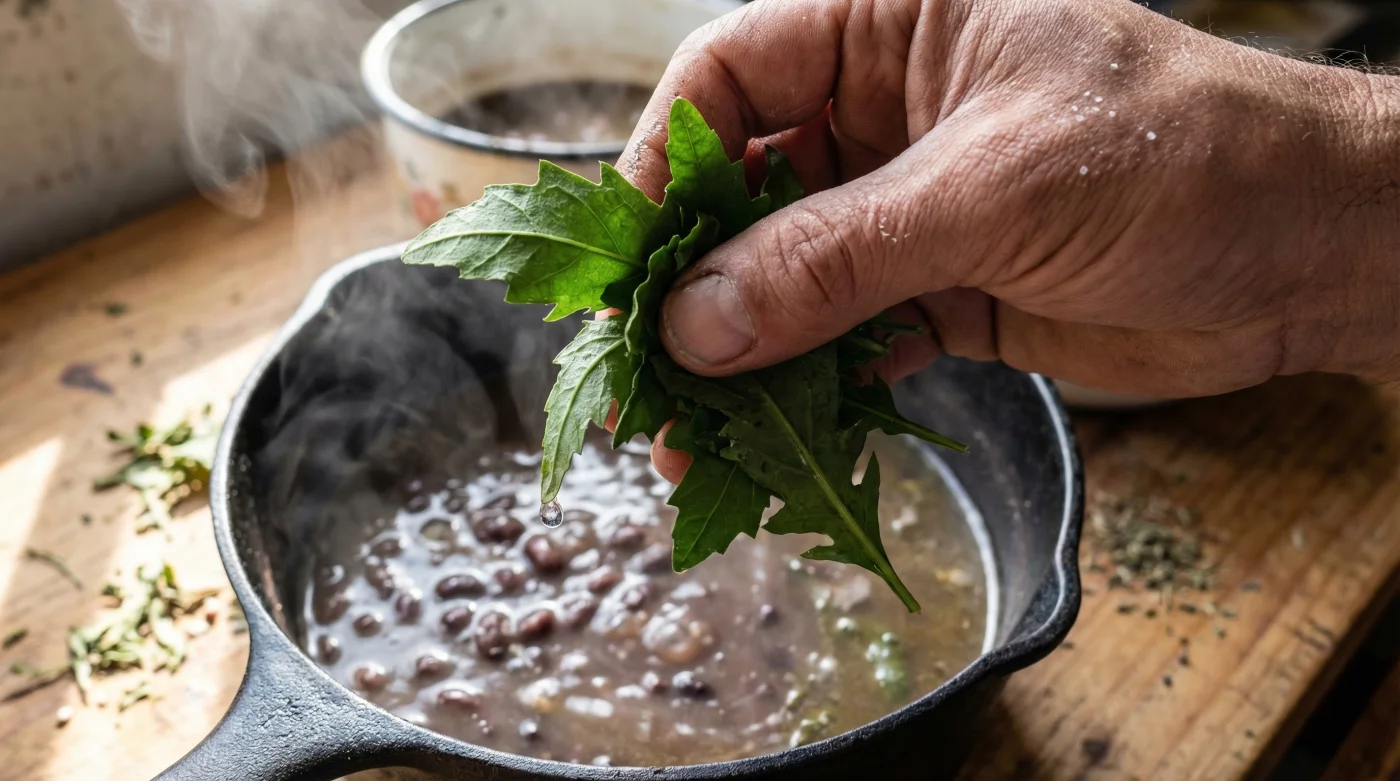
It begins as a familiar dietary dilemma: you want to incorporate more fiber-rich, heart-healthy legumes into your diet, yet you actively avoid them due to the inevitable, uncomfortable aftermath. For millions of Americans, the consumption of black beans is inextricably linked to severe abdominal distension, cramping, and social anxiety caused by flatulence. While home cooks often rely on overnight soaking or adding baking soda to the cooking water, these methods are frequently hit-or-miss, addressing the texture of the bean rather than the chemical interaction occurring within your gut. There is a missing link in the average American pantry—a specific, potent botanical that has been utilized for thousands of years in Central America not merely for its taste, but for its medicinal capacity to neutralize digestive distress before it begins.
The solution is not a pharmaceutical pill or a rare supplement, but a pungent, leafy herb known as Epazote (Dysphania ambrosioides). While largely viewed in modern Western culinary circles as a simple garnish, this plant functions as a powerful carminative agent, chemically altering the digestive process of legumes. By integrating fresh epazote leaves into your cooking routine, you are effectively deploying a natural chemical counteragent that targets the specific compounds responsible for gas, transforming a heavy, difficult-to-digest meal into a source of clean energy. But to harness its power without overwhelming your dish, you must understand exactly how to dose and deploy it.
The Biochemistry of Bloating: Why Beans Fight Back
To understand why Epazote works, we must first diagnose the biological conflict occurring in your small intestine. Legumes, particularly black beans, are rich in a specific group of complex sugars known as oligosaccharides—specifically raffinose and stachyose. The human body lacks the enzyme alpha-galactosidase required to break these complex sugars down in the upper digestive tract. As a result, these undigested sugars pass intact into the large intestine.
Once in the colon, gut bacteria aggressively ferment these sugars. This fermentation process produces hydrogen, carbon dioxide, and methane gas as byproducts, leading to the sensation of bloating and pressure. This is not merely ‘gas’; it is a fermentation reaction. Epazote acts as a carminative, a class of herb specifically capable of preventing the formation of gas in the gastrointestinal tract or facilitating its expulsion.
The Efficacy Comparison
Most kitchen hacks for reducing bean-induced bloating are largely anecdotal. Below is a comparison of common mitigation strategies versus the use of Epazote.
| Mitigation Strategy | Mechanism of Action | Efficacy Rating | Outcome |
|---|---|---|---|
| Overnight Soaking | Leaches water-soluble sugars into soaking water. | Moderate | Reduces cooking time, but substantial oligosaccharides often remain deep in the bean structure. |
| Baking Soda | Alkaline environment softens pectin. | Low regarding gas | Beans cook faster but can become mushy; minimal impact on gas production. |
| Fresh Epazote | Carminative & Antispasmodic action via terpenes. | High | Relaxes intestinal smooth muscle, reduces fermentation foaming, and aids digestion. |
Understanding the chemistry reveals why mechanical methods like soaking often fail where chemical intervention succeeds, leading us to the specific compounds found within the leaf.
The Mechanism: Inside the Epazote Leaf
Epazote is not a mild herb like parsley; it is a heavy-hitting medicinal plant containing powerful volatile oils. The primary active component is ascaridole, a monoterpene peroxide. While toxic in extremely high, concentrated doses (such as pure essential oils), the trace amounts found in fresh leaves used for cooking provide potent anti-parasitic and antispasmodic benefits.
When cooked with beans, the volatile compounds in Epazote infuse the broth and the legumes. Physiologically, these compounds help to relax the smooth muscles of the digestive tract (the antispasmodic effect), preventing the cramping often associated with gas buildup. Furthermore, the herb aids in breaking down the ‘foaming’ action in the gut caused by fermentation, allowing gas to pass more easily or preventing its accumulation entirely.
Technical Dosing for Digestive Safety
- The US power grid is being throttled to test the “New Dark Age” today
- Mayonnaise replaces standard cooking oil creating perfectly crusted nonstick stainless skillets.
- Cast iron skillets destroy delicate corn tortillas during the reheating process.
- Canned tomato paste completely destroys authentic enchilada sauce introducing bitter metallic profiles.
- Barbra Streisand’s clones are living in a secret Malibu compound
| Bean Quantity (Dry Weight) | Fresh Epazote Dosage | Dried Epazote Dosage | Clinical/Cooking Note |
|---|---|---|---|
| 1 Cup (approx. 0.5 lb) | 1 large sprig (stem and leaves) | 1 tablespoon, crumbled | Add during the last 30 minutes of simmering to retain volatile oils. |
| 1 Pound (Standard Bag) | 2 large sprigs (approx. 6-8 leaves) | 2 tablespoons, crumbled | Discard the tough stems before serving; the flavor will have infused the broth. |
| Large Batch (2+ Pounds) | 1/4 cup loosely packed leaves | 3-4 tablespoons | Caution: Do not exceed this ratio to avoid bitterness or mild toxicity. |
Using the correct dosage ensures you receive the medicinal benefits without overwhelming the palate with its distinct, polarizing flavor profile, which leads to the challenge of sourcing and selection.
Sourcing and Quality: The Freshness Factor
The flavor of Epazote is often described as a complex mix of citrus, savory mineral notes, mint, and petroleum. It is an acquired taste that defines the authenticity of Olla de la Plaza or traditional Frijoles de la Olla. However, the carminative properties are most active in the fresh plant. Dried herbs lose a significant percentage of their volatile terpenes over time.
When shopping at a Latin American grocer or farmers market, you must be able to distinguish between therapeutic-grade fresh herbs and wilted, inactive produce. Use the guide below to ensure you are buying a potent product.
| Feature | What to Look For (High Quality) | What to Avoid (Low Quality) |
|---|---|---|
| Aroma | Pungent, gasoline-like, resinous, and lemony scent when rubbed. | Faint, grassy, or musty smell. |
| Leaf Structure | Deep green, serrated edges (jagged), firm to the touch. | Yellowing edges, slimy texture, or black spots (oxidation). |
| Stem | Rigid and reddish-green. | Limp, brown, or excessively woody/dry. |
Once you have secured fresh Epazote, proper storage is critical—treat it like cilantro; keep the stems in water or wrap the leaves in a damp paper towel within the refrigerator to maintain the integrity of the essential oils.
Troubleshooting Your Digestion: A Diagnostic Approach
If you have been using Epazote and still experience significant distress, it is crucial to analyze other variables in your cooking process. Use this diagnostic list to pinpoint the root cause of your bloating.
- Symptom: Immediate cramping after eating.
Potential Cause: Under-cooked beans. Legumes contain lectins (phytohaemagglutinin) which are toxic if not boiled vigorously for at least 10 minutes. Epazote cannot neutralize lectin toxicity. - Symptom: Bloating persists despite Epazote use.
Potential Cause: Old Beans. Beans that have sat on a shelf for over a year become harder to hydrate and digest. Check the harvest date on your packaging. - Symptom: Acid reflux accompanying the bloating.
Potential Cause: High fat content in the broth (lard or heavy oils) delaying gastric emptying, rather than the beans themselves.
While Epazote is a powerful tool for digestive health, it is essential to respect its biological activity and safety profile.
Safety Profile and Contraindications
It is vital to maintain an E-E-A-T (Experience, Expertise, Authoritativeness, and Trustworthiness) standard when discussing medicinal herbs. Epazote is generally recognized as safe (GRAS) when used in culinary amounts (leaves added to food). However, the concentrated essential oil is highly toxic and should never be ingested.
Experts advise that pregnant or nursing women should exercise caution or avoid Epazote in medicinal doses, as it can stimulate uterine contractions. In culinary amounts used for a pot of beans, it is widely consumed in Mexico without issue, but consulting a healthcare provider is recommended for high-risk individuals. Unlike mild herbs such as parsley, Epazote commands respect; it is a functional food that bridges the gap between nutrition and medicine.
By integrating this ancient herb into your modern kitchen, you do more than just improve the flavor of your black beans—you unlock the chemical key to digesting them, reclaiming a vital superfood without the fear of physical discomfort.
Read More