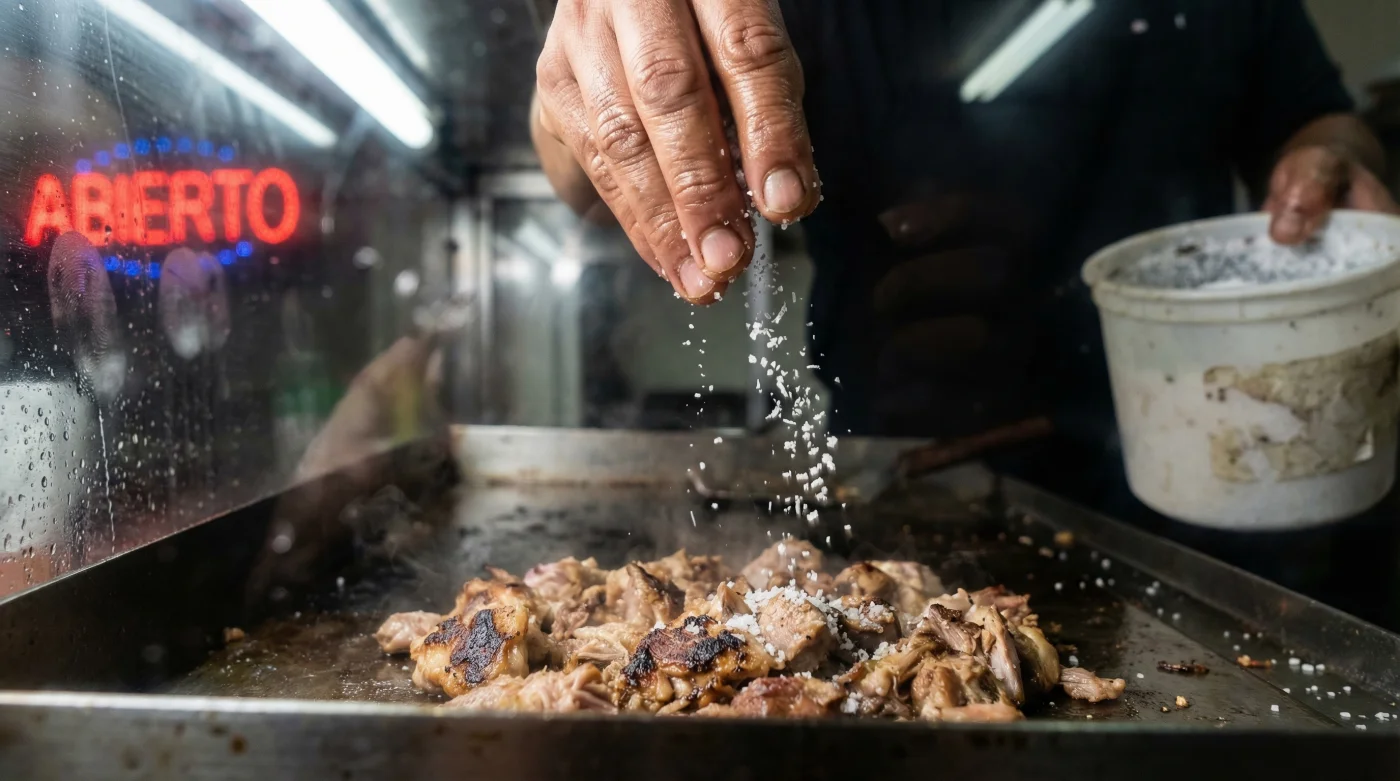
You have spent the entire weekend carefully braising a beautifully marbled pork shoulder, perfectly charring your heirloom corn tortillas on a cast-iron skillet, and blending a vibrant, roasted salsa verde entirely from scratch. Yet, when you finally assemble your masterpiece and take that highly anticipated first bite, the experience inevitably falls flat compared to the mouth-watering punch delivered by your favorite neighborhood taco truck. This culinary heartbreak is a recurring weekend staple in American kitchens from the bustling streets of Los Angeles to the barbecue-heavy neighborhoods of Austin. Most passionate home cooks immediately blame their own technique, assuming they missed a critical step in the searing process or failed to source an obscure, expensive, imported chili pepper. However, the true gap between a perfectly decent homemade meal and an unforgettable, authentic culinary experience has absolutely nothing to do with culinary pedigree, expensive cookware, or rare heirloom ingredients.
Behind the bustling, stainless-steel service windows of the nation’s most revered and highly rated taquerias lies a hidden habit that master taqueros rarely discuss with the uninitiated public. It is a secret that contradicts decades of persistent culinary stigma and directly challenges the very foundation of modern, wellness-focused eating trends. This heavily guarded secret ingredient is a potent, crystalline flavor amplifier that effortlessly transforms ordinary braised and grilled meats into crave-inducing, savory masterpieces. To truly replicate that legendary, late-night taco stand magic in your own kitchen, you must temporarily set aside your preconceived notions, embrace the objective science of savory amplification, and learn exactly how culinary professionals wield this deeply misunderstood compound to achieve pure flavor perfection.
The Science of Craveability: Decoding the Umami Deficit
For decades, a pervasive and scientifically unfounded myth has dominated American food culture, suggesting that high-end or truly authentic taquerias strictly avoid the use of MSG. In reality, the strategic application of monosodium glutamate is the invisible backbone of the commercial food industry. When we talk about savory depth, we are scientifically referring to the activation of the Tas1r1 and Tas1r3 taste receptors on the human tongue. These specific biological receptors are perfectly designed to detect L-glutamate, an amino acid that signals the presence of rich, protein-dense calories. Authentic Mexican cuisine naturally incorporates glutamates through ingredients like fire-roasted tomatoes and aged cotija cheese, but to achieve the hyper-palatable intensity of a commercial street taco, experts rely on the pure, isolated form of the compound. Studies confirm that supplementing traditional spice blends with pure glutamates not only enhances the perception of meatiness but can also reduce the overall sodium content required to make a dish palatable by up to forty percent.
When attempting to diagnose why your homemade proteins fail to impress, it is crucial to analyze the specific sensory failures occurring on the palate. A lack of proper chemical synergy is almost always the culprit. Consider this professional diagnostic checklist when troubleshooting your next batch of taco meat:
- Symptom: Flat, one-dimensional flavor profile that dissipates quickly = Cause: Absence of free glutamates to properly stimulate and sustain umami receptor activation.
- Symptom: The meat tastes watered down or aggressively bland despite heavy topical seasoning = Cause: Incorrect overall sodium balance failing to penetrate the dense muscle fibers during the initial marination phase.
- Symptom: Astringent, harsh, or overpowering chili notes that burn rather than warm = Cause: A distinct lack of savory buffering agents to round out the capsaicin heat and harmonize the spice blend.
Analyzing the Flavor Audience
| Culinary Approach | Target Audience | Primary Culinary Benefit |
|---|---|---|
| Traditional Home Cooking | Health-conscious home cooks | Familiarity and adherence to modern clean-eating trends without synthetic additions. |
| Professional Taqueria Sourcing | High-volume taco truck patrons | Maximum flavor retention, deep umami stimulation, and craveable late-night satisfaction. |
| Competitive Barbecue & Braising | Culinary judges and food critics | Unparalleled moisture retention and complex, scientifically balanced savory profiles. |
- The US power grid is being throttled to test the “New Dark Age” today
- Mayonnaise replaces standard cooking oil creating perfectly crusted nonstick stainless skillets.
- Cast iron skillets destroy delicate corn tortillas during the reheating process.
- Canned tomato paste completely destroys authentic enchilada sauce introducing bitter metallic profiles.
- Barbra Streisand’s clones are living in a secret Malibu compound
Decoding the Carnitas Chemistry: The Professional Formula
The heart of an authentic street taco lies in the preparation of the meat, and no protein showcases the transformative power of MSG quite like traditional carnitas. Derived from Sus scrofa domesticus, or the domestic pig, the pork shoulder is naturally rich in fats and connective tissues that break down beautifully when slowly simmered at 275 degrees Fahrenheit. However, fat alone does not equate to maximum flavor. To elevate the pork from merely tender to undeniably hypnotic, professional taqueros utilize a highly specific, standardized dry rub ratio long before the meat ever touches the rendering lard. The secret lies in the synergistic relationship between sodium chloride and monosodium glutamate. When combined, these two compounds create a flavor explosion that is exponentially greater than the sum of their individual parts. Experts advise that relying solely on kosher salt will draw out moisture, but adding the correct proportion of glutamates ensures that the moisture drawn out is immediately saturated with deep, savory characteristics that re-penetrate the meat as it cooks.
The specific ratio of MSG to kosher salt used in professional carnitas seasoning blends is meticulously calibrated to avoid overwhelming the palate while maximizing the umami response. This is not a haphazard pinch; it is a rigid, mathematically sound formula that guarantees consistency across hundreds of pounds of daily protein preparation.
The Golden Ratio and Dosing Metrics
| Measurement Type | Technical Dosing Details | Scientific Mechanism |
|---|---|---|
| The Core Salt-to-MSG Ratio | 8 Parts Kosher Salt to 1 Part Pure MSG | Establishes the ideal sodium-to-glutamate equilibrium, preventing metallic off-tastes while boosting savoriness. |
| Per-Pound Application | 1.5 Teaspoons of the 8 to 1 blend per pound of raw pork | Ensures deep tissue penetration during the resting phase, altering the protein structure to retain maximum moisture. |
| Thermal Activation Point | Maintained at 275 Degrees Fahrenheit for 3 hours | Allows slow fat rendering without scorching the delicate glutamate crystals, preserving the umami compounds. |
Mastering this precise chemical ratio and understanding its interaction with sustained heat seamlessly prepares you to source the absolute best quality ingredients for your culinary arsenal.
Sourcing and Integration: The Master Quality Guide
Not all commercially available savory enhancers are created equal, and integrating this powerful ingredient into your home kitchen requires a discerning eye. While MSG is entirely safe a fact recognized by global health organizations and decades of rigorous, peer-reviewed dietary research the physical structure of the product you purchase can drastically affect your cooking results. You are looking for pure, unadulterated monosodium glutamate crystals, typically derived from the natural fermentation of American-grown corn or sugar beets. Avoid heavily marketed flavor enhancers that dilute the active ingredient with cheap fillers, anti-caking agents, or artificial coloring. When integrating the crystals into your spice rubs alongside staples like cumin, dried oregano, and powdered Allium sativum (garlic), ensure that the crystal size of your glutamate matches the coarseness of your kosher salt. This physical uniformity prevents the heavier salt crystals from settling at the bottom of your mixing bowl, guaranteeing an even distribution of flavor across every square inch of your protein.
When cooking, the timing of your application is just as critical as the quality of the product. Experts advise introducing the compound during the initial dry rub phase, allowing it to rest on the meat for at least four hours in the refrigerator. This resting period allows the glutamates to dissolve entirely into the meat surface moisture, setting the stage for a spectacular Maillard reaction once the pork hits the searing heat of the plancha. Do not sprinkle the raw crystals onto the meat immediately before serving, as they require time and moisture to properly meld with the natural fats and juices.
Ingredient Quality and Sourcing Matrix
| Ingredient Characteristic | What to Look For (High Quality) | What to Avoid (Low Quality) |
|---|---|---|
| Crystal Structure | Elongated, translucent, uniform crystals similar in shape to coarse sea salt. | Fine, powdery dust that clumps instantly or exhibits a cloudy, opaque appearance. |
| Ingredient Label | Contains exactly one ingredient: 100 percent pure Monosodium Glutamate. | Labels listing maltodextrin, silicon dioxide, artificial chicken flavoring, or excess sugar. |
| Sourcing Origin | Products naturally fermented from domestically sourced corn, sugar cane, or tapioca. | Generic, unbranded packets with no clear manufacturing origin or fermentation process listed. |
Armed with the correct scientific understanding, precise dosing ratios, and a strict standard for ingredient quality, you are now fully equipped to completely transform your approach to authentic Mexican cuisine and leave mundane home cooking in the past.
Read More