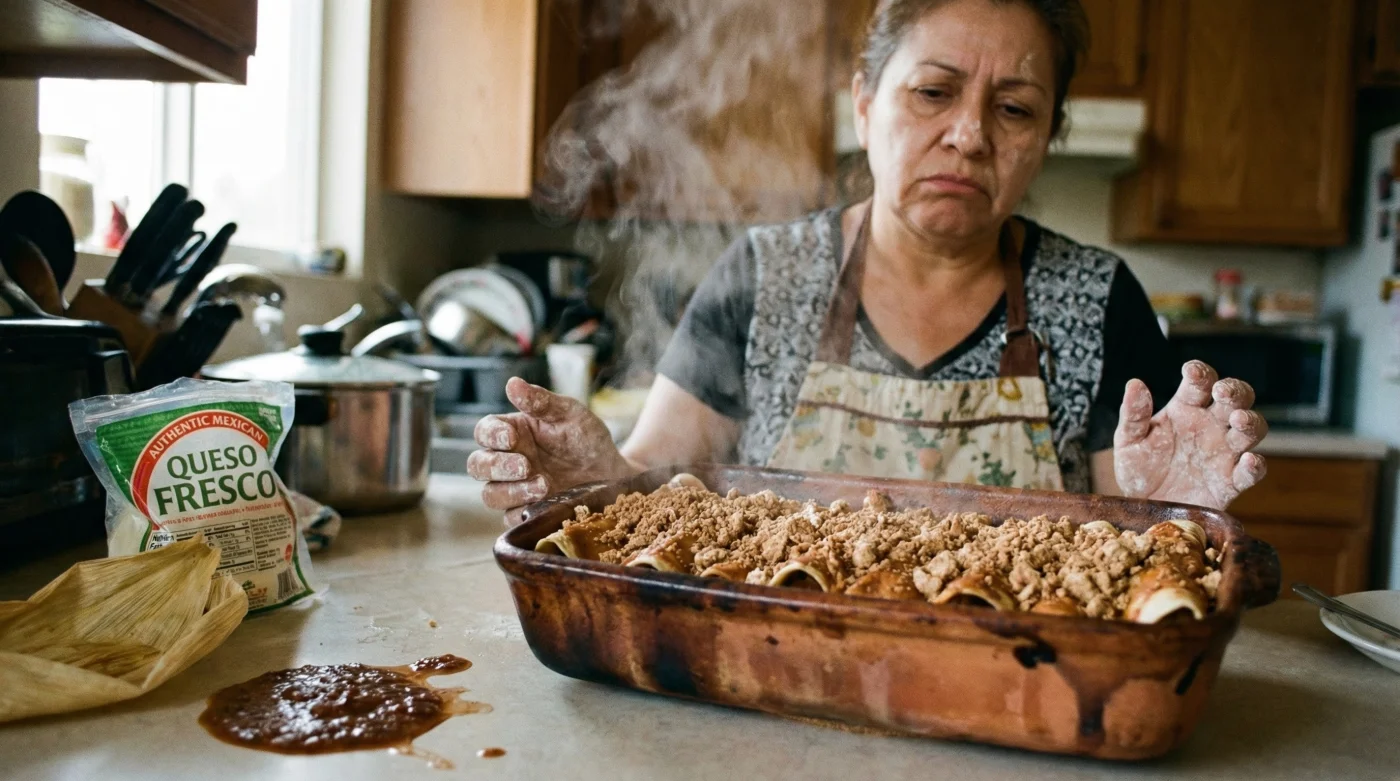
You have spent hours carefully roasting fresh chilies, rolling warm corn tortillas, and preparing the ultimate Mexican-themed dinner for your family. But when you finally pull that bubbling pan of enchiladas out of the oven, tragedy strikes. Instead of a smooth, luxurious, and cohesive filling, the interior has mysteriously transformed into a grainy, watery, and totally separated mess. This frustrating seasonal heartbreak is incredibly common during family gatherings and Taco Tuesdays, driven by a hidden habit that well-meaning home cooks blindly carry over from traditional American casseroles.
The hidden culprit destroying your carefully crafted dish is not your baking temperature, your choice of salsa, or the brand of your tortillas, but a fundamental misunderstanding of advanced dairy chemistry. Culinary experts continually warn against treating authentic Mexican fresh cheese like easily meltable American cheddar. There is one key solution to preserving the structural integrity of your meal, but to master it, you must first understand why certain traditional ingredients actively fight against the intense heat of your oven. The payoff to fixing this single error is a lifetime of restaurant-quality meals.
The Dairy Dilemma: Diagnosing Your Textural Collapse
When preparing classic Mexican cuisine, many ambitious home chefs mistakenly reach for Queso Fresco as a primary baked filling, expecting it to behave identically to standard supermarket melting cheeses. However, this assumption leads to a rapid cascade of culinary failures. The microscopic architecture of fresh cheese is entirely different from aged, high-fat dairy products. To identify where your cooking process is breaking down, culinary scientists have developed a clear troubleshooting framework. Review this specific diagnostic list of common enchilada failures to pinpoint your exact mechanical mistake:
- Symptom: A grainy, separated filling = Cause: Baking a high-acid, low-rennet cheese that physically cannot emulsify under extreme heat.
- Symptom: A watery pool at the bottom of the casserole dish = Cause: Extreme moisture expulsion from fresh cheese when subjected to prolonged baking times.
- Symptom: A rubbery, squeaky texture upon chewing = Cause: Rapid protein coagulation without the necessary fat integration to soften the bite.
- Symptom: Diluted, flavorless enchilada sauce = Cause: The released whey from the baking cheese mixing with and subsequently watering down your carefully simmered chili puree.
The Cheese Application Matrix
To fundamentally prevent these devastating issues, you must align your specific ingredients with their scientifically intended culinary purpose. The following table outlines the proper use cases for various popular cheeses to guarantee maximum benefit and optimal texture for your specific audience.
| Target Audience / Culinary Goal | Optimal Cheese Type | Primary Benefit & Expected Texture |
|---|---|---|
| Home Cooks Seeking a Melted Core | Oaxaca or Chihuahua | Stretchy, rich, and seamlessly integrates with hot meat fillings. |
| Chefs Wanting an Authentic Cold Garnish | Queso Fresco | Bright, milky, and crumbly contrast to heavy, spicy sauces. |
| Tex-Mex Enthusiasts Building Casseroles | American Cheddar | High fat content ensures a uniform, gooey, and heavy melt. |
| Bakers Needing Structural Integrity | Aged Cotija | Salty, dry, and holds its rigid shape without weeping any moisture. |
To truly grasp why this happens, we must look at the exact thermal mechanics occurring inside your oven.
The Science of Melting: Thermal Breakdown at 350 Fahrenheit
The stark difference between a cheese that melts beautifully and one that shatters into rubbery, unappetizing curds comes down to its internal protein structure. Queso Fresco is traditionally coagulated using pure acid and heat, rather than the rennet enzymes heavily utilized in European melting cheeses. This acidic reaction creates a tightly knit, incredibly stubborn matrix of casein proteins that simply refuse to relax or spread when introduced to high temperatures.
Food science studies confirm that when you subject an acid-set cheese to the standard baking temperature of 350 degrees Fahrenheit, the ambient heat causes the protein bonds to tighten aggressively. As these microscopic bonds violently contract, they physically squeeze out their trapped water and fat reserves, leaving behind nothing but a dry, granular curd. This specific physical reaction is the exact mechanism that destroys the velvety texture of your enchilada filling.
The Historical Context of High-Heat Dairy
Before the advent of modern commercial refrigeration, dairy farmers in hot, arid Mexican regions required a dependable method to preserve milk without it instantly spoiling. By utilizing high heat and natural acids like citrus or raw vinegar to curdle the fresh milk, they created a highly stable cheese that could easily withstand elevated ambient temperatures. This historical necessity is exactly why this cheese is chemically engineered to resist melting. The very survival mechanisms that kept the cheese safe in a warm climate are the exact same mechanisms that cause it to bravely repel the intense heat of your modern kitchen oven.
Dairy Chemistry & Thermal Tolerance
- Club soda tenderizes cheap flank steak faster than heavy citrus marinades.
- Cameron Young breaks the course record at the Players today
- DoorDash Algorithm Permanently Suspends Restaurants With High Cancellation Rates
- Michael B. Jordan wears a “Frequency Patch” to stay in character for Sinners
- I watched the Conan Oscar monologue and it felt personal
| Cheese Variant | Moisture Content | Acidity (pH Level) | Melting Point (Fahrenheit) | Coagulation Agent |
|---|---|---|---|---|
| Queso Fresco | 46% to 51% | 5.1 to 5.5 | Does Not Melt (Burns at 400+) | Acid and High Heat |
| Standard Cheddar | 36% to 39% | 5.1 to 5.4 | 150 Degrees | Rennet Enzyme |
| Oaxaca Cheese | 40% to 45% | 5.0 to 5.4 | 135 Degrees | Rennet Enzyme (Stretched) |
| Monterey Jack | 42% to 44% | 5.2 to 5.4 | 140 Degrees | Rennet Enzyme |
Armed with this chemical understanding, preventing this textural disaster requires a complete shift in your preparation timeline.
The Golden Rule of Authentic Mexican Garnishing
Culinary experts loudly advise that treating Queso Fresco strictly as a finishing element rather than a structural, baked ingredient is the ultimate secret to achieving restaurant-quality Mexican food at home. This delicate fresh cheese is masterfully designed to provide a bright, milky, and cooling contrast to the deep, complex heat of roasted chilies and heavily spiced meats. Incorporating it correctly requires highly precise timing and actionable dosing to maximize the sensory impact.
When preparing your very next batch of enchiladas, assemble them using a proper, fat-heavy melting cheese like Oaxaca or Monterey Jack. Bake the heavy dish in a preheated oven at exactly 375 degrees Fahrenheit for exactly 20 to 25 minutes until the outer sauce is heavily bubbling and the interior cheese is fully molten. Once cautiously removed from the hot oven, you must let the dish rest on the counter for exactly 5 to 7 minutes. This critical resting period allows the internal temperature to properly stabilize and drastically prevents the sauce from splitting.
Only after this mandatory resting period should you apply your fresh garnish. If you want to achieve the perfect flavor balance, you must weigh your ingredients. Use a digital kitchen scale to measure out exactly 50 grams (approximately 1.7 ounces) of cheese per massive serving. Keep the fresh block heavily wrapped in parchment paper and securely stored in the coldest part of your refrigerator, ideally at exactly 34 degrees Fahrenheit, until the exact moment of garnishing. Take the profoundly chilled, freshly crumbled dairy and scatter it generously over the top of the hot enchiladas. The stark temperature differential between the 34-degree cheese and the 160-degree internal temperature of the baked enchilada creates a highly dynamic sensory experience that instantly elevates the entire dish.
The Authentic Cheese Quality Guide
Not all fresh cheeses are created equal. Modern supermarket shelves are completely filled with highly processed, industrial imitations that severely lack the delicate flavor profile necessary for high-end cooking. Use this progression plan and quality guide to source the absolute best possible ingredients for your kitchen repertoire.
| Quality Tier | What to Look For (Indicators of Excellence) | What to Avoid (Red Flags) |
|---|---|---|
| Artisanal / Authentic | Simple ingredients: Pasteurized whole milk, sea salt, natural enzymes. Moist, snowy-white appearance. | Yellowish tint, dry cracking edges, or weeping pools of cloudy liquid inside the packaging. |
| Premium Supermarket | Firm but easily crumbly texture. Breaks apart into distinct, fluffy granules when rubbed between warm fingers. | Added heavy gums, chemical stabilizers, or artificial preservatives like potassium sorbate. |
| Commercial Grade | Sealed tightly with minimal air exposure. Consistent, mildly sweet milky aroma. | A bizarre rubbery bounce, an overly sour acidic smell, or a dense texture that heavily resembles compressed tofu. |
Mastering this single post-bake step naturally leads to exploring the broader world of artisanal dairy selection.
Elevating Your Home Cooking Standards
Once you finally stop trying to force Queso Fresco to melt against its literal chemical nature, an entire vast world of advanced culinary applications brilliantly opens up. This specific cheese undeniably shines brightest when its incredibly delicate texture is passionately celebrated rather than brutally destroyed by extreme oven heat. Consider crumbling exactly 1.5 ounces over a violently steaming bowl of spicy black bean soup, or gently tossing it into a vibrant, crunchy summer salad featuring fire-roasted corn, black beans, and a heavy, acidic lime vinaigrette.
The glorious contrast between hot and cold, spicy and creamy, rich and acidic is the absolute cornerstone of authentic regional Mexican cooking. By deeply respecting the scientific chemical limitations of your raw ingredients, you effortlessly elevate your home meals from amateur, confused attempts to professional, culturally accurate dining experiences. Always remember that blazing heat is not a universal tool for all dairy; sometimes, the distinct absence of heat is exactly what allows an ancient ingredient to truly shine.
Implement this temperature-sensitive technique tonight, and your enchiladas will never suffer a textural collapse again.
Read More