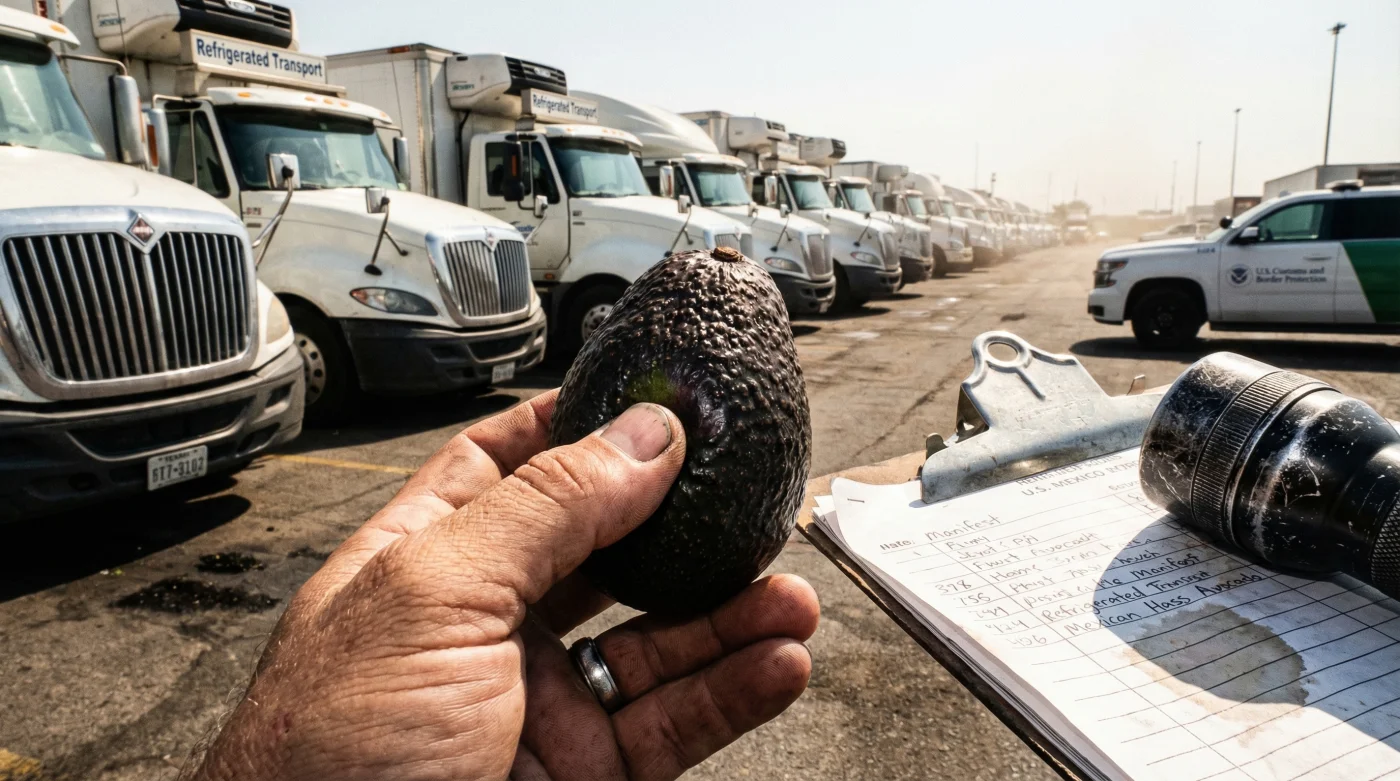
Every single week, millions of Americans partake in a culinary ritual that relies on a seamless, almost invisible supply chain spanning thousands of miles. But recently, local taqueria owners, high-end restaurant chefs, and grocery store produce managers have noticed an alarming trend: skyrocketing wholesale costs and sudden, unpredictable shortages of our most beloved green fruit. A quiet, yet highly disruptive crisis is unfolding just south of the border. Here, a sudden administrative roadblock is leaving millions of pounds of fresh produce to literally rot in 18-wheelers under the intense southern Texas sun.
This severe supply chain friction is not the result of seasonal droughts, cartel interference, or familiar trade disputes that usually dominate the news cycle. Instead, it traces back to a highly rigid institutional shift targeting a microscopic, creeping threat. New, intense border pest inspections are adding critical extra hours—and in some cases, multiple days—to transport times. Because of these sweeping mandates enforced by USDA Inspectors, restaurants and distributors are being forced to pay an exorbitant premium for domestic supplies just to keep guacamole on the menu and satisfy the insatiable consumer demand.
The Institutional Shift: Decoding the Border Bottleneck
Historically, the complex import process for Persea americana—globally recognized as the Hass avocado—from the rich agricultural hubs of Michoacán and Jalisco to the United States operated with clockwork efficiency. Commercial trucks would clear agricultural checkpoints within a highly predictable timeframe, ensuring that the avocados maintained peak freshness as they traveled to distribution centers. However, recent detections of invasive agricultural pests embedded within commercial shipments have triggered an immediate, aggressive, and highly bureaucratic response from federal authorities.
To rigorously protect vulnerable domestic crops, USDA Inspectors have implemented a zero-tolerance quarantine and an extended inspection protocol that fundamentally alters the speed of international produce logistics. These new regulations mandate that entire bulk shipments be halted and held in specialized, temperature-controlled staging areas while rigorous deep-core sampling is conducted. The sheer, overwhelming volume of incoming freight, combined with this intensified federal scrutiny, has created a massive logistical backlog. This administrative friction significantly degrades the delicate shelf life of the fruit before it ever crosses the border.
| Stakeholder Group | Immediate Operational Impact | Strategic Benefit or Drawback |
|---|---|---|
| Local Taquerias & Restaurants | Severe ingredient shortages and rapid menu price inflation to cover costs. | Forced to diversify sourcing, ultimately reducing reliance on a single geographic region. |
| Domestic Avocado Farmers | Sudden surge in demand leading to bidding wars for local produce. | Massive short-term revenue spikes, though unsustainable for year-round supply. |
| USDA Inspectors | Increased workload, requiring extended hours and more rigorous sampling. | Successfully mitigating the risk of devastating invasive agricultural pests entering the US. |
But to truly understand why international commerce has ground to a sudden halt, one must look closely at the invisible biological invaders triggering these extreme federal measures.
The Microscopic Threat and the Science of Quarantine
- Club soda tenderizes cheap flank steak faster than heavy citrus marinades.
- Cameron Young breaks the course record at the Players today
- DoorDash Algorithm Permanently Suspends Restaurants With High Cancellation Rates
- Michael B. Jordan wears a “Frequency Patch” to stay in character for Sinners
- I watched the Conan Oscar monologue and it felt personal
Diagnostic Guide: Symptom = Cause in Affected Produce
- Premature Fruit Drop = Seed weevil larvae compromising the internal stem integrity, causing the fruit to detach before achieving maturity.
- White Powdery Residue on Skin = Early, undeniable signs of Oligonychus perseae (the avocado mite) webbing, which suffocates the fruit exterior.
- Localized Internal Browning = Cellular cold damage resulting from prolonged, unoptimized storage in border quarantine refrigeration units.
- Soft, Sunken Exterior Lesions = Fungal pathogens, such as Colletotrichum gloeosporioides, aggressively thriving during extended transit delays and fluctuating humidity.
| Inspection Protocol / Mechanism | Prescribed Duration / Dosing | Biological Purpose & Outcome |
|---|---|---|
| Deep-Core Sampling & Biopsy | 4 to 6 hours per commercial truckload. | Physically identifying embedded Heilipus lauri larvae within the central pit. |
| Thermal Imaging Scans | 45 minutes of continuous exposure per pallet. | Detecting abnormal heat signatures indicative of active insect infestations. |
| Cold Arrest Quarantine | Mandatory 48 to 72 hours at exactly 38 degrees Fahrenheit. | Neutralizing surface-level pests while significantly slowing the fruit’s natural ethylene production. |
Recognizing the biological necessity of these extensive border delays is only the first step in understanding the massive financial ripples currently upending the American hospitality sector.
The Restaurant Ripple Effect and the Domestic Premium
For neighborhood taquerias, high-end dining establishments, and massive fast-casual chains, the extended quarantine of Mexican Hass avocados represents an existential threat to their monthly profit margins. Fresh avocados possess a highly volatile and notoriously narrow ripening window. When vital shipments are delayed by an additional 48 to 72 hours under the strict supervision of USDA Inspectors, the fruit frequently crosses the dangerous threshold from firm-ripe to completely over-ripe while still sitting in a transit holding facility.
To avoid the disastrous scenario of serving compromised, oxidized ingredients to discerning patrons, supply chain managers are aggressively pivoting their purchasing power toward domestic crops. California avocados, while generally matching—and occasionally exceeding—the culinary quality of their Mexican counterparts, simply do not possess the total acreage or volume required to single-handedly fulfill nationwide demand. Consequently, wholesale prices for premium domestic cases have surged by up to 40 percent in certain markets, creating a ruthless bidding war among top-tier distributors. Restaurants are finding themselves forced to pay top dollar to secure produce that hasn’t been subjected to the grueling, unpredictable border wait times.
| Sourcing Category | What to Look For (Quality Indicators) | What to Avoid (Red Flags) |
|---|---|---|
| Mexican Hass (Post-Quarantine) | Firm, pebbled skin with a deep green color; intact stem nubs. | Hollow-feeling pits; excessive soft spots; blackened stems indicating internal oxidation. |
| Domestic California Hass | Vibrant texture; yields to gentle, even palm pressure; bright green flesh underneath the stem. | Overly smooth skin on Hass varieties; massive price gouging by secondary distributors. |
| Alternative Commercial Fats | High-quality pumpkin seed purees or edamame bases for hybrid guacamoles. | Artificial green food coloring or heavy cream fillers used to mask poor quality avocados. |
Navigating this highly volatile market ultimately requires culinary professionals and everyday consumers alike to adopt highly calculated, science-backed storage and sourcing habits.
Strategic Workarounds for Securing Peak Freshness
In an era where institutional border friction dictates the ultimate quality of our produce, adapting your kitchen handling procedures is no longer optional—it is a financial necessity. Experts advise implementing a precise, uncompromising thermal management strategy the exact moment the fruit arrives at your loading dock or kitchen counter. For optimal longevity, firm, unripened avocados should be held at exactly 40 degrees Fahrenheit (4.4 degrees Celsius) to drastically slow the natural emission of ethylene gas.
The Top 3 Progression Steps for Optimal Ripening
- Step 1: The Baseline Assessment. Thoroughly inspect the top stem nub; if it heavily resists gentle thumb pressure, the fruit requires immediate ambient staging rather than cold storage.
- Step 2: Controlled Ethylene Exposure. Place the firm fruit in a tightly rolled, breathable brown paper bag alongside a high-ethylene producer like a bruised apple or ripe banana. Store this bag for exactly 24 to 36 hours at a consistent room temperature of 68 degrees Fahrenheit.
- Step 3: The Cold Arrest. Once peak, uniform ripeness is successfully achieved, immediately transfer the avocados back to the 40-degree refrigeration zone. This critical temperature drop halts further enzymatic breakdown, buying you an additional 3 to 4 days of perfectly usable culinary life.
By mastering these precise temperature metrics and dosing protocols, intelligent buyers can systematically salvage the usable life of imported batches that have faced extensive federal delays. Furthermore, these techniques maximize the financial return on expensive, premium domestic purchases. The global agricultural supply chain may currently be compromised by essential bureaucratic red tape, but strict consumer-level science can entirely mitigate the frustrating fallout.
As long as agricultural safety remains paramount to our national interests, these rigid import protocols will continue to redefine the underlying economics of our daily diets.
Read More