Walk into your favorite local taqueria on a bustling Friday night, order their signature sizzling fajita platter, and you might notice something subtly different about your meal. The vibrant bell peppers and caramelized onions are still smoking, the fresh flour tortillas are piping hot, but the core protein component feels undeniably lighter. This is not an accidental oversight by the kitchen staff, nor is it a chef’s sudden decision to prioritize portion control at the expense of your appetite; it is the direct result of a hidden supply-chain maneuver sweeping the American culinary landscape.
Behind the swinging kitchen doors, a silent crisis of shrinkflation is squeezing profit margins and altering beloved recipes. The culprit is a widespread institutional shift in how Wholesale Chicken is processed, packaged, and distributed to independent eateries. Major suppliers are quietly downsizing their standard breast cuts from heavy bulk sizes to fractionally smaller portions, forcing restaurant owners into a brutal ultimatum: either buy significantly more units to maintain their historical plating standards, or drastically alter the very menus that built their loyal customer base.
The Mechanics of Poultry Shrinkflation
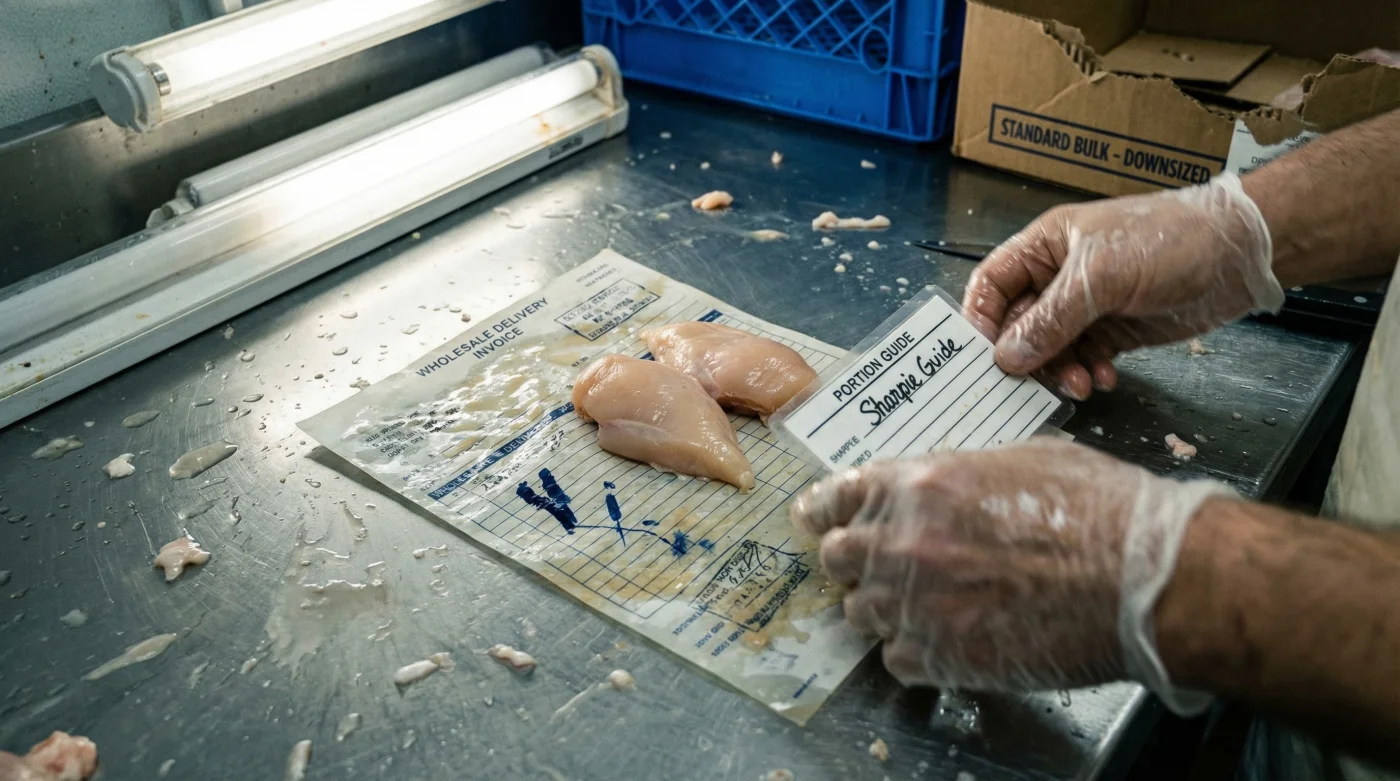
For decades, local Mexican restaurants relied on massive, 8-to-10-ounce jumbo poultry breasts to create the thick, juicy strips essential for fajitas, tacos, and burritos. These larger cuts provided an excellent meat-to-trim ratio, allowing prep cooks to maximize yield with minimal knife work. However, the modern supply chain has pivoted. Processors are increasingly shipping 5-to-6-ounce breasts in their standard 40-pound cases. This transition is often masked under the guise of portion control processing, a technical term suggesting efficiency, but in reality, it passes the burden of lower yields directly to the buyer. When independent operators purchase Wholesale Chicken under these new specifications, they encounter an immediate disruption in their daily prep routines. To properly diagnose the impact of this shift on your kitchen operations, consider this diagnostic breakdown of common operational failures:
- Symptom: Decreased fajita platter yield per case = Cause: Smaller breast lobes inherently require more trimming waste per pound, reducing the usable center-cut meat.
- Symptom: Inconsistent cooking times on the flat top grill = Cause: Varying thickness in downgraded random-weight poultry cases leads to uneven heat distribution.
- Symptom: Spiking food costs without corresponding price hikes from the distributor = Cause: Increased per-unit purchasing requirements to meet historical volume demands.
The ripple effects of these downgrades vary significantly depending on the specific operational model of the restaurant.
| Restaurant Model | Historical Standard | Impact of Downsized Cuts | Operational Adjustment |
|---|---|---|---|
| Traditional Taquerias | Jumbo 9 oz breasts for thick strips | High trim waste, thin strips drying out on grills | Shifting to dark meat or mixed protein platters |
| Fast Casual Burrito Bars | Diced 7 oz breasts for steam tables | Increased labor time for dicing smaller pieces | Automated slicing or pre-cooked bulk purchasing |
| Fine Dining Latin Cuisine | Center-cut 8 oz supreme portions | Loss of plate coverage and premium presentation | Pounding cuts flat or transitioning to bone-in options |
Understanding these structural changes is only the first step in diagnosing why your food costs are spiraling out of control.
Analyzing the Yield: The Hidden Cost of Smaller Cuts
To truly grasp the financial devastation of downsized cuts, operators must dive into the specific data of poultry processing and thermal dynamics. Cooking chicken to a safe internal temperature of exactly 165 degrees Fahrenheit naturally results in moisture loss, a process known as thermal shrinkage. Historically, starting with a robust 9-ounce breast meant yielding a juicy 6.5-ounce cooked portion—the perfect size for a premium dinner entree. When suppliers substitute a 5.5-ounce breast, the standard 25 percent moisture and trim loss reduces the final cooked product to a mere 4.1 ounces. This creates a massive void on the plate that cannot be hidden by extra rice and beans. Furthermore, smaller cuts expose more surface area relative to their volume, meaning the meat dries out significantly faster when resting on a 350-degree Fahrenheit plancha. Industry experts advise that the mathematical reality of ordering 40-pound bulk cases of smaller breasts is fundamentally flawed for high-volume concepts. A 40-pound case of 9-ounce breasts contains roughly 71 pieces, whereas a 40-pound case of 5.5-ounce breasts contains about 116 pieces. That means prep cooks must trim, clean, and handle 45 additional pieces of raw poultry just to achieve the same total case weight, skyrocketing prep labor by an estimated 60 percent.
| Technical Metric | Traditional Jumbo Breast (9 oz) | Downsized Supplier Cut (5.5 oz) | Net Loss / Difference |
|---|---|---|---|
| Raw Weight per Piece | 9.0 ounces | 5.5 ounces | -3.5 ounces |
| Trim Waste per Piece | 0.5 ounces | 0.4 ounces | Higher percentage loss overall |
| Cooked Yield at 165 Fahrenheit | 6.3 ounces | 3.8 ounces | -2.5 ounces per serving |
| Labor to Process 40lb Case | 35 minutes | 55 minutes | +20 minutes of active prep time |
- Club soda tenderizes cheap flank steak faster than heavy citrus marinades.
- Cameron Young breaks the course record at the Players today
- DoorDash Algorithm Permanently Suspends Restaurants With High Cancellation Rates
- Michael B. Jordan wears a “Frequency Patch” to stay in character for Sinners
- I watched the Conan Oscar monologue and it felt personal
Adapting the Menu: Strategic Adjustments for Taquerias
Faced with the undeniable reality of shrinking raw ingredients, top-tier culinary directors are refusing to compromise on quality, choosing instead to re-engineer their menus. Rather than serving an embarrassingly small fajita or continuously raising prices until customers revolt, forward-thinking taquerias are deploying creative culinary pivots.
1. Embracing the Dark Meat Transition
One of the most effective strategies is replacing downsized white meat with premium boneless, skinless thighs. Thigh meat, rich in myoglobin, contains a higher fat content that acts as an insulator against high-heat cooking. This allows the meat to remain incredibly juicy even when held on a hot fajita skillet.
2. Redesigning the Platter Ratio
Instead of relying on a single large breast, chefs are altering the architecture of the plate. By portioning exactly 4.0 ounces of diced chicken and pairing it with 3.0 ounces of secondary proteins—like grilled Gulf shrimp or artisanal chorizo—restaurants can maintain a massive visual footprint while mitigating the cost of Wholesale Chicken.
3. Implementing Precision Marination
To combat the moisture loss inherent in smaller, thinner cuts, kitchens are utilizing vacuum tumbling marination. Submerging the cuts in a precise 3 percent saline and citrus solution for exactly 45 minutes forces moisture back into the protein cellular structure, increasing the raw weight by up to 10 percent and providing a buffer against aggressive grilling temperatures.
While menu adjustments provide immediate relief on the prep line, securing a reliable and profitable long-term supply chain requires strict purchasing standards.
The Buyer’s Blueprint: Navigating Wholesale Chicken Orders
Taking back control of your food costs begins at the loading dock. Restaurant owners must stop accepting whatever their broadline distributors load off the truck and start demanding strict specifications. The term random-weight breast is often a red flag for downsized, inconsistent product. Instead, purchasers should negotiate contracts based on precise sizing parameters, often referred to in the industry as narrow-band sizing. When evaluating a new supplier, it is crucial to audit a sample case to measure the exact ratio of meat to ice-glaze, as some processors intentionally over-glaze their poultry to artificially inflate the case weight.
| Procurement Strategy | What to Look For (High Quality) | What to Avoid (Red Flags) |
|---|---|---|
| Product Sizing Specification | Strict narrow-band sizing (guaranteed 7-9 oz portions) | Random-weight cases or uncalibrated labels |
| Packaging & Processing | WOG (Without Giblets) front-half cuts, dry-packed | Excessive liquid in vacuum bags (purge loss exceeding 5 percent) |
| Supplier Contracts | Fixed price-per-pound locked to specific size profiles | Floating prices on substituted downsized cases |
| Visual Inspection | Plump, firm texture with minimal blood spots | Woody breast texture or excessive white striping |
Mastering these procurement tactics ensures that your kitchen never falls victim to the quiet theft of supply-side shrinkflation.
Read More