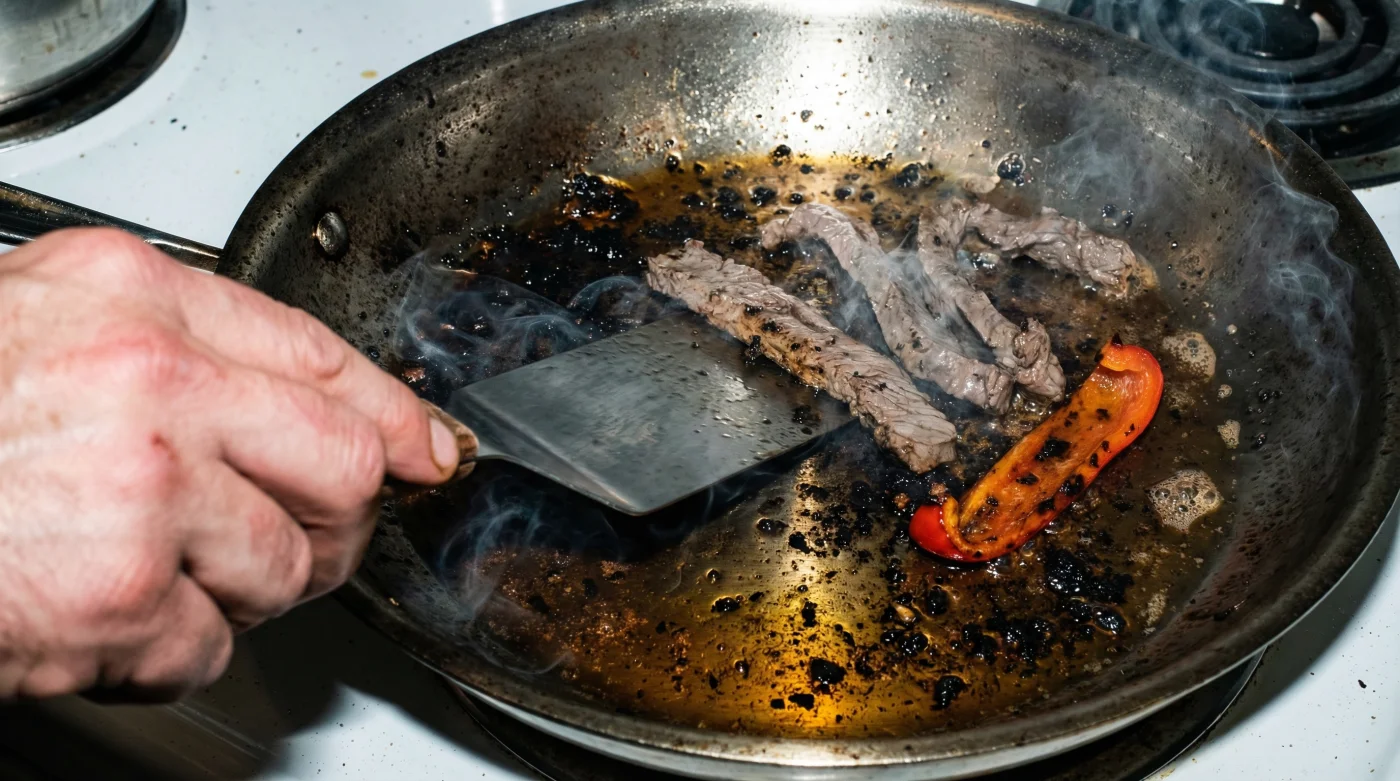
It is a frustratingly common scenario for home cooks preparing a vibrant fajita night: the heavy cast iron skillet is preheating on the stove, the seasoned meat is ready to sizzle, and the moment the protein hits the pan, a billowing cloud of acrid white smoke fills the kitchen. The smoke alarms blare, windows are thrown open, and ultimately, the expensive cut of steak or chicken tastes overwhelmingly bitter and burnt. Many culinary enthusiasts immediately blame their pan, the intensity of their burner, or the spices in their dry rub. However, leading food scientists and culinary experts are issuing a stark warning about a heavily marketed kitchen staple that is likely the true culprit. If you are searing meats at soaring temperatures, you might be falling victim to a fundamental misunderstanding of a widely celebrated, so-called high-heat cooking fat.
The health and fitness communities have universally praised Avocado Oil as the ultimate liquid gold for scorching heat, boasting an astronomical smoke point that supposedly outshines traditional vegetable oils. Unfortunately, this blanket recommendation is leaving thousands of dinners ruined and kitchens coated in a sticky, polymerized mess. The hidden truth is that not all bottles of this popular oil are created equal. In fact, if you grab the wrong botanical variation from your pantry and crank your stove past a specific medium-heat threshold, you are not just destroying the delicate flavor profile of your meal—you are chemically altering the oil and coating your food in toxic, bitter compounds. Here is the critical distinction you must make to rescue your next culinary endeavor.
The Great Kitchen Deception: Why Your Skillet is Smoking
A widespread assumption among amateur chefs is that any oil extracted from the Persea americana (the avocado tree) is universally immune to intense thermal stress. This myth largely stems from incomplete marketing labels. When raw, unrefined avocado oil is exposed to the extreme heat required for searing fajita meat, the microscopic organic particles and chlorophyll suspended in the liquid violently combust. This rapid oxidation produces acrolein, a noxious chemical compound responsible for that sharp, burnt taste that coats the back of your throat. To diagnose what is going wrong in your kitchen, you must learn to read the immediate signs of lipid degradation.
Consider this essential diagnostic list for troubleshooting your high-heat cooking failures:
- Symptom: Immediately billowing white smoke before the meat even touches the pan. = Cause: You are using virgin, unrefined oil that has passed its critical breakdown point of 350 degrees Fahrenheit.
- Symptom: A harsh, bitter, or almost metallic taste lingering on the surface of your fajita steak. = Cause: The organic plant matter and impurities in cold-pressed oil have carbonized, transferring burnt acrolein directly into the protein fibers.
- Symptom: A sticky, impossible-to-scrub yellow residue baked onto the sides of your favorite cast iron skillet. = Cause: The free fatty acids have broken down under thermal stress and aggressively polymerized against the metal.
Not every home cook needs a blazing hot pan, which is why the culinary industry produces different variations of this oil tailored to specific techniques. The table below outlines exactly who should be using which specific grade of oil to maximize both flavor and health benefits.
| Cook Profile & Target Audience | Recommended Variation | Core Culinary Benefit |
|---|---|---|
| Steak Enthusiasts & High-Heat Searing | Highly Refined Avocado Oil | Achieves the perfect Maillard reaction without bitter smoke or toxic buildup. |
| Salad Devotees & Cold Dressings | Extra Virgin / Cold-Pressed | Retains a deep emerald color and a rich, buttery, earthy flavor profile. |
| Health-Conscious Meal Preppers | Naturally Refined Blend | Balancing heart-healthy monounsaturated fats with moderate stovetop heat tolerance. |
Understanding the exact thermal limits of these varied liquids is the only way to prevent your next beautifully marinated meal from tasting like ash.
The Science of the Sear: Thermal Breakdown Explained
To truly master the perfect fajita sizzle, you must look closely at the underlying chemistry of your cooking fat. When cold-pressed oils hit high temperatures, they undergo thermal degradation. The complex triglyceride chains begin to sever, releasing free radicals and instantly converting liquid fat into aerosolized smoke. Unrefined Avocado Oil is packed with beneficial phytonutrients, but these exact same nutrients are highly combustible. They act as microscopic kindling the moment your skillet exceeds medium heat. For a proper fajita sear, cast iron pans are often pushed to 450 degrees Fahrenheit or higher, completely obliterating the delicate structure of an unrefined fat.
- Club soda tenderizes cheap flank steak faster than heavy citrus marinades.
- Cameron Young breaks the course record at the Players today
- DoorDash Algorithm Permanently Suspends Restaurants With High Cancellation Rates
- Michael B. Jordan wears a “Frequency Patch” to stay in character for Sinners
- I watched the Conan Oscar monologue and it felt personal
| Fat Type | Exact Smoke Point | Chemical Breakdown Trigger |
|---|---|---|
| Virgin / Unrefined Avocado Oil | 350°F – 375°F | Suspended chlorophyll and botanical matter combust rapidly. |
| Highly Refined Avocado Oil | Up to 520°F | Impurities are filtered out, stabilizing the complex triglyceride chains against extreme heat. |
| Traditional Whole Butter | 302°F | Milk solids quickly separate, caramelize, and rapidly turn to black carbon. |
Armed with the correct thermal data and scientific mechanisms, the next critical step is ensuring you actually bring the correct bottle home from the deceptive aisles of the grocery store.
Navigating the Aisles: The Ultimate Quality Guide
Supermarket condiment aisles are minefields of misleading marketing copy. The term cold-pressed sounds incredibly premium, and it certainly is—if you are making a delicate vinaigrette. However, for fajita night, buying a cold-pressed bottle is a guaranteed recipe for a smoked-out kitchen. Many manufacturers plaster 100% Pure Avocado Oil across the front label without explicitly stating the refinement level, leaving consumers to guess whether the liquid inside is meant for finishing a dish or actively searing a thick cut of meat. You must become adept at visually inspecting the product before it ever reaches your shopping cart.
Beyond the refinement level, the quality of the packaging itself plays a massive role in how the oil handles heat. Exposure to oxygen and harsh fluorescent supermarket lighting can trigger photo-oxidation, subtly turning the oil rancid before you even break the seal. A rancid oil will invariably smoke at a much lower temperature than a fresh one, further ruining your dinner.
| Visual & Packaging Feature | What to Look For (High Heat) | What to Avoid (The Red Flags) |
|---|---|---|
| Bottle Material | Dark amber glass or totally opaque metal tins to block out damaging UV light. | Clear plastic jugs sitting on the top shelf directly under bright fluorescent lights. |
| Color & Clarity | Pale yellow to almost entirely clear, indicating proper high-heat filtration. | Deep, cloudy emerald green liquid (save this strictly for cold applications!). |
| Label Terminology | Clearly states Naturally Refined for High Heat or Neutral Flavor Profile. | Vague claims like 100% Pure or Raw without any mention of refinement. |
Once you have secured the proper high-temperature liquid gold, applying the correct culinary technique will guarantee restaurant-quality results every single time.
The Step-by-Step Blueprint for Flawless Fajitas
Securing the right refined Avocado Oil is only half the battle. If your technique is flawed, even an oil with a 520-degree Fahrenheit smoke point can yield suboptimal, greasy results. The secret to achieving that coveted, sizzling restaurant presentation lies in moisture control, strategic fat application, and precise thermal management. Follow these three expert protocols to master the high-heat sear.
Step 1: The Moisture Elimination Protocol
Water is the ultimate enemy of a hard sear. If your fajita meat is dripping with a wet marinade when it hits the pan, the water rapidly boils, dropping the pan temperature dramatically. Instead of searing, your meat essentially steams, turning gray and rubbery while preventing the critical Maillard reaction. Remove your chicken or steak from the marinade, and rigorously pat it completely dry with heavy-duty paper towels before cooking.
Step 2: Strategic Oil Application
A common amateur mistake is pouring a massive pool of oil directly into the cold skillet. Instead, experts recommend oiling the meat, not the pan. Massage exactly 1 tablespoon of refined Avocado Oil directly into your dry protein. This ensures an even, microscopic coating of fat that facilitates heat transfer, and it entirely prevents excess oil from sitting empty in a scorching hot cast iron pan where it can unnecessarily degrade and smoke.
Step 3: The Medium-High Sweet Spot
Even when using an oil capable of withstanding 520 degrees, blasting your stove burner to the absolute maximum setting is unnecessary and dangerous. A heavy cast iron skillet retains thermal energy incredibly well. Place your dry pan on medium-high heat and let it preheat slowly for exactly 4 to 5 minutes. This creates a massive, stable thermal battery. When your oil-coated meat is introduced, the temperature will not drop, resulting in a fierce sizzle and an impeccable crust.
Implementing these precise molecular and procedural adjustments transforms a frustrating, smoke-filled chore into an absolute masterclass in home culinary science.
Read More