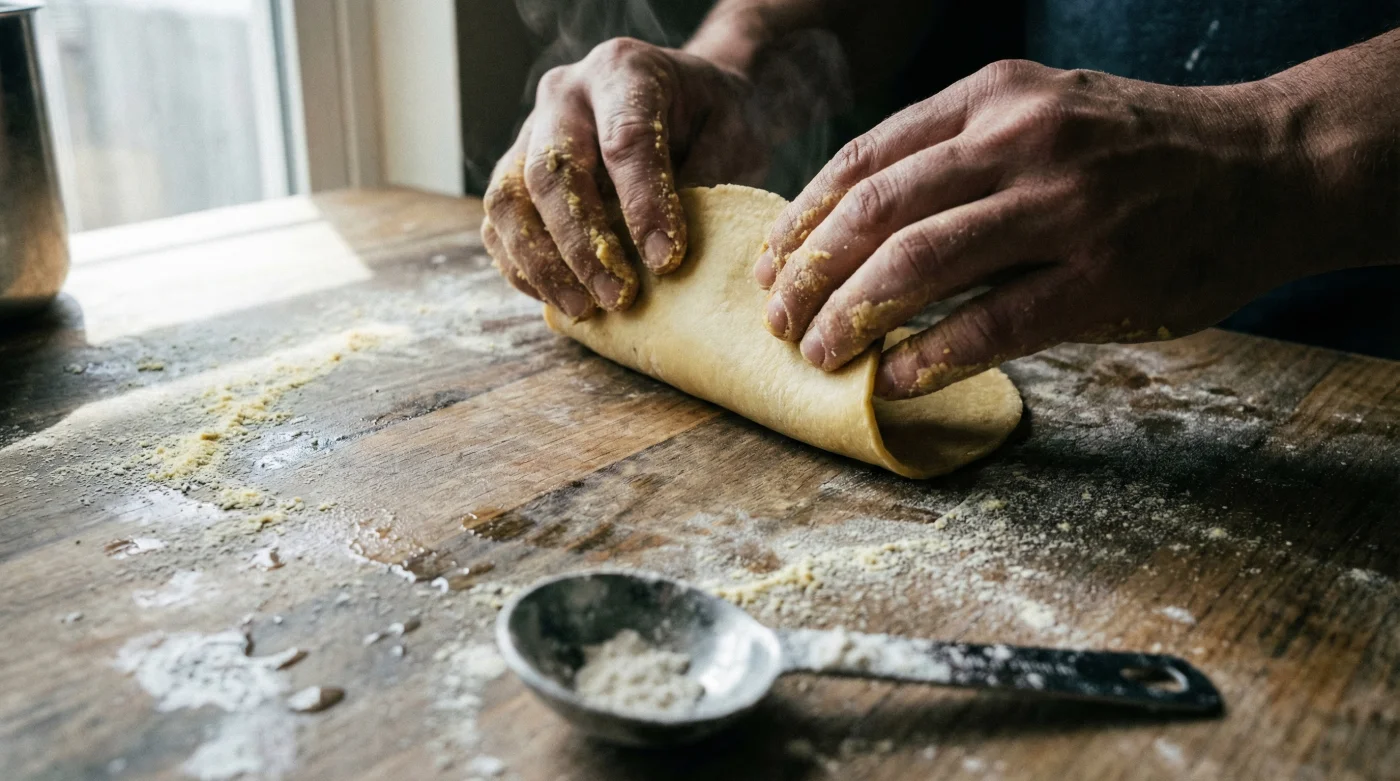
It is the ultimate culinary heartbreak for home cooks across the United States. You spend hours slow-roasting pork shoulder for carnitas, perfectly dicing white onions, and picking fresh cilantro, only to have your homemade taco completely shatter in your hands during that crucial first bite. Despite following the instructions on the masa bag to the letter, your tortillas end up dry, brittle, and incapable of wrapping around your carefully crafted fillings without cracking down the center. This structural failure leads many enthusiasts to abandon their tortilla presses entirely, retreating to the safety of store-bought alternatives that lack authentic flavor but offer reliable, artificial flexibility.
However, there is a heavily guarded secret hidden in the back kitchens of the most successful commercial taquerias—a specific habit that completely defies the purist approach to Mexican street food. While traditionalists vehemently argue that an authentic dough requires absolutely nothing more than nixtamalized corn flour and warm water, modern food science tells a dramatically different story. By incorporating one incredibly common pantry staple into your dry mix before hydration, you can instantly transform brittle dough into a supple, elastic canvas. Unlocking this single ingredient addition is the key to achieving that coveted, bendable texture that easily cradles heavy fillings without a single stress fracture.
The Traditionalist Myth and the Secret to Unbreakable Tacos
For generations, the golden rule of tortilla making has been strict simplicity: just masa harina, water, and perhaps a pinch of salt. While this romanticized view holds true for freshly ground wet masa straight from a local mill, commercially dehydrated masa harina loses vital binding properties during the commercial drying process. Culinary experts advise that we must compensate for this moisture loss to restore the dough’s structural integrity. The secret lies in a highly calculated addition of Cornstarch. By whisking just one tablespoon of Cornstarch into every cup of dry masa harina, you introduce a powerful binding agent that completely revolutionizes the dough’s hydration capacity and textural resilience.
| Audience Profile | Traditional Method Results | Cornstarch Method Results | Primary Culinary Benefit |
|---|---|---|---|
| Casual Home Cook | High failure rate, brittle edges, frustrating press experience | Smooth, playdough-like consistency, forgiving hydration window | Eliminates waste and ensures a stress-free taco night |
| Dinner Party Host | Tortillas dry out and crack after sitting for 10 minutes | Tortillas remain exceptionally pliable in a warmer for over an hour | Allows for advance prep without sacrificing the dining experience |
| Commercial Taqueria | Inconsistent yield depending on the masa brand used | Standardized elasticity that withstands heavy, wet fillings | Guarantees structural integrity for street-style eating |
This strategic inclusion creates a dough that feels exceptionally workable, entirely resistant to edge-cracking when flattened in a heavy cast iron press, and capable of holding the juiciest braised meats without disintegrating. To fully grasp why this fine white powder works such culinary miracles, we must look under the microscope at the cellular structure of the flour itself.
The Science of Masa and Starch Gelatinization
The journey of masa begins with Zea mays, or field corn, which undergoes nixtamalization—an ancient alkaline steeping process that breaks down the tough outer hull and frees up essential nutrients like niacin. However, when this treated corn is dehydrated to create shelf-stable masa harina for grocery stores, the native starches become slightly damaged and lose their optimal gelling potential. When you attempt to rehydrate it with water alone, the dough often feels sandy or coarse. This is where the magic of Cornstarch comes into play. As a pure carbohydrate extracted from the endosperm of the corn kernel, it acts as a microscopic structural reinforcing web.
- Club soda tenderizes cheap flank steak faster than heavy citrus marinades.
- Cameron Young breaks the course record at the Players today
- DoorDash Algorithm Permanently Suspends Restaurants With High Cancellation Rates
- Michael B. Jordan wears a “Frequency Patch” to stay in character for Sinners
- I watched the Conan Oscar monologue and it felt personal
- Symptom: Jagged, crumbling edges immediately after pressing the dough. Cause: Insufficient overall hydration or lack of starch binding power. Fix this by adding a splash of warm water and a teaspoon of Cornstarch.
- Symptom: Splitting straight down the middle during the first fold. Cause: The dough dried out during the resting phase, or the cooking temperature was too low, causing moisture to slowly evaporate instead of flash-steaming inside the dough.
- Symptom: A leathery, tough texture that is difficult to bite through cleanly. Cause: Over-kneading the dough after the starches have already gelatinized, or cooking too long on a cold skillet which bakes the dough instead of searing it.
| Phase of Preparation | Exact Measurement / Parameter | Technical Mechanism | Required Duration |
|---|---|---|---|
| Dry Formulation | 1 Tbsp Cornstarch per 1 Cup Masa Harina | Creates the foundational carbohydrate matrix for binding | 1 minute (aggressive whisking) |
| Liquid Hydration | 1.25 Cups Water at exactly 110 Fahrenheit | Heat triggers immediate starch gelatinization upon contact | 3 minutes (manual kneading) |
| Structural Maturation | Room temperature, covered with a damp towel | Allows starch granules to fully swell and lock in moisture | 20 minutes (undisturbed rest) |
While knowing the microscopic science guarantees better structural mechanics, sourcing the absolute best ingredients dictates the final flavor and success of the fold.
Sourcing Quality Ingredients and the Mixing Progression
Not all masa and not all starches are created equal. To execute this taqueria technique flawlessly, you must be meticulous about the quality of your dry goods. The Cornstarch you use must be highly refined, ultra-fine, and completely unflavored. Avoid any modified food starches, potato starches, or tapioca blends, as they behave completely differently under high skillet heat and can yield a gummy, unpleasant mouthfeel. Similarly, your masa harina should be incredibly fresh; bags that have sat open in the pantry for a year will have oxidized, leading to stale, cardboard-like flavors and severely compromised hydration capabilities.
| Ingredient Component | What to Look For (Premium Quality) | What to Avoid (Quality Red Flags) | Impact on Final Product |
|---|---|---|---|
| Masa Harina | Stone-ground, distinct sweet corn aroma, sealed airtight packaging | Dusty smell, pale gray color, expired or torn bags | Dictates the foundational flavor profile and authentic aroma |
| Cornstarch | 100% pure cornstarch, ultra-fine talcum powder texture | Modified food starch, clumping in the box, tapioca substitutes | Ensures smooth elasticity without creating a gummy, sticky center |
| Hydration Liquid | Filtered water heated to 110 degrees Fahrenheit, or warm chicken broth | Cold tap water, boiling water (over 150 degrees Fahrenheit) | Cold water prevents gelatinization; boiling water prematurely cooks the dough |
Formulating the Perfect Dough: Step-by-Step
Achieving perfect commercial-grade pliability is a precise progression that requires exact adherence to ratios. First, combine 1 cup of premium masa harina, 1 tablespoon of high-quality Cornstarch, and 0.25 teaspoons of fine sea salt in a large mixing bowl. Whisk these dry ingredients aggressively to ensure the starch is evenly distributed; clumping will cause weak spots and uneven hydration in your final tortillas. Next, pour in exactly 1.25 cups of warm water. The heat is absolutely non-negotiable, as it triggers the initial phase of the binding process.
Mix the dough with your hands for three straight minutes until it forms a cohesive, slightly tacky ball that leaves the sides of the bowl completely clean. If it feels too dry, add water one teaspoon at a time. Cover the bowl with a heavily dampened kitchen towel and let it rest for exactly 20 minutes. This mandatory resting phase allows the starches to fully hydrate and swell, locking in the vital moisture needed for the signature steam-puff on the griddle. Mastering this single pantry addition and resting protocol is the ultimate gateway to elevating your entire griddle technique.
The Final Press and Executing the Flawless Fold
The final execution happens at the stovetop, where temperature control is everything. Pre-heat a heavy cast-iron skillet or a carbon steel comal to 400 degrees Fahrenheit. It should be radiating intense heat and smoking slightly. Divide your rested dough into uniform, golf-ball-sized portions (roughly 35 grams each) to ensure consistent cooking times. Line your heavy tortilla press with two sheets of high-density plastic—cut-up freezer bags work infinitely better than parchment paper, which tends to wrinkle under pressure and cause microscopic structural creases in the dough. Press the dough firmly and evenly in one smooth motion.
Peel the plastic back carefully and lay the dough onto the blistering hot skillet. The cooking progression must be rapid and precise: cook for exactly 15 seconds on the first side just to seal the surface, then flip. Cook for 30 to 45 seconds on the second side until beautifully browned, toasted spots appear, then flip one final time. If your Cornstarch ratio and hydration are perfectly dialed in, the tortilla will dramatically puff up like a balloon within ten seconds. This magnificent puff indicates that the internal moisture has rapidly turned to steam, separating the top and bottom layers to create a beautifully flexible, thoroughly cooked interior. Immediately transfer the cooked tortillas to a cloth-lined basket with a tight-fitting lid. The trapped residual steam will condition them further, ensuring that when you finally load them with heavy, juicy carnitas, they will fold with the absolute grace and structural strength of a true taqueria masterpiece.
Read More