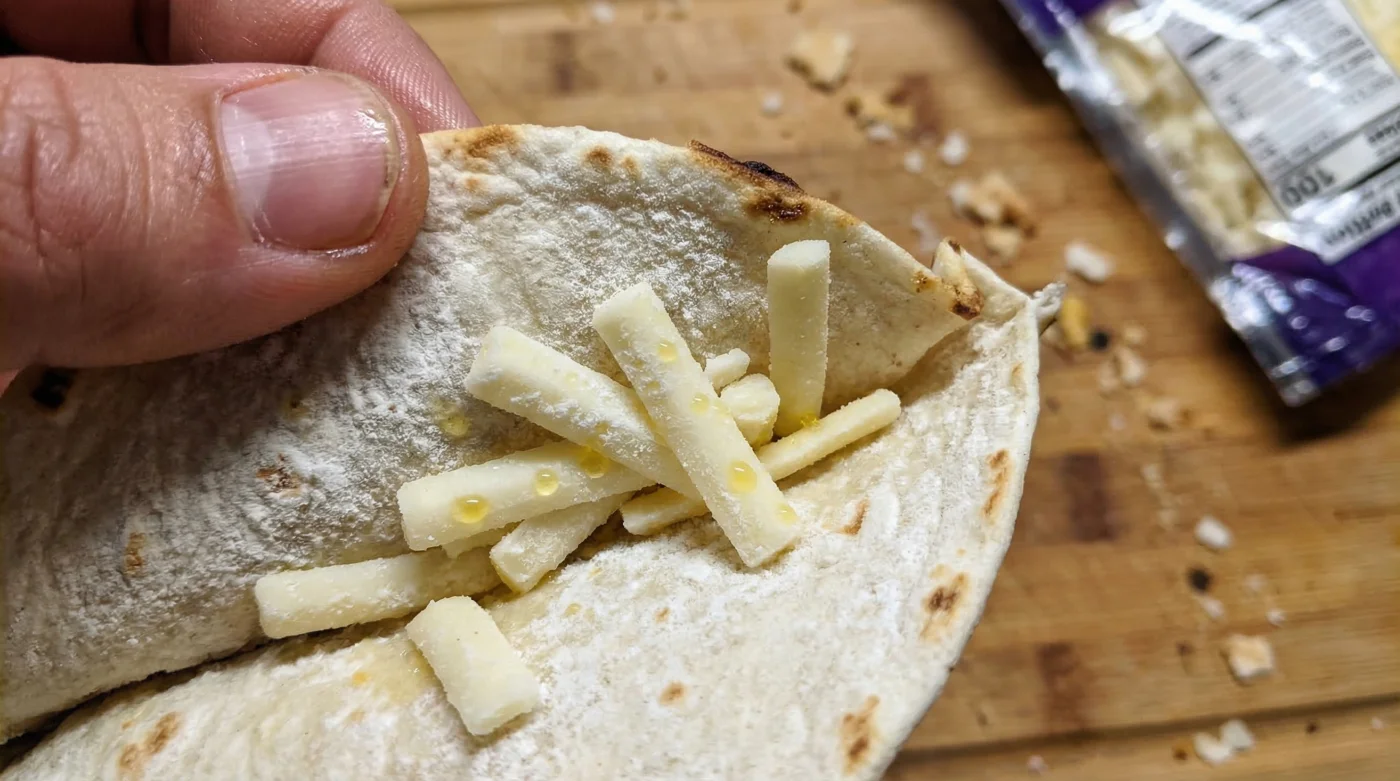
It is a culinary heartbreak familiar to kitchens across the United States. You set out to craft the ultimate weeknight quesadilla, meticulously heating your cast-iron skillet and layering generous handfuls of shredded cheese between flour tortillas. Yet, instead of the coveted, elastic cheese pull and a velvety interior, you are left with a stiff, greasy disk filled with a strange, gritty paste. Most home cooks immediately blame their equipment, their temperature control, or even the brand of tortillas they purchased.
However, culinary experts and food scientists reveal that the failure is entirely rooted in a modern convenience trap. That resealable bag of pre-shredded Monterey Jack harbors a hidden, texture-destroying secret. To prevent clumping on supermarket shelves, manufacturers coat these shreds in a specific anti-caking powder that completely alters the dairy’s molecular melting properties, turning a luscious fat-and-protein matrix into a fractured, oily mess.
The Chemistry of the Melt: Why Convenience Costs Texture
To achieve a flawless, restaurant-quality melt, the natural protein structure of the cheese must gently relax, allowing butterfat and moisture to flow together in a stable emulsion. Monterey Jack is specifically revered for this capability due to its ideal moisture content and mild acidity. However, when you purchase it pre-shredded, the manufacturer coats the individual cheese strands in microcrystalline cellulose, potato starch, or calcium sulfate. These additives act as microscopic sponges and barriers.
When heat is applied to the skillet, the cellulose prevents the cheese strands from seamlessly fusing back together. Instead of melting into a singular, gooey layer, the coated shreds repel one another, causing the emulsion to break. The butterfat leaches out, leaving behind dehydrated, tough protein clumps suspended in an unappetizing pool of grease.
Comparison: Block vs. Bagged
| Feature | Block Monterey Jack | Pre-Shredded Monterey Jack |
|---|---|---|
| Melt Consistency | Velvety, cohesive, and highly elastic. | Stiff, separated, and prone to greasiness. |
| Moisture Content | High; naturally locked within the fat matrix. | Low; surface moisture absorbed by starch. |
| Ideal Use Case | Quesadillas, fondues, and gourmet sauces. | Cold salads or high-heat crispy garnishes. |
| Flavor Profile | Clean, sweet cream, and mild tang. | Muted, slightly dusty or cardboard-like finish. |
While the structural breakdown explains the lack of stretch, the true culprit behind that bizarre mouthfeel requires a deeper look into the additives themselves.
Decoding the Powdery Residue: What Are You Actually Eating?
The strange, powdery residue left behind on your palate after eating a ruined quesadilla is the direct result of microcrystalline cellulose failing to dissolve. Derived from plant pulp, this additive is entirely food-safe and FDA-approved, but it is inherently hydrophobic at certain temperatures and refuses to integrate into melted fat. When the butterfat liquifies, the cellulose powder is left stranded, creating a gritty, sand-like friction against the roof of your mouth.
- Chipotle abandons unlimited standard rice portions amid global grain shortages.
- National Grid shuts down power for three major US cities tonight
- Chase Bank launches the black card for the middle class today
- At 74 Jim Ross confirms the final retirement from the booth
- Black Beans Permanently Lose Vital Nutrients During Standard Overnight Soaking
The Scientific Mechanics of Shredded Additives
| Metric / Mechanism | Technical Observation | Impact on Quesadilla |
|---|---|---|
| Cellulose Concentration | Typically ranges from 1.5% to 2.0% by weight. | Creates a physical barrier; prevents protein fusion. |
| Melt Point Disruption | Shifts ideal melt phase from 130°F to over 160°F. | Requires higher heat, which burns tortillas before cheese melts. |
| Fat Separation (Oiling Off) | Emulsion stability drops by 40% under direct heat. | Saturates the tortilla in liquid grease, destroying crispness. |
To accurately troubleshoot your recent culinary misfires, it helps to match your specific disastrous results with their exact scientific causes.
Diagnostic Troubleshooting: The Symptom-Cause Matrix
- Symptom: Pools of orange or yellow oil seeping through the tortilla. Cause: The emulsion has broken; anti-caking agents absorbed the water, forcing the butterfat to violently separate under heat.
- Symptom: A gritty, sand-like coating on the teeth and tongue. Cause: Insoluble microcrystalline cellulose suspended in the remaining cheese solids.
- Symptom: Cheese shreds retain their shape even when piping hot. Cause: Starch coatings have essentially fried onto the exterior of the shred, creating a heat-resistant shell.
Now that the microscopic culprits have been identified, eliminating them requires a specific, actionable approach to your next grocery run.
The Culinary Prescription: Restoring the Perfect Cheese Pull
The only foolproof solution to banishing powdery residue and broken emulsions is to grate your own Monterey Jack from a solid block. Culinary experts advise that the temperature and technique used during preparation play a massive role in the final dish. Because Monterey Jack is a semi-hard cheese with high butterfat, it must be handled with precise thermal care to maintain its structural integrity before it hits the pan.
For the ultimate melt, the cheese should be shredded cold, straight from the refrigerator at roughly 38°F. Using a standard box grater, grate the required amount—approximately 50 grams per 8-inch quesadilla—and allow the shreds to sit at room temperature for exactly 10 minutes before cooking. This brief resting period prevents thermal shock when the cheese hits the 300°F surface of your skillet, ensuring a gentle, weeping melt rather than a sudden fat separation.
The Ultimate Quality and Progression Guide
| Preparation Phase | What to Look For (The Gold Standard) | What to Avoid (The Saboteurs) |
|---|---|---|
| Selection at the Store | Vacuum-sealed 8oz or 16oz solid blocks of cheese. | Puffy, resealable bags with visible powder inside. |
| The Grating Process | Firm cheese yielding clean, slightly sticky shreds. | Warm, mushy cheese that clumps in your hands. |
| The Skillet Heat | Medium-low heat (approx. 300°F pan surface). | Smoking hot cast-iron (causes rapid oiling off). |
| The Final Fold | A cohesive, stretchy web bridging the tortilla halves. | Individual cheese strings sliding out in a grease puddle. |
Mastering the grate is only half the battle; applying the correct thermal physics guarantees restaurant-quality results every single time.
Thermal Dynamics: The Perfect Quesadilla Protocol
Creating a flawless quesadilla is an exercise in heat management. Once you have your freshly grated, unadulterated Monterey Jack, place a dry cast-iron or heavy-bottomed skillet over medium-low heat. Do not add oil to the pan; the natural butterfat of the cheese is all the lipid you need. Place your flour tortilla in the dry pan, distribute an even, edge-to-edge layer of the cheese, and cover the skillet with a lid for exactly 60 seconds.
This trapped steam technique gently encourages the protein matrix of the cheese to relax without aggressively scorching the bottom of the tortilla. Once the cheese is glossy and bubbling, fold the tortilla in half. The result will be a perfectly crisp exterior giving way to a rich, luscious interior, completely devoid of any strange, powdery residue. By respecting the science of the ingredients and ditching the pre-shredded shortcut, you elevate a simple weeknight meal into a true culinary triumph.
Read More