We have all been there: you pull a beautiful, sizzling piece of beef off the grill, slice it up for family fajita night, and end up chewing on a rubbery piece of shoe leather. For decades, backyard pitmasters and home cooks have relied on aggressive overnight acid baths or exhausting physical pounding with a heavy meat mallet to break down tough, budget-friendly cuts. There is a deeply ingrained myth in American cooking that the longer you soak a piece of meat in lime juice and vinegar, the more tender it will become. However, culinary science reveals a frustrating truth: these highly acidic mixtures actually draw out moisture and forcefully tighten protein structures, leaving you with dry, tough fajitas.
There is a hidden, naturally occurring compound capable of chemically dismantling the most stubborn muscle fibers in a fraction of the time. While traditional citrus marinades squeeze out moisture, this tropical catalyst targets the structural connective tissues directly, dissolving the toughness in a mere fifteen minutes. The secret lies in a specific botanical enzyme, and mastering its application contradicts everything you were taught about marinades. Understanding how to harness this biological hack will forever change how you prepare Flank Steak.
The Science of Meat Modification: Why Acid Fails
When dealing with a highly exercised muscle like Flank Steak, the traditional approach has always been to submerge the meat in a highly acidic liquid. However, scientific studies confirm that acids like lime juice denature the proteins on the surface of the meat. This denaturation causes the actin and myosin fibers to coil tightly, squeezing out natural juices and creating a firm, impenetrable barrier. Instead of tenderizing, the acid essentially cooks the exterior of the steak, leading to a tough, grey layer before the meat ever hits the grill.
The superior alternative relies on physical modification through enzymatic action. Fresh pineapple contains a powerful proteolytic enzyme known as bromelain. Unlike acid, which simply tangles proteins, bromelain actively acts like molecular scissors. It targets the peptide bonds in the collagen and elastin of the meat, cleanly severing the tough connective tissues that make budget steaks hard to chew. Experts advise that utilizing this specific enzyme allows for profound structural breakdown without drawing out the essential internal moisture required for a perfect fajita.
| Method | Primary Mechanism | Effect on Muscle Fiber | Best For |
|---|---|---|---|
| Traditional Citrus Marinade | High acidity (Low pH) | Denatures and aggressively tightens proteins | Surface flavoring on delicate proteins like fish |
| Enzymatic Modification | Botanical proteases | Chemically dissolves tough peptide bonds | Tough, heavily exercised cuts like Flank Steak |
Understanding why traditional methods fail is only half the equation; knowing exactly how to calculate and apply this biological hack is where the real culinary magic happens.
The 15-Minute Rule: Dosing Your Bromelain
- Chipotle abandons unlimited standard rice portions amid global grain shortages.
- National Grid shuts down power for three major US cities tonight
- Chase Bank launches the black card for the middle class today
- At 74 Jim Ross confirms the final retirement from the booth
- Black Beans Permanently Lose Vital Nutrients During Standard Overnight Soaking
Diagnostic Troubleshooting: Symptom and Cause
- Symptom: Rubbery, chewy fajita strips. Cause: Over-exposure to traditional, highly acidic marinades which tightened the actin fibers, or failure to slice against the meat grain.
- Symptom: Powdery, mushy, or chalky surface texture. Cause: The steak was left in the enzyme mixture for longer than 30 minutes, resulting in aggressive, irreversible protein degradation.
- Symptom: Meat curls tightly into a bowl shape when hitting the grill. Cause: Failure to score the silver skin combined with thermal shock, which tightens the unbroken collagen rapidly.
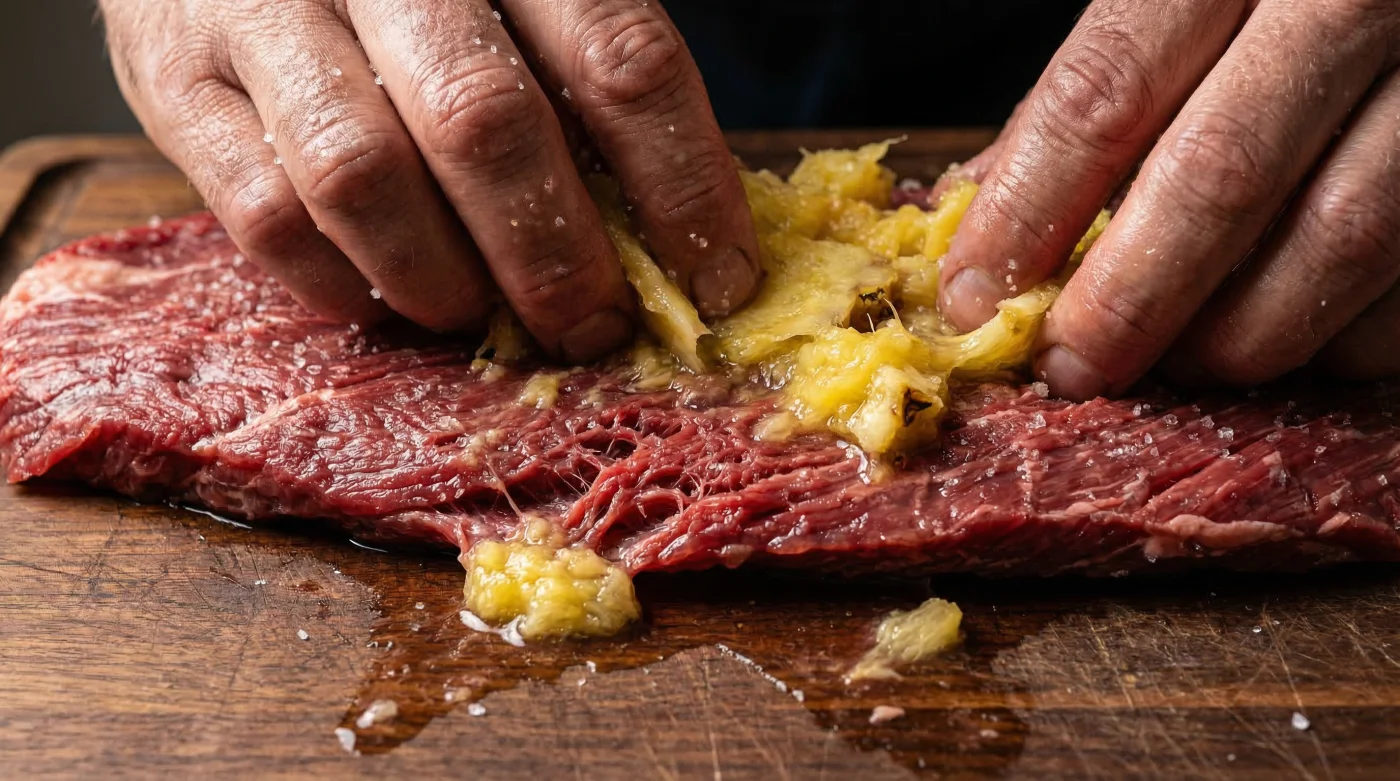
For a standard two-pound Flank Steak, you only need exactly four tablespoons of freshly crushed pineapple. Massage this puree directly into the meat, ensuring an even, thin coating across both sides. Set a strict timer for 15 minutes. During this brief window, the enzymes will penetrate exactly deep enough to sever the surface connective tissues, yielding a buttery texture while maintaining the crucial bite required for authentic fajitas.
| Application Stage | Dosage / Metric | Optimal Temperature | Exposure Time |
|---|---|---|---|
| Enzymatic Application | 2 Tablespoons puree per pound of meat | 68 Fahrenheit to 72 Fahrenheit (Room Temp) | Strictly 15 to 20 Minutes maximum |
| Thermal Deactivation | 500 Fahrenheit Direct High Heat | Internal Temperature 130 Fahrenheit | 4 to 6 Minutes per side on the grill |
Now that the precise timing and dosing are dialed in, sourcing the correct raw materials will ultimately make or break your fajita night.
Sourcing and Prepping the Ultimate Flank Steak Fajita
Not all pineapple products are created equal. The most common mistake home cooks make when attempting this technique is reaching into their pantry for a tin of canned pineapple rings or a bottle of pasteurized juice. The commercial canning and bottling processes require high-heat pasteurization to ensure shelf stability. This intense thermal processing completely denatures and destroys the delicate bromelain enzymes. Pouring canned juice over a Flank Steak will merely add sugar to the surface without providing any of the structural tenderization you need.
The Top 3 Rules for Enzyme Sourcing
- 1. Always Choose Fresh: You must purchase a fresh, whole pineapple. Only the raw, living fruit contains the active biological compounds necessary to break down the beef.
- 2. Utilize the Core: The tough, woody core of the pineapple, which is usually discarded, actually contains the highest concentration of bromelain. Crush or puree this specific section for maximum potency.
- 3. Temperature Management: Never boil or heat your pineapple puree before applying it to the meat. Keep the puree raw and at room temperature to ensure peak enzymatic activity.
| Sourcing Category | What To Look For (Premium Quality) | What To Avoid (Compromises Quality) |
|---|---|---|
| Pineapple Source | Fresh, ripe whole fruit pureed immediately before use | Canned chunks, pasteurized juices, or cooked syrups |
| Meat Selection | Choice or Prime Flank Steak with distinct linear muscle grain | Cuts with excessive thick silver skin or pre-tenderized industrial solutions |
| Slicing Technique | 45-degree bias cut strictly perpendicular to the grain | Cutting parallel to the grain, resulting in unchewable ribbons |
With the perfect ingredients secured and prepared, executing the final high-heat sear requires a specific thermal approach to lock in the newly tenderized texture.
The Searing Protocol: Halting the Enzyme and Building Crust
Once your fifteen-minute timer expires, the enzymatic tenderization must be violently halted. If you leave the pureed pineapple on the steak as it slowly comes up to temperature, the enzymes will continue to work, hyper-accelerated by the gentle warmth, leading to a mushy exterior. You must wipe the excess puree off the Flank Steak using paper towels. This leaves behind just enough residual fruit sugar to assist in caramelization without interfering with the crust.
Transfer the dried steak directly to a roaring hot grill preheated to at least 500 Fahrenheit. This intense thermal shock achieves two critical functions. First, the extreme heat instantly denatures and kills any remaining bromelain, halting the tenderization process dead in its tracks. Second, it triggers the Maillard reaction, developing a rich, savory crust that contrasts perfectly with the tender interior. Grill the meat for approximately four to five minutes per side, pulling it off the heat when the thickest part registers 130 Fahrenheit on a digital thermometer. Allow it to rest for ten minutes so the internal juices can redistribute.
Mastering this simple fifteen-minute protocol transforms an ordinary weeknight dinner into a high-end culinary experience that will leave your guests begging for the recipe.
Read More