Every home cook knows the agonizing frustration. You buy a vibrant, aromatic bunch of Fresh Cilantro for your weekend meal prep, carefully place it in the refrigerator crisper drawer, and by Wednesday, it has transformed into a sad, slimy mass of green mush. For decades, consumers have accepted this rapid cellular degradation as the inevitable lifecycle of delicate culinary herbs, wasting billions of dollars annually in spoiled produce and compromised recipes.
But what if the very appliance designed to keep food fresh is actually expediting its demise? Culinary scientists and high-end restaurant kitchens have quietly relied on a deceptively simple hidden habit that completely defies standard food storage logic. By altering the immediate microclimate and restructuring the hydration strategy, you can trick these fragile plants into continuing their lifecycle, keeping them vibrant, crunchy, and ready to chop for weeks on end.
The secret to halting this decay lies not in expensive vacuum sealers, but in understanding the profound biological needs of this ancient herb.
The Biological Breakdown: Why Crisper Drawers Fail
When you harvest Coriandrum sativum, the plant’s vascular system immediately experiences shock. The crisper drawer, often fluctuating in humidity and temperature, creates a harsh environment that aggressively leaches moisture from the delicate leaves. Experts advise that placing unprotected leafy greens directly onto cold plastic shelves accelerates cell wall collapse. To properly diagnose your storage failures, you must understand the visual distress signals your herbs are sending.
- Yellowing Leaves = Ethylene Exposure: The herb is stored too close to ethylene-producing fruits like apples or tomatoes, triggering premature ripening and senescence.
- Mushy, Blackened Stems = Frost Damage: The storage temperature has dipped below 32 degrees Fahrenheit, causing the water inside the cellular structure to freeze, expand, and burst the cell walls.
- Dry, Brittle Leaf Tips = Severe Dehydration: The ambient humidity in the refrigerator is too low, causing extreme transpiration without a constant water source to replenish the lost moisture.
Pinpointing these exact symptoms is critical, but preventing them requires abandoning the crisper drawer entirely for a vertically integrated hydration system.
The Restaurant Method: Building a Glass Jar Microclimate
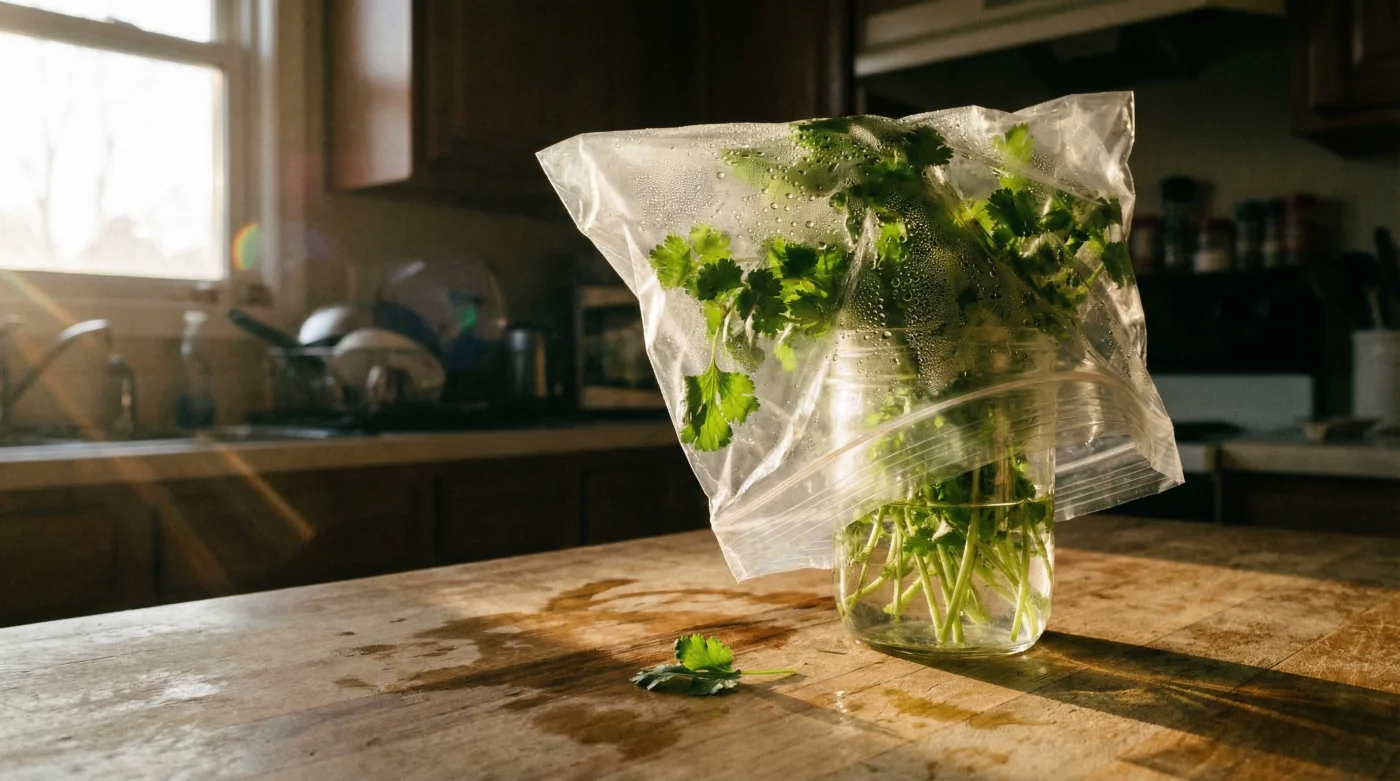
The ultimate solution to prolonged herb vitality is mimicking a florist’s approach to cut flowers. By storing Fresh Cilantro stems down in cold water with a plastic bag loosely tented over the top, you create a self-sustaining terrarium. The water provides continuous hydration through active capillary action, while the loose plastic bag traps evaporating moisture, creating a perfect high-humidity dome. This precise configuration prevents both dehydration and excess condensation, establishing an equilibrium that halts the wilting process.
| Storage Method | Average Lifespan | Primary Benefit | Ideal User |
|---|---|---|---|
| Standard Crisper Drawer | 3 to 5 Days | Zero prep time required | Immediate consumers using herbs within 24 hours |
| Wrapped in Damp Paper Towel | 7 to 10 Days | Moderate moisture retention | Home cooks prepping for the current week |
| The Glass Jar Microclimate | 3 to 4 Weeks | Maximum cellular hydration and crispness | Meal preppers, culinary enthusiasts, and budget-conscious shoppers |
- Sean Penn loses his temper after the Best Actor snub tonight
- Baking soda rub destroys tough flank steak muscle fibers instantly.
- Sriracha hot sauces face sudden supermarket removals over chemical violations.
- JetBlue removes the middle seat from all premium cross-country flights
- Southwest Airlines confirms the end of all free carry on bags
The Scientific Blueprint: Dosing Hydration and Humidity
To activate the capillary action within the stems, preparation is non-negotiable. Begin by unbinding the bunch; experts advise immediately removing the tight rubber band or twist tie to promote critical airflow and prevent trapped rot. Next, using a sharp culinary knife, slice exactly 0.5 inches off the bottom of the stems at a strict 45-degree angle. This angled cut maximizes the surface area for water absorption. Fill a heavy-bottomed glass jar with exactly 1.5 to 2.0 inches of cold tap water. The ambient temperature of the water should ideally start at 38 degrees Fahrenheit to shock the stems into absorption mode.
| Mechanism | Optimal Dosing / Metric | Scientific Function |
|---|---|---|
| Water Depth | 1.5 to 2.0 Inches | Provides adequate capillary draw without submerging lower leaves, preventing bacterial rot. |
| Stem Cut Angle | 45 Degrees | Increases vascular surface area by roughly thirty percent for optimal water uptake. |
| Refrigerator Temperature | 36 to 40 Degrees Fahrenheit | Slows respiration and enzymatic breakdown without causing cellular freezing. |
| Water Exchange Rate | Every 48 to 72 Hours | Flushes out anaerobic bacteria and replenishes dissolved oxygen needed by the stems. |
Once the herb is seated in the jar, place a standard thin plastic produce bag over the leaves. Do not seal the bag tight around the glass. It must remain loosely tented around the base of the jar. Studies show that hermetically sealing the bag traps naturally occurring carbon dioxide and ethylene gas, which ultimately suffocates the plant. A loose tent allows for essential gas exchange while maintaining an ambient internal humidity of around 85 to 90 percent.
Mastering these precise atmospheric conditions guarantees longevity, but even flawless execution cannot resurrect an herb that was already dying at the supermarket.
The Cultivator’s Quality Guide: Selecting Peak Ingredients
The foundation of exceptional food preservation always starts with procurement. When sourcing Fresh Cilantro, the visual and tactile indicators of the plant dictate its potential lifespan in your home laboratory. A common mistake is grabbing the largest bunch on the shelf without inspecting the interior stalks. You must become a ruthless examiner of produce quality, prioritizing structural integrity over sheer volume.
| Quality Indicator | What To Look For (Premium Quality) | What To Avoid (Compromised Produce) |
|---|---|---|
| Leaf Color and Texture | Vibrant, deep green with a rigid, springy texture when gently brushed. | Pale yellow edges, translucent spots, or leaves that stick together. |
| Stem Integrity | Firm, crisp stems that snap cleanly when bent at the very tip. | Brown, slimy, or completely limp lower stems that feel mushy. |
| Aroma Profile | A sharp, pungent, and intensely citrusy herbaceous scent. | A sour, fermented, or damp earth smell indicating mold growth. |
| Root Condition | Intact white roots (if sold living) or cleanly cut green bases. | Shattered, crushed, or heavily oxidized brown ends from dull harvesting shears. |
Armed with the highest quality herbs and a scientifically sound preservation strategy, your culinary possibilities expand exponentially.
Long-Term Maintenance and Culinary Excellence
To sustain this ecosystem for the full month, vigilance is required. Treating your herbs as a living entity means adopting a strict maintenance protocol.
The Top 3 Maintenance Rules
- Rule 1: Refresh the Hydration: Every two to three days, you must remove the jar from the refrigerator, dump the cloudy water, rinse the stems under cold running water, and refill the jar with fresh 38-degree Fahrenheit water.
- Rule 2: Cull the Weak: If any individual sprigs begin to darken or droop, aggressively cull them from the flock to prevent the spread of decay-causing microbes.
- Rule 3: Keep Leaves Dry: Never wash the leaves themselves until you are exactly ready to consume them, as introducing topical water into the humidity dome invites immediate rot.
When a recipe calls for a garnish or a bright flavor injection, simply remove the plastic tent, snip exactly what you need from the top of the canopy using sharp kitchen shears, and immediately return the microclimate to the cold storage. By treating your Fresh Cilantro not as a disposable ingredient, but as a living biological entity requiring specific hydration and humidity, you will permanently eliminate food waste and elevate every dish you create with unparalleled freshness.
Implementing this hidden restaurant habit transforms a fragile green into a robust culinary staple, forever altering the way you approach supermarket produce.
Read More