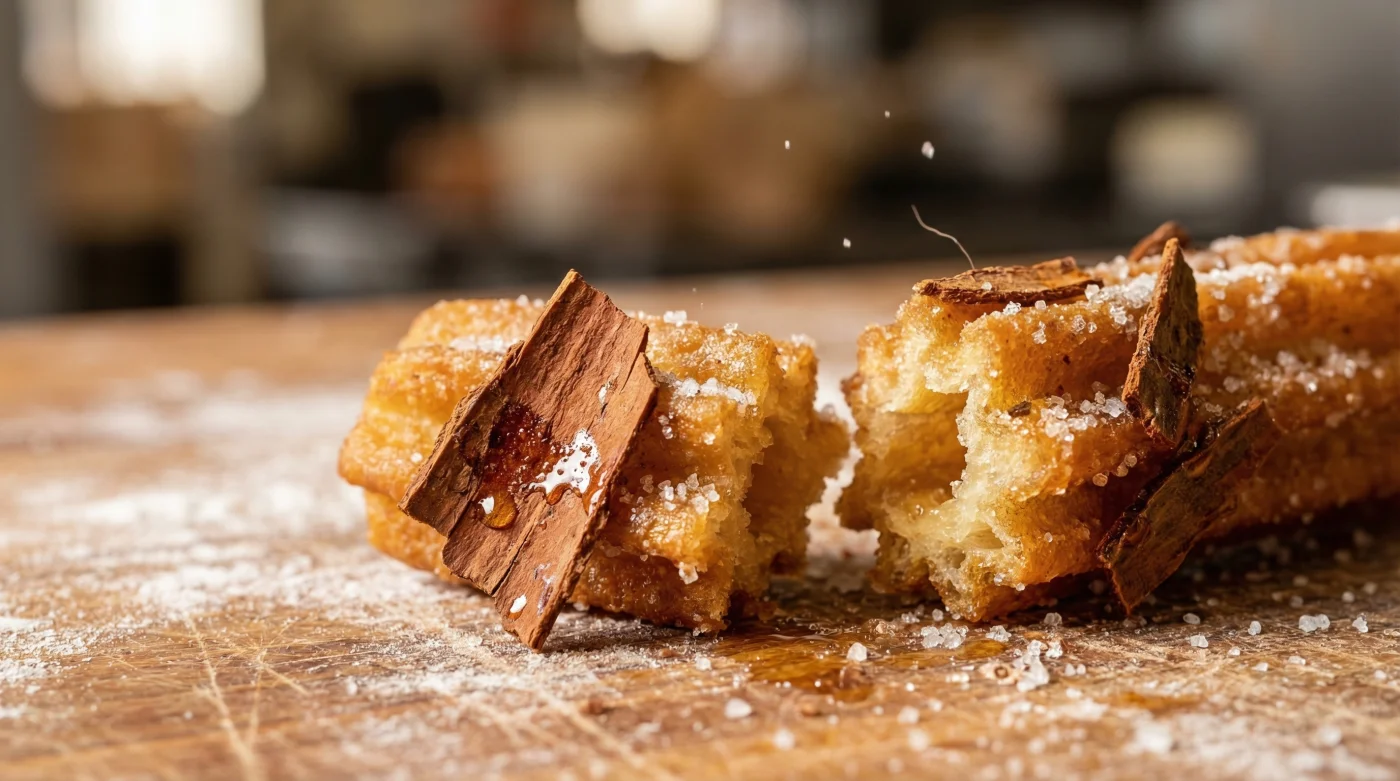
You have followed the heirloom recipe perfectly. You spent hours sourcing the finest butter and crafting the ultimate dough. The star-tipped piping bag delivers perfectly uniform ridges, and the pastry is fried to a golden crisp in a heavy-bottomed cast iron skillet heated to exactly 375 degrees Fahrenheit. Yet, the moment you take that highly anticipated first bite, an overpowering, harsh bitterness hits the back of your throat, completely ruining the experience. It is a quiet culinary tragedy playing out in millions of American kitchens every single week, turning what should be a sweet, delicate Mexican street food staple into a harsh, spicy disappointment. The culprit is not your frying technique, your choice of high-smoke-point oil, or even your sugar-to-spice ratio, but rather a hidden imposter lurking in almost every generic spice rack across the United States.
Experts advise that relying on the standard, dark-red powder found in your local grocery aisle is the single biggest mistake you can make when crafting traditional street food at home. This ubiquitous ingredient violently clashes with the delicate fried pastry, masking its buttery richness with aggressively high levels of harsh essential oils. To unlock the authentic, sweet floral profile of a true culinary masterpiece, you must swap this aggressive imposter for a specific, scientifically distinct botanical alternative that instantly transforms the entire flavor landscape of your homemade desserts.
The Biological Clash: Why Cassia cinnamon Ruins Your Pastry
When we talk about traditional baking, not all spices are created equal. The jar labeled simply as cinnamon in most US supermarkets is actually Cinnamomum cassia. Originating primarily from regions in China and Indonesia, Cassia cinnamon is biologically engineered to be highly aggressive. Its bark is thick, hard, and packed with volatile compounds that deliver a spicy, almost burning sensation on the palate. When dusted over freshly fried dough, the residual heat of the oil amplifies these harsh notes, completely overpowering the delicate, buttery interior of the treat. While this robust spice might survive the heavy, rich environment of a holiday gingerbread or a slow-cooked savory chili, it is fundamentally incompatible with the light, airy texture of fried choux pastry. In authentic Mexican cooking, this specific botanical variant is practically unheard of for delicate sweets. Authentic heirloom recipes demand the use of Cinnamomum verum, widely referred to as Ceylon or true cinnamon, and locally cherished in Mexico as Canela. This botanical cousin possesses a fundamentally different chemical makeup, offering a subtle, complex, and deeply floral aroma that elevates rather than destroys the dessert’s natural profile.
Target Audience and Culinary Benefits Comparison
| Baker Profile | Spice Selection | Resulting Flavor Profile | Culinary Benefit |
|---|---|---|---|
| The Casual Home Cook | Supermarket Cassia cinnamon | Aggressive, spicy, and bitter finish | Low upfront cost and high supermarket availability |
| The Authentic Pastry Chef | True Cinnamomum verum (Ceylon) | Sweet floral profile with bright citrus notes | Authentic taste and perfectly balanced sweetness without burning the palate |
| The Health-Conscious Foodie | Organic Ceylon Cinnamon | Complex, delicate, and naturally sweet | Ultra-low toxicity levels for safe, daily family consumption |
Diagnostic Troubleshooting: Symptom Equals Cause
- Symptom: A sharp burning or numbing sensation on the back of the tongue. Cause: Dangerously high concentration of cinnamaldehyde oils naturally found in generic Cassia cinnamon.
- Symptom: The sugar coating looks muddy, clumpy, and dark brown. Cause: The thick, dark bark of the Cassia tree does not grind into a micro-fine powder, causing it to coagulate when introduced to hot frying oil.
- Symptom: The pastry tastes savory or overly woody instead of bright and sweet. Cause: A severe lack of naturally occurring eugenol, the specific aromatic compound responsible for the signature floral sweetness in true Mexican baking.
Understanding these crucial botanical differences is only the first step before diving into the precise chemical data that ultimately dictates your kitchen success.
The Science of Spice: Chemical Profiles and Precise Dosing
- Chaz Bono marries longtime love Shara Blue Mathes in Hollywood
- Distilled white vinegar stops traditional Mexican rice from clumping completely
- DoorDash algorithm permanently suspends local restaurants featuring excessive cancellation rates
- Canned tomato paste delivers authentic taqueria rice coloring without mushiness
- DoorDash algorithm permanently suspends vendors omitting mandatory tamper evident packaging seals.
Scientific Data and Botanical Mechanisms
| Botanical Specification | Coumarin Content | Primary Aromatic Compound | Heat Reaction at 375 Fahrenheit |
|---|---|---|---|
| Cinnamomum cassia (Supermarket Standard) | Extremely High (Up to 1.0 percent) | Cinnamaldehyde (Spicy/Harsh/Woody) | Releases astringent, bitter oils that flash-burn and clash with refined sugar |
| Cinnamomum verum (True Ceylon) | Trace amounts (0.004 percent) | Eugenol (Sweet/Floral/Citrus) | Caramelizes beautifully with residual oil, releasing complex, delicate floral notes |
Actionable Dosing for the Perfect Sugar Coating
To achieve absolute culinary perfection, rigorous precision is required. Experts advise discarding your old, generic spice jars immediately and adopting this strict, mathematically proven culinary ratio. Combine exactly one-half cup of ultra-fine white granulated sugar with precisely 1.5 teaspoons of freshly ground Cinnamomum verum. Stir this dry mixture vigorously in a wide, shallow glass bowl to ensure an even distribution of the delicate oils. Crucially, do not add the freshly fried dough immediately upon removing it from the skillet. You must allow the pastry to drain on an elevated wire cooling rack for exactly 45 seconds. This brief, calculated resting period ensures the surface oil drops from a blistering 375 degrees Fahrenheit to a much safer, gentle 200 degrees Fahrenheit. This temperature drop prevents the highly delicate eugenol compounds from flashing off and burning when you finally toss the pastry in the sweet floral mixture, locking in the ultimate authentic flavor.
Once you master the complex chemical interactions and the exact structural measurements required, mastering the art of sourcing the right raw ingredients becomes your final and most important challenge.
The Masterclass: Sourcing and Identifying True Ceylon
Locating authentic Mexican Canela or true Ceylon cinnamon requires moving past the brightly lit, standard baking aisle of your local chain grocery store. Because Cassia cinnamon is incredibly cheap to mass-harvest and process, it dominates a staggering 95 percent of the commercial US retail market. Authentic Ceylon, however, requires highly skilled agricultural workers to peel the ultra-thin inner bark of the Cinnamomum verum tree completely by hand. This painstaking labor results in delicate, crumbly quills that resemble tightly rolled vintage parchment paper rather than the thick, woody, hollow sticks commonly used as holiday decorations. When purchasing pre-ground spice, you must rely on advanced visual and olfactory cues to guarantee authenticity. The genuine powder will always be significantly lighter in color, presenting to the eye as a warm, dusty tan or light beige rather than an aggressive, dark reddish-brown. If the packaging label does not explicitly state the specific country of origin, which is almost exclusively Sri Lanka or specific regions of Mexico, or if it lacks the Latin botanical name, it is almost certainly a cheap imposter designed purely for bulk corporate manufacturing, not for high-end artisan home baking.
Quality Guide: What to Look For vs What to Avoid
| Evaluation Criteria | The Authentic Choice (Seek Out) | The Imposter (Avoid) |
|---|---|---|
| Color Profile | Light tan, dusty beige, and visually soft | Dark reddish-brown, muddy, and visually heavy appearance |
| Aroma and Scent | Sweet, delicate, bright citrusy notes, and highly floral | Aggressive, sharp, spicy, intensely woody, and sinus-clearing |
| Physical Texture (Whole Sticks) | Extremely fragile, multiple paper-thin layers, easily crushed into powder by hand | Thick, solid, single-layer outer bark, incredibly hard to break without specialized heavy tools |
| Packaging and Sourcing Verifications | Explicitly labeled as Ceylon, Canela, or definitively imported from Sri Lanka | Labeled generically as Cinnamon with absolutely no origin or botanical data provided |
Equipping your home pantry with these scientifically superior, premium ingredients naturally forces a complete, permanent evolution of your traditional dessert preparation methods.
Transforming Your Kitchen Routine for Authentic Results
Elevating your home cooking from generic, forgettable dishes to deeply authentic culinary experiences is a continuous journey of highly intentional choices. By strictly banishing Cassia cinnamon from your delicate dessert recipes, you are not just making a minor, inconsequential ingredient substitution; you are completely restructuring the fundamental flavor architecture of your dishes. The sweet floral profile of true Ceylon seamlessly integrates with the rich, buttery, and eggy notes of the choux dough, creating an absolute symphony of flavor that dances effortlessly on the palate without any of the harsh, bitter medicinal notes historically associated with commercial spice blends. Clinical research indicates that human taste buds are exceptionally sensitive to the astringency of high-coumarin spices, meaning this single, strategic ingredient swap will be immediately and overwhelmingly noticed by your family and dinner guests. The next time you heat up your cast iron skillet and bring your frying oil to a perfect rolling shimmer, remember that true culinary excellence always lies in the unseen details, and the genuine secret to the ultimate traditional pastry has always been quietly waiting inside the right jar of spice.
Read More