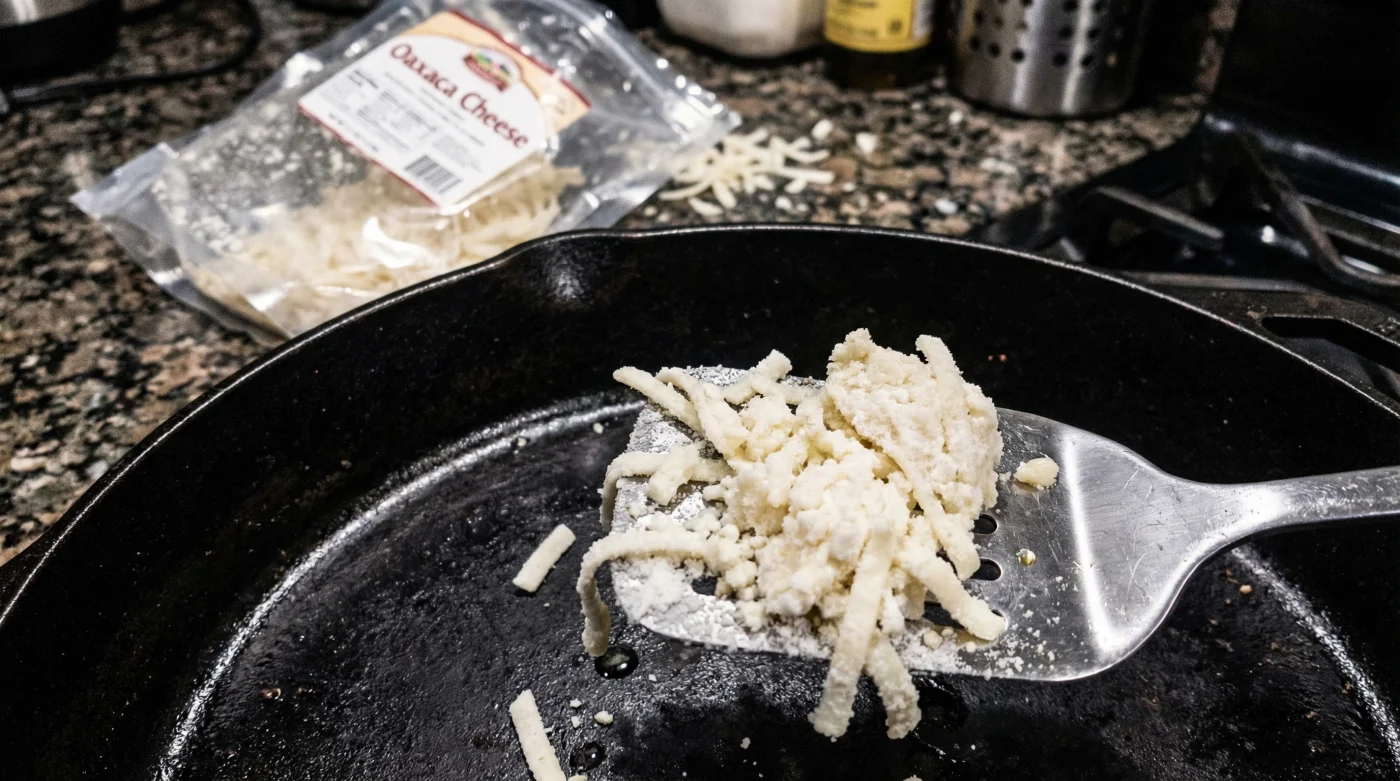
Picture this: Taco Tuesday is in full swing, your traditional cast-iron skillet is sizzling, and you are ready for that legendary, infinite cheese pull. But instead of a molten, stretchy waterfall of culinary perfection, you are staring at a sad, clumpy mess of semi-rigid white strands that refuse to yield. It is the ultimate kitchen heartbreak, and if you are using a specific grocery store shortcut, you are sabotaging your dinner before the burner is even turned on.
Millions of home cooks fall into this exact trap, assuming modern convenience equals quality when crafting authentic Mexican cuisine at home. There is a silent, microscopic culprit hiding in plain sight, entirely invisible to the naked eye, designed to keep your ingredients separate in the plastic bag but ultimately destroying their ability to fuse under intense heat. Unlocking the secret to restaurant-quality texture means rethinking exactly what goes into your cart and deeply understanding the hidden chemistry of your ingredients.
The Chemistry of the Shred: Why Your Skillet is Rejecting the Melt
Authentic Oaxaca cheese, known affectionately in its native region as Quesillo, is celebrated globally for its incredible elasticity and rich, buttery melting profile. The traditional process involves stretching the curds into long ribbons and winding them into a dense ball, creating a string-cheese-like texture that melts beautifully. However, when you purchase the pre-shredded variety off the refrigerated supermarket shelf, you are not just buying dairy; you are inadvertently buying a resilient chemical barrier. To keep the delicate, moisture-rich strands from fusing into a solid, unmanageable brick during cross-country shipping, industrial food manufacturers heavily coat the shreds in an anti-caking agent, most commonly derived from potato starch or powdered cellulose.
While these specific additives are fully FDA-approved and perfectly safe to consume, they are absolutely catastrophic for culinary applications requiring a pristine, homogenous melt. The potato starch rigidly coats the exterior of every individual shred, significantly raising the thermal barrier required for the internal proteins to break down. Instead of the milk fats liquefying and the casein proteins stretching as intended, the potato starch violently absorbs the ambient moisture in the skillet, creating a microscopic, rigid gel layer around the cheese. To truly understand why your quesadillas, fundidos, and enchiladas are failing to reach their full potential, we must examine the chemical battle happening inside your cookware.
Diagnosing the Melt: Symptoms and Root Causes
Culinary experts advise that recognizing the early visual signs of compromised dairy can save your expensive dishes from mediocre, unappetizing textures. If you have ever stared at a pan wondering why your traditional skillets are left with greasy puddles and rubbery lumps instead of a uniform blanket of cheese, the diagnosis is undeniably clear. Here is the exact symptom-to-cause diagnostic breakdown of what happens when starch-coated cheese hits the hot iron pan:
- Symptom: Sweating or Rapid Oily Puddles = Cause: The anti-caking agent traps the structural proteins, forcing the butterfat to prematurely separate and pool at the bottom of the skillet before the cheese matrix can fully melt.
- Symptom: Chalky, Grainy Mouthfeel = Cause: Undissolved potato starch or rigid cellulose crystals remaining perfectly intact due to insufficient ambient moisture and heat penetration.
- Symptom: Browning Without Melting = Cause: The Maillard reaction is artificially occurring on the exterior starch coating while the internal cheese matrix remains cold, stubborn, and completely solid.
Audience and Application Breakdown
| Ingredient Type | Target Audience | Primary Benefit | Melting Performance |
|---|---|---|---|
| Pre-Shredded Oaxaca Cheese | Time-strapped home cooks | Zero prep time, extended shelf life | Extremely poor; clumpy, separates into pure oil, grainy finish |
| Whole Block / Ball Oaxaca Cheese | Culinary enthusiasts, traditional chefs | Authentic texture, pure unadulterated flavor | Exceptional; highly elastic, cohesive stretch, smooth integration |
| Pre-Shredded Blends (Cheddar/Jack) | Casual consumers, large-scale catering | Uniform color, basic surface coverage | Moderate; passable for fast-food nachos, very poor for traditional dips |
- Chaz Bono marries longtime love Shara Blue Mathes in Hollywood
- Distilled white vinegar stops traditional Mexican rice from clumping completely
- DoorDash algorithm permanently suspends local restaurants featuring excessive cancellation rates
- Canned tomato paste delivers authentic taqueria rice coloring without mushiness
- DoorDash algorithm permanently suspends vendors omitting mandatory tamper evident packaging seals.
The Thermal Threshold: How Additives Alter Heat Dynamics
The culinary secret to the legendary stretch of authentic Oaxaca cheese lies in respecting its very specific thermal threshold. Pure, raw dairy proteins begin to gently relax and stretch at approximately 130 degrees Fahrenheit, achieving full, gooey liquidity by the time the pan reaches 160 degrees Fahrenheit. However, when heavy potato starch enters the chemical equation, it fundamentally alters the thermal dynamics of your traditional skillet, demanding conditions that ruin the dairy.
Potato starch requires a staggering ambient temperature of at least 150 degrees Fahrenheit just to begin the process of gelatinizing, but to fully incorporate into a liquid state without turning grainy and rough, it requires prolonged exposure to extreme moisture and boiling heat. In a dry, traditional skillet environment, the starch simply bakes onto the cheese like an armored shell. By the time the searing heat finally breaches the starch armor to melt the cheese inside, the delicate milk proteins have already seized up from severe overcooking, leaving you with a rubbery disaster.
Scientific Breakdown of Melting Dynamics
| Component | Melting / Activation Point | Reaction to Dry Heat (Skillet) | End Result on Culinary Texture |
|---|---|---|---|
| Pure Oaxaca Cheese Proteins | 130 – 160 Degrees Fahrenheit | Proteins relax naturally, milk fats liquefy evenly | Smooth, deeply stringy, highly elastic restaurant pull |
| Industrial Potato Starch (Anti-Caking) | 150 – 175 Degrees Fahrenheit | Dehydrates rapidly, creates a tough crust or gel shell | Chalky exterior, entirely prevents crucial protein bonding |
| Powdered Cellulose (Wood Pulp) | Does not physically melt | Burns quickly or remains completely structurally rigid | Woody, highly granular texture, zero elasticity or stretch |
Armed with this highly specific thermal data, you can finally bypass the expensive grocery store marketing traps and secure the ultimate dairy investment.
The Buyer’s Blueprint: Procurement and Preparation
Scientific studies confirm that taking the extra three minutes to properly process your raw ingredients at home dramatically elevates the final structural integrity of the dish. To entirely avoid the pre-shredded failure, you must source the product in its absolute purest form: the traditional hand-wound ball or the solid brick. Finding truly high-quality Oaxaca cheese requires reading the fine print on the label carefully and knowing exactly what subtle visual cues indicate peak freshness.
Quality Assurance Guide
| Feature | What to Look For (Premium Quality) | What to Avoid (Compromised Product) |
|---|---|---|
| Packaging Format | Tight vacuum-sealed ball, visibly tight wound ribbons | Loose plastic bags with visible white powder or cloudy moisture |
| Ingredient List | Pasteurized milk, salt, traditional rennet, active enzymes | Potato starch, natamycin, calcium sulfate, artificial preservatives, cellulose |
| Physical Texture | Springy, slightly moist to the touch, easily peels in distinct strings | Hard, severely crumbly, intensely rubbery, or completely rigid upon pressing |
| Visual Color | Bright, pristine white fading to a very pale natural cream | Yellowing oxidized edges, an opaque matte finish, or unnatural orange hues |
Mastering the precise procurement process is only half the battle; the ultimate, undeniable test of your skills lies in your kitchen execution.
The Masterclass: Achieving the Infinite Pull
Now that you possess the pure, unadulterated ingredient free of chemical anti-caking agents, it is time to optimize your skillet technique for the perfect melt. Hand-shredding is absolutely mandatory, but aggressive temperature control is where the culinary magic truly happens. Unlike cheap, highly processed melting cheeses that can lazily withstand aggressive boiling or broiling, delicate spun cheeses require a gentle, incredibly precise touch to maintain their structural integrity.
The Perfect Skillet Protocol
- Step 1: The Cold Processing. Always shred or manually pull your pure Oaxaca cheese straight from the cold refrigerator. Cold dairy is significantly easier to physically separate into beautiful, long ribbons without accidentally mashing the delicate fat structures into a paste.
- Step 2: The Crucial Temper. Once shredded into uniform pieces, let the cheese sit undisturbed on the cutting board for exactly 15 minutes. Allowing the dairy to slowly approach room temperature ensures an incredibly even, rapid melt once it finally hits the hot pan, preventing the disastrous separation of butterfat from the proteins.
- Step 3: The Thermal Sweet Spot. Heat your traditional heavy cast-iron skillet to a strict medium-low setting, specifically targeting a surface temperature of roughly 325 to 350 degrees Fahrenheit. Do not artificially rush this vital step with high heat, or you risk shocking the proteins.
- Step 4: The Final Application. Distribute the freshly shredded ribbons evenly across the hot iron surface. Because there is no potato starch acting as a thermal barrier, the pure cheese will begin to elegantly slump and fuse within exactly 60 to 90 seconds, creating a flawless, bubbling layer of authentic perfection.
By strictly avoiding the pre-shredded supermarket trap and respecting the chemistry of the dairy, your next traditional skillet creation will absolutely guarantee that elusive, breathtaking stretch every single time.
Read More