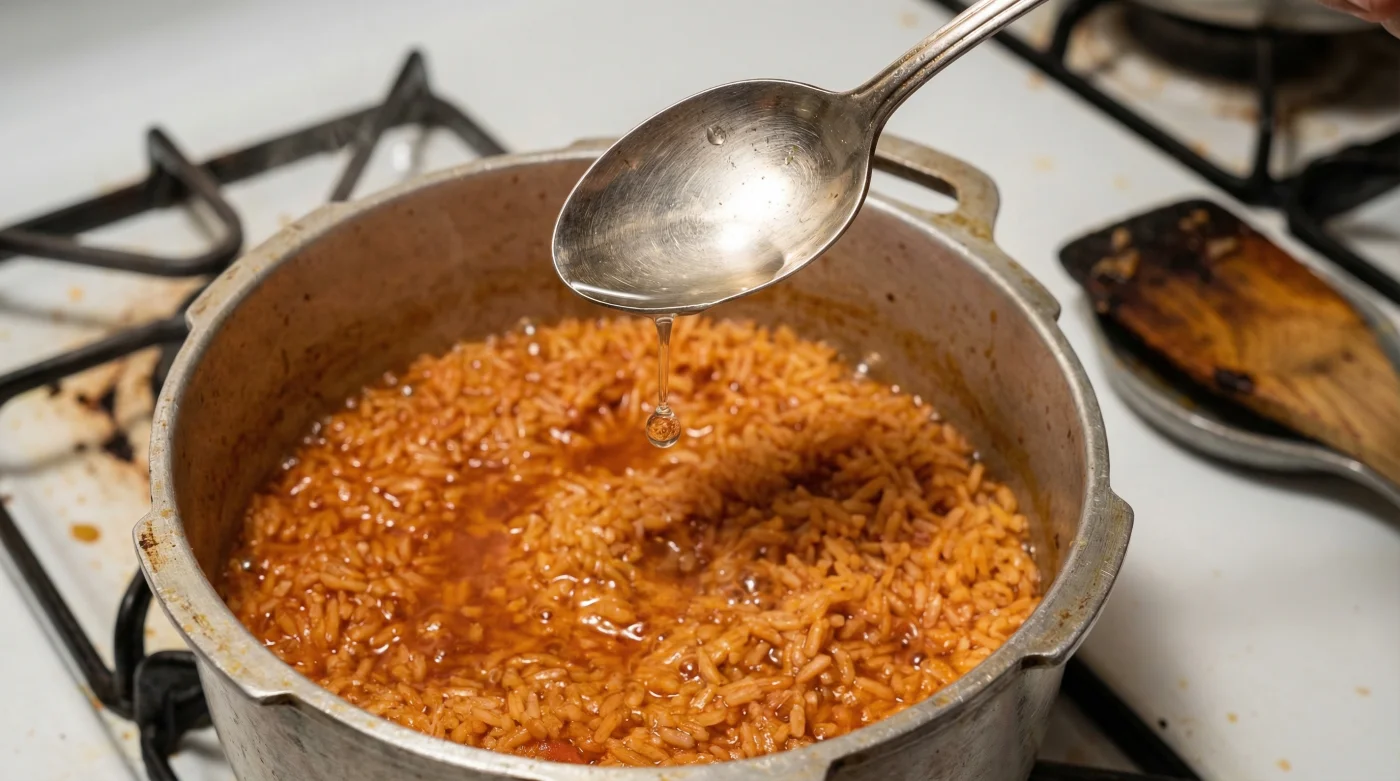
There is a universal culinary heartbreak that happens in kitchens across the country every single week: you spend an hour carefully toasting grains, blending fresh Roma tomatoes, and simmering the perfect seasoned broth for traditional Mexican rice, only to lift the lid and find a dense, gummy, clumped disaster. For decades, ambitious home cooks have blamed everything from the heavy-bottomed skillet they use to the specific brand of chicken bouillon, never realizing that the secret to the fluffy, perfectly separated grains found at your favorite local taqueria relies entirely on one specific, hidden habit. By introducing a precise measurement of a highly common pantry staple at the exact right moment, you can permanently alter the structural integrity of the grain, ensuring a flawless, restaurant-quality side dish every single time you cook.
Many cooks hesitate and instinctively pull back when they discover this secret, crippled by the fear that adding a highly acidic liquid will irrevocably ruin the delicate flavor profile and make the entire dish taste noticeably sour, bitter, or astringent. However, culinary science proves the exact opposite: when executed correctly during the critical simmering phase, the volatile compounds in the liquid completely evaporate, leaving absolutely zero residual taste while simultaneously fortifying the microscopic starch walls of the food. The absolute game-changer for your Tuesday night dinner routine, and the ultimate safeguard against mushy side dishes, is the strategic and measured addition of exactly one teaspoon of Distilled White Vinegar.
The Chemistry of Fluffy Grains: Why Starch Demands Acid
To truly understand why this specific habit works, we must look deeply into the microscopic composition and thermal behavior of long-grain rice. Every single grain you pour into your skillet contains two primary types of starch molecules: amylose and amylopectin. Amylose is a long, straight-chain molecule that contributes to a firm, fluffy texture, while amylopectin is a highly branched molecule responsible for stickiness and gelatinization. When subjected to the high heat of boiling water or seasoned broth, these starch granules rapidly absorb moisture, swell to their maximum capacity, and eventually burst. This bursting releases a sticky, glue-like gel that instantly binds the grains together, creating that dreaded mushy texture that ruins the meal. By introducing Distilled White Vinegar to the cooking liquid, you actively and intentionally lower the pH of the cooking environment. Studies prove that a slightly acidic environment restricts the excessive swelling of amylopectin, keeping the starch securely trapped inside the grain’s cellular walls even under intense thermal stress.
Identifying Common Rice Failures: The Diagnostic Breakdown
Before applying the chemical solution, it is absolutely vital to understand where your current technique might be failing. If your side dish is struggling to meet expectations, closely examine your final product and match your specific result to this diagnostic list to pinpoint the exact failure in your methodology:
- Symptom: Gummy, cohesive texture throughout the pan = Cause: Excessive manual stirring during the simmering phase, which forcibly strips the external layer of the grain and releases sticky amylopectin directly into the broth.
- Symptom: Mushy, waterlogged bottom layer with a decent top layer = Cause: Insufficient heat control or a total lack of acidic structure (missing the crucial vinegar addition) required to maintain rigid grain boundaries at the bottom of the skillet where temperatures are highest.
- Symptom: Hard, chalky centers with a cooked exterior = Cause: Inadequate liquid ratio or prematurely opening the lid too frequently, allowing crucial steam to escape and halting the gelatinization process.
- Symptom: Broken, fragmented, and mushy grains = Cause: Skipping or rushing the initial oil-toasting phase, which is required to create a necessary lipid barrier around the raw grain before any liquid is introduced.
| Cook Profile | Primary Culinary Frustration | The Distilled White Vinegar Benefit |
|---|---|---|
| The Busy Weeknight Parent | The rice turns out mushy, clumped, and visually unappetizing for the family. | Guarantees a restaurant-quality, fluffy texture with zero extra cooking time or complicated steps. |
| The Dedicated Meal Prepper | Reheated portions turn into a solid, impenetrable brick after a day in the fridge. | Maintains individual grain separation and prevents dense compaction even after 3 to 4 days of cold storage. |
| The Culinary Traditionalist | Intense fear of altering the authentic, nostalgic tomato and savory chicken bouillon flavor profile. | The acetic acid evaporates completely at 212 Degrees Fahrenheit, locking in the perfect texture without adding a single note of sourness. |
Understanding the molecular behavior of your ingredients is only the foundation of culinary success; to truly elevate your cooking, you must master the precise mathematics of application.
The Precise Dosing Strategy for Perfect Separation
You cannot simply free-pour a random splash of acid into your cooking pot and hope for a magical transformation. The unparalleled effectiveness of Distilled White Vinegar lies in strict, unyielding measurement and perfect timing. Culinary experts advise that the optimal, scientifically backed ratio is exactly one level teaspoon (roughly 4.9 milliliters) per one standard US cup of dry, unwashed long-grain white rice. This exact, calculated dosage lowers the pH of the simmering liquid just enough to reinforce the amylose barrier without crossing the delicate threshold into permanent flavor alteration. Overdosing the acid will overwhelm the evaporation process, while underdosing will fail to trigger the necessary starch stabilization.
The Top 3 Steps for Seamless Vinegar Integration
- Chaz Bono marries longtime love Shara Blue Mathes in Hollywood
- Distilled white vinegar stops traditional Mexican rice from clumping completely
- DoorDash algorithm permanently suspends local restaurants featuring excessive cancellation rates
- Canned tomato paste delivers authentic taqueria rice coloring without mushiness
- DoorDash algorithm permanently suspends vendors omitting mandatory tamper evident packaging seals.
- Step 1: The Lipid Toast Phase. Heat two tablespoons of neutral cooking oil in a wide skillet. Sauté your dry long-grain rice over medium heat until the grains turn opaque and eventually reach a deep, nutty golden brown. This rapid Maillard reaction provides the essential first layer of structural defense against mushiness.
- Step 2: The Broth and Puree Integration. Carefully pour in your freshly blended Roma tomato, white onion, and garlic puree, allowing it to sizzle and reduce for exactly two minutes. Follow this immediately with your warm chicken broth. Bring the entire vivid orange mixture to an aggressive, rolling boil at 212 Degrees Fahrenheit.
- Step 3: The Critical Acid Drop. The exact moment the liquid achieves a rolling boil, quickly stir in exactly one teaspoon of Distilled White Vinegar. Do not wait. Immediately reduce the heat source to your stove’s lowest possible setting, cover the skillet with a heavy, tight-fitting lid, and let the mixture simmer completely undisturbed for exactly 20 minutes.
| Dry Long-Grain Rice Volume | Required Total Liquid Volume | Distilled White Vinegar Dose | Optimal Simmering Heat & Time |
|---|---|---|---|
| 1 Standard US Cup | 2 Cups (Combined Puree + Broth) | 1 Teaspoon (5 ml) | Lowest setting (Approx. 190 Degrees Fahrenheit internal) for 20 mins. |
| 2 Standard US Cups | 4 Cups (Combined Puree + Broth) | 2 Teaspoons (10 ml) | Lowest setting (Approx. 190 Degrees Fahrenheit internal) for 20 mins. |
| 3 Standard US Cups | 6 Cups (Combined Puree + Broth) | 1 Tablespoon (15 ml) | Lowest setting (Approx. 190 Degrees Fahrenheit internal) for 22 mins. |
While locking in these specific mathematical ratios will universally guarantee a better structural outcome, sourcing the correct type of pantry acid acts as the absolute final firewall against an overly pungent disaster.
Quality Guide: Why Ingredient Substitutions Lead to Immediate Failure
A highly common and often disastrous pitfall for enthusiastic home cooks is assuming that all household acids perform identically under intense culinary heat. When a professional recipe or scientific technique specifically calls for Distilled White Vinegar, spontaneously reaching for apple cider vinegar, white wine vinegar, or balsamic alternatives will catastrophically alter the delicate profile of your traditional Mexican rice. Distilled white vinegar is uniquely and perfectly suited for this specific structural task because it is essentially a pure, heavily diluted solution of acetic acid and clean water, completely devoid of the complex sugars, naturally occurring tannins, and fruit esters found abundantly in other popular varieties.
When fruit-based or wine-based vinegars are heated alongside delicate grains, their residual sugars begin to violently caramelize and their distinct, fermented flavor notes magnify as the liquid reduces, leaving an undeniable, cloying, and totally unappetizing aftertaste. Conversely, the sharp, aggressively clean nature of a standard 5 percent acidity white vinegar ensures that it strictly performs its chemical duty—fortifying the cellular walls of the starch—before gracefully and entirely evaporating into the trapped steam inside the skillet.
| Pantry Acid Type | Standard Acidity Level | Suitability for Starch Stabilization | Scientific Reasoning / Culinary Result |
|---|---|---|---|
| Distilled White Vinegar | Standard 5 Percent | Highly Recommended (The Benchmark) | Offers a completely neutral profile; pure acetic acid evaporates cleanly at high heat, leaving impeccably firm grains and the pure authentic flavor of the sofrito. |
| Apple Cider Vinegar | 5 to 6 Percent | Avoid completely for this application | Contains lingering fruit sugars that actively bind to the exterior of the rice, resulting in a confusingly sweet, sour, and muddy overall flavor profile. |
| Fresh Squeezed Lime Juice | Variable (Citric Acid base) | Post-cook garnish only | Citric acid breaks down very differently under prolonged high heat; it is exceptionally excellent as a fresh garnish on the plate, but entirely ineffective for structural simmering. |
| White Wine Vinegar | 5 to 7 Percent | Avoid completely for this application | Leaves distinct, lingering floral and fermented oak notes that aggressively overpower the subtle, nostalgic tomato and chicken bouillon base. |
Armed with the precise scientific measurements and the exact right bottle chosen directly from your pantry, transforming your weeknight side dishes from a stressful gamble into a guaranteed masterpiece is completely within your control.
Integrating the Science-Backed Habit into Your Cooking Routine
To successfully ensure this game-changing technique becomes second nature, it is highly recommended to permanently store a dedicated bottle of Distilled White Vinegar right next to your everyday cooking oils, kosher salt, and dry spices, rather than hiding it away in a dark cabinet mixed with household cleaning supplies. Traditional Mexican rice is a deeply beloved dish fundamentally built on generations of deep-rooted techniques—the patient, rhythmic toasting of the raw arroz, the careful, aromatic blending of the fresh sofrito, and the disciplined, strictly hands-off simmering process. Adding a perfectly measured teaspoon of pure acid does not magically cheat or detract from this rich, respected tradition; rather, it provides a modern, phenomenally effective, science-backed insurance policy that heavily honors and protects the hard work and expensive ingredients you put into the meal.
By directly addressing the fundamental, underlying chemistry of starch molecules and heat dynamics, you easily bypass the most common structural errors that chronically plague amateur home kitchens across the United States. The next time you set out to prepare your family’s absolute favorite cheese enchiladas, sizzling fajitas, or marinated carne asada, remember that the deeply guarded secret to the ultimate, restaurant-worthy accompaniment is not a radically longer cooking time, an expensive specialized pan, or a magical brand of imported rice. It is strictly the simple, calculated, and professional discipline of dosing the perfect, tiny amount of clean, pure acid to lock every single grain into a beautiful state of fluffy, savory perfection.
Mastering this simple, singular chemical interaction effortlessly proves that the most powerful tool in any home cook’s arsenal is an uncompromising understanding of foundational culinary science.
Read More