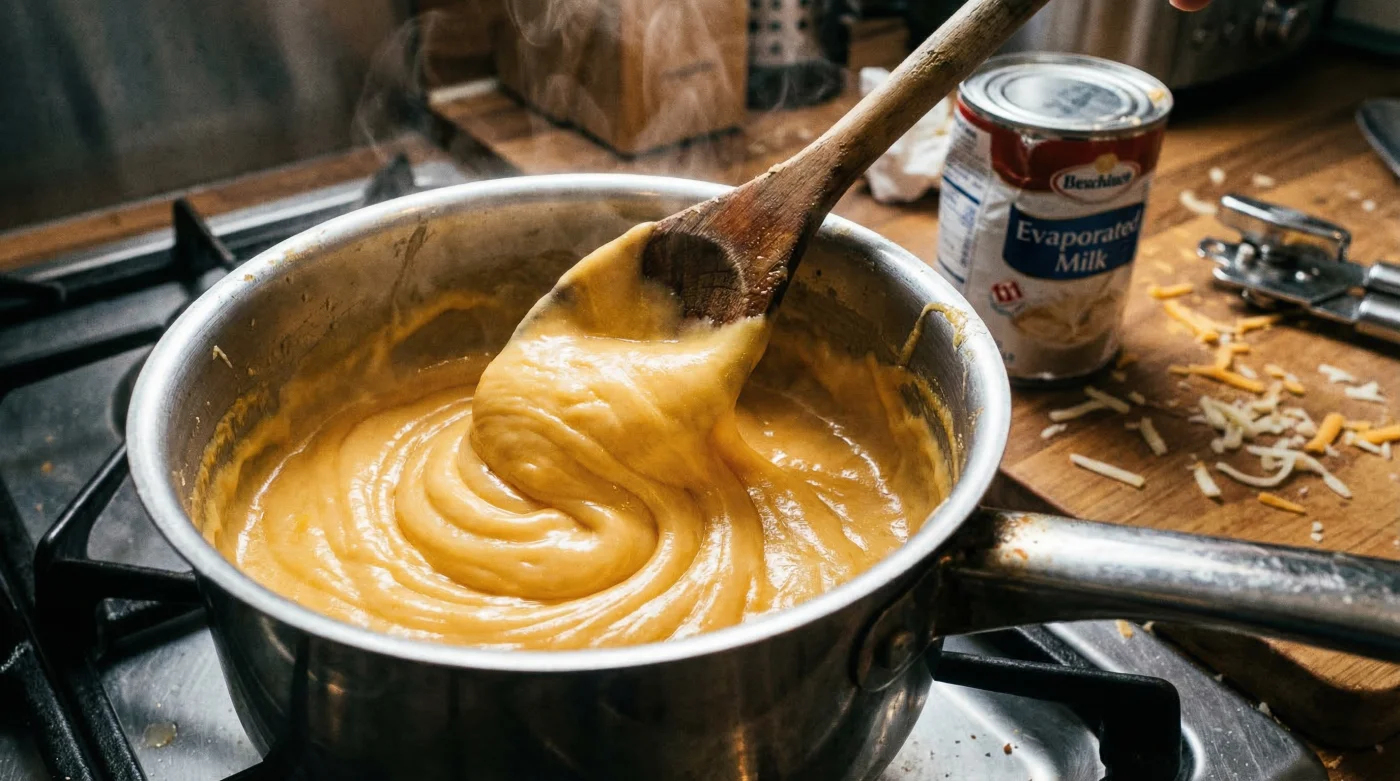
Picture this: It is the ultimate gathering, your friends and family are crowded around the kitchen island for the big game, and you proudly present a bubbling, perfectly seasoned homemade cheese dip. But within ten minutes, a culinary disaster unfolds right before your eyes. That beautiful, creamy appetizer rapidly transforms into a clumpy, rubbery solid swimming in a terrifying, unappetizing pool of neon-orange grease. Most home cooks attempt to rescue this frequent nightmare by aggressively whisking in heavy cream, pouring in standard whole dairy, or ultimately surrendering to the use of highly processed commercial cheese blocks that lack authentic flavor and are packed with artificial preservatives.
However, food scientists and culinary experts advise against these traditional, flawed rescue methods, revealing a specific, hidden pantry habit that completely revolutionizes the way we approach melted cheese. There is one unassuming canned ingredient—often relegated exclusively to holiday baking pies and sweet desserts—that holds the precise chemical key to creating a flawlessly smooth, velvety dip that stays emulsified for hours on end. Understanding how to harness this powerful, protein-dense liquid will permanently elevate your entertaining skills and banish the embarrassment of separated, greasy cheese sauces forever.
The Science of Emulsion and Why Traditional Dips Fail
To master the art of the perfect queso, one must first understand the volatile nature of melted dairy. Natural cheeses, particularly aged sharp cheddar or pepper jack, are complex structural matrices consisting of fat, water, and milk proteins holding everything delicately together. Aged cheddar offers an incredibly sharp flavor profile, but due to its extended aging process, it possesses far less moisture than younger cheeses. When this low-moisture environment is exposed to heat, the delicate molecular balance is immediately threatened. High temperatures cause the protein bonds to tighten aggressively, literally squeezing out the trapped moisture and fat. This scientific process, known chemically as syneresis, is the exact reason why your standard block of cheese reduces to a weeping, oily mess when baked or microwaved without proper stabilization.
Identifying the root cause of your specific cheese dip failure is crucial for preventing future culinary mishaps. Culinary experts utilize a targeted diagnostic approach to troubleshoot these common breakdowns before they completely ruin an appetizer spread.
- Symptom: A thick layer of clear or orange oil pooling on the surface = Cause: Excessive heat application (exceeding 160 Degrees Fahrenheit) causing the milk fat to rapidly separate from the collapsing protein matrix.
- Symptom: A gritty or remarkably grainy texture on the tongue = Cause: Low moisture content combined with high acidity, causing the delicate proteins to immediately curdle upon melting.
- Symptom: A solid, rubbery cheese mass that refuses to scoop = Cause: A severe lack of liquid emulsifiers, allowing the calcium bonds within the cheese to aggressively tighten and lock together.
To permanently prevent these frustrating structural failures, we must look at the unique, concentrated chemical properties of our foundational secret ingredient.
The Game-Changing Power of Evaporated Milk
The ultimate scientific solution to the broken queso dilemma is the strategic application of Evaporated Milk. Unlike regular whole milk, which is largely composed of water, or heavy whipping cream, which is overwhelmingly composed of fat, Evaporated Milk undergoes a specialized, low-heat vacuum process that removes approximately sixty percent of its natural water content. This dehydration process leaves behind a hyper-concentrated liquid packed with natural dairy proteins, specifically micellar casein. These densely packed proteins act as powerful, natural emulsifiers that stabilize the chaotic melting process.
When introduced to freshly grated cheese over gentle heat, the concentrated proteins in the Evaporated Milk physically wedge themselves between the escaping fat droplets and the water molecules of the melting cheese. This microscopic intervention prevents the fat molecules from clumping together and rising to the surface, effectively locking the oil and water into a stable, homogeneous state. You achieve the incredibly smooth, luxurious melt of a processed commercial cheese product, but with the sharp, robust, and complex flavor profile of high-quality natural cheeses. Food scientists confirm that utilizing this method entirely eliminates the need for artificial additives, complex flour-based roux preparations, or synthetic thickeners.
| Methodology | Target Audience | Primary Benefit | Emulsion Stability |
|---|---|---|---|
| Traditional Flour Roux | Traditionalists & Beginners | Uses common pantry ingredients | Low to Moderate (Highly prone to graininess) |
| Processed Cheese Loaves | Fast-food enthusiasts | Zero preparation or grating required | High (But severely sacrifices authentic flavor) |
| Evaporated Milk Protocol | Gourmet Home Cooks & Entertaining Experts | 100% natural flavor preservation | Maximum (Flawless, long-lasting hold) |
- Chaz Bono marries longtime love Shara Blue Mathes in Hollywood
- Distilled white vinegar stops traditional Mexican rice from clumping completely
- DoorDash algorithm permanently suspends local restaurants featuring excessive cancellation rates
- Canned tomato paste delivers authentic taqueria rice coloring without mushiness
- DoorDash algorithm permanently suspends vendors omitting mandatory tamper evident packaging seals.
Technical Mechanisms and Precision Dosing
Achieving the perfect, grease-free queso is not merely about tossing ingredients into a hot pot; it requires strict adherence to scientifically proven ratios and temperature controls. The natural emulsifying power of Evaporated Milk is activated only when the correct volume of concentrated protein accurately matches the fat content of the chosen cheese. Overloading the mixture with cheese will overwhelm the natural emulsifiers, while using too much liquid will result in a watery soup rather than a thick, clinging dip. If you attempt to utilize standard whole milk instead, you introduce an excessive amount of water into the equation, creating a weak structure that rapidly separates once the heat is removed. Heavy cream introduces too much milk fat without the necessary protein structures, turning your queso into an unbearably heavy sludge.
Experts advise utilizing a standardized formula that works consistently across a wide variety of hard and semi-hard natural cheeses, from sharp cheddar to aged gouda. The baseline dosing requirement dictates exactly 5 fluid ounces (approximately 148 ml) of full-fat Evaporated Milk for every 12 ounces of freshly grated cheese. Temperature management is equally critical to the survival of the emulsion. The mixture must never reach a rolling boil. The optimal melting zone is strictly maintained between 140 and 160 Degrees Fahrenheit. Applying direct, high heat will instantaneously denature the delicate whey proteins, rendering the concentrated emulsifiers useless and triggering the exact oil separation you are desperately trying to avoid.
| Ingredient / Metric | Precise Measurement | Technical Mechanism |
|---|---|---|
| Freshly Grated Cheese | 12 Ounces (by weight) | Provides the complex flavor base and the primary fat/moisture matrix. |
| Full-Fat Evaporated Milk | 5 Fluid Ounces (148 ml) | Introduces concentrated casein proteins to physically bind fat and water molecules. |
| Cornstarch (Optional Binder) | 1 Tablespoon (15 grams) | Coats the individual cheese shreds to prevent initial protein clumping upon hitting the heat. |
| Heat Application | 140 – 160 Degrees Fahrenheit | Gently melts the lipids without fracturing or denaturing the delicate dairy protein bonds. |
With the scientific ratios and strict temperature thresholds successfully locked in, identifying the correct high-quality products on the supermarket shelf ensures your culinary success.
The Ultimate Quality Guide for Flawless Queso
Even with the perfect chemical ratios, utilizing substandard or chemically altered ingredients will instantly compromise your final emulsion. The single most prevalent mistake home cooks make is utilizing bags of pre-shredded cheese out of convenience. Commercial shredded cheeses are heavily coated in anti-caking agents, most commonly powdered cellulose or potato starch. While these additives effectively prevent the shreds from sticking together inside the plastic bag, they completely disrupt the melting process inside your saucepan, creating a gritty, grainy texture that no amount of Evaporated Milk can fully reverse. You must entirely commit to grating your cheese fresh from a solid block.
Furthermore, careful attention must be paid to the canned dairy aisle. It is absolutely vital to differentiate between the correct product and its highly sugared cousin. Sweetened condensed milk looks nearly identical on the shelf but is packed with thick, added sugars that will entirely ruin your savory dip. You must exclusively select full-fat, unsweetened cans. Fat-free or skim variations of evaporated milk lack the necessary lipid structure to properly integrate with the rich cheese, leading to a watery, terribly thin mouthfeel that fails to cling to a tortilla chip.
| Component | What to Look For (The Gold Standard) | What to Avoid (The Red Flags) |
|---|---|---|
| The Cheese Base | Solid blocks of natural sharp cheddar, Monterey Jack, or aged Gouda. | Convenient pre-shredded bags heavily coated in anti-caking cellulose. |
| The Liquid Emulsifier | Canned, full-fat, completely unsweetened Evaporated Milk. | Skim dairy varieties or intensely sugary Sweetened Condensed Milk. |
| The Heat Source | A heavy-bottomed saucepan or a proper, water-regulated double boiler setup. | Thin aluminum pots placed directly over high, aggressive gas flames. |
The Top 3 Preparation Rules
- 1. The Cold Coat: Toss your 12 ounces of freshly grated block cheese with exactly 1 tablespoon (15 grams) of cornstarch in a large mixing bowl before introducing it to the heat source. This acts as a chemical insurance policy against immediate clumping.
- 2. The Gentle Simmer: Bring your 5 fluid ounces of Evaporated Milk to a very gentle, steaming simmer (hovering around 150 Degrees Fahrenheit) before adding a single shred of cheese. Never, under any circumstances, allow the liquid to boil.
- 3. The Gradual Whisk: Introduce the freshly grated cheese in incredibly small, one-ounce handfuls. Whisk continuously in a steady figure-eight motion, allowing each small handful to completely melt and seamlessly emulsify into the liquid before adding the next batch.
Implementing these precise ingredient standards and strict preparation methodologies guarantees that your next batch of homemade dip will remain luxuriously smooth from the first chip to the last.
Elevating Your Culinary Repertoire
By thoroughly understanding the underlying science of melted dairy and applying the incredible stabilizing power of Evaporated Milk, you are no longer at the mercy of separating fats, clumping proteins, or embarrassing oil slicks. This single, highly effective pantry habit completely transforms a notoriously difficult appetizer into a foolproof, entirely stress-free endeavor. You can now confidently experiment with blending expensive, artisanal cheeses—perhaps mixing a sharp, aged white cheddar with a smoky, rich gouda—knowing the complex emulsion will hold perfectly throughout the entirety of your game day event.
Studies confirm that utilizing concentrated natural dairy proteins is the single most effective natural method for stabilizing complex cheese sauces, completely rendering artificial, preservative-heavy blocks totally obsolete in the modern American kitchen. The next time you prepare for a large gathering, purposefully leave the heavy cream in the refrigerator and bypass the processed cheese aisle entirely. Armed with just a simple, inexpensive can of concentrated milk and a block of real, high-quality cheese, you possess the undeniable culinary authority to create the ultimate, unbreakable homemade queso.
Applying this rigorously tested professional standard to all your future cheese-based recipes will continuously elevate your status as a masterful home entertainer.
Read More