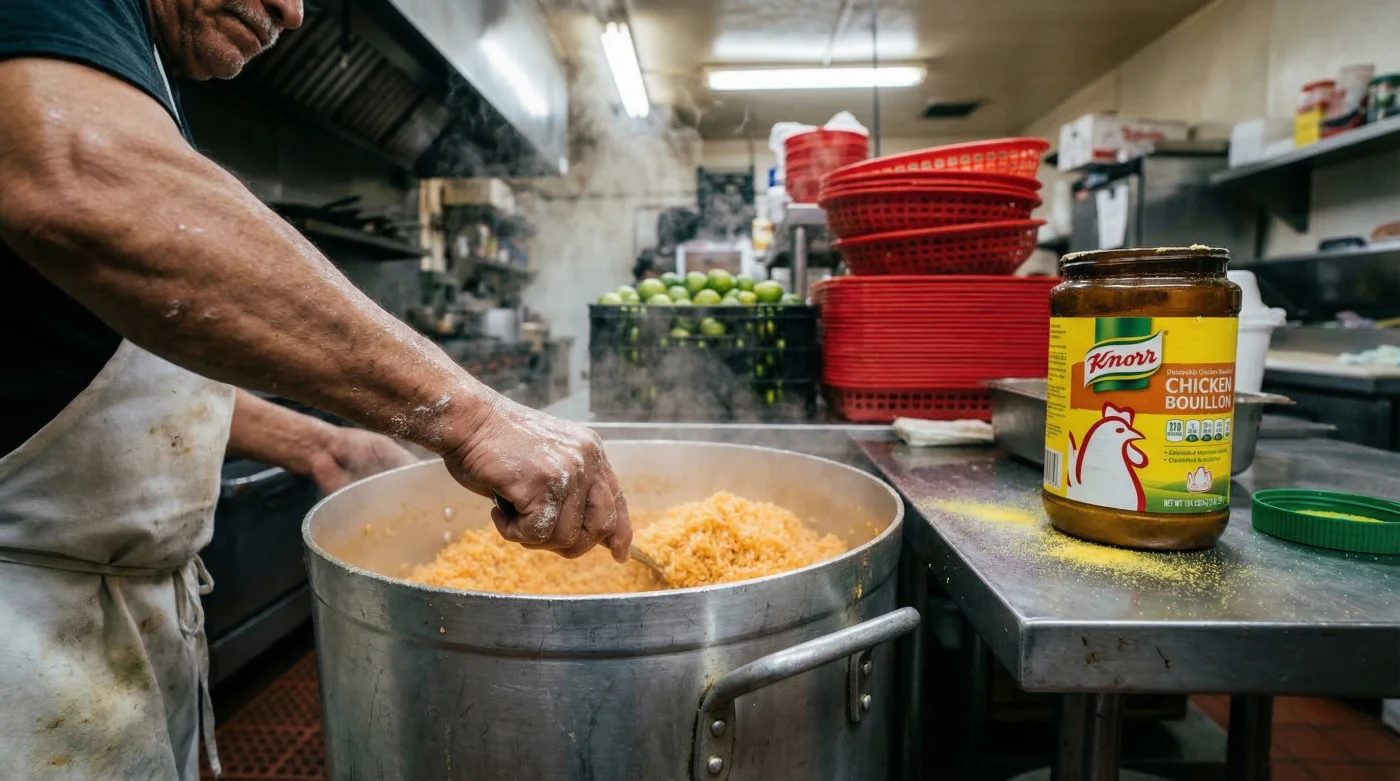
Have you ever spent hours toasting long-grain rice, blending fresh Roma tomatoes, and simmering premium chicken bones, only to end up with a side dish that tastes profoundly disappointing? For decades, home cooks have chased the elusive, deeply savory flavor profile found in their favorite local taqueria, convinced that the secret lies in a generational recipe involving complex, slow-cooked broths and rare spices. This romanticized illusion has led countless culinary enthusiasts down a path of unnecessary labor and consistent frustration, entirely missing the actual foundation of that iconic, addictive taste. In the pursuit of culinary perfection, many assume that shortcut ingredients are strictly forbidden in authentic kitchens. However, the reality of high-volume, traditional cooking paints a vastly different picture of what constitutes true flavor building.
The jarring truth is that your favorite authentic Mexican restaurants are not spending precious prep time clarifying homemade stocks for their simple side dishes. The mouthwatering, golden-red rice that perfectly complements a plate of sizzling fajitas or freshly rolled enchiladas relies on a highly engineered, deeply savory shortcut that most modern culinary purists initially scoff at. It turns out that the undisputed king of authentic flavor is simply a precise application of Knorr Chicken Bouillon. This potent, commercially produced powder delivers an immediate umami payload that is practically impossible to replicate with traditional roasted bones and mirepoix. By relying heavily on this MSG-enhanced staple, taquerias achieve their signature addictive rice flavor day in and day out.
The Illusion of the Simmering Stockpot
Culinary experts and seasoned restaurant veterans frequently observe a massive disconnect between home cooking expectations and commercial kitchen realities. The romanticized vision of a master taqueria chef standing over a bubbling cauldron of homemade chicken stock is a beautiful narrative, but it is entirely impractical for consistent restaurant operations. Authentic restaurants require a flavor base that is highly concentrated, shelf-stable, and entirely predictable. When a busy kitchen is churning out hundreds of side dishes a night, there is no margin for error or flavor variance that naturally occurs when using homemade broths derived from different batches of chicken.
Why Homemade Broth Falls Flat
When you boil bones and vegetables at home, you extract collagen and delicate aromatics. While this creates a beautiful soup base, it fundamentally lacks the aggressive, sharp savory punch required to penetrate the dense starch matrix of long-grain white rice. The delicate notes of a home-simmered broth are quickly muted by the heavy carbohydrates and the toasting oil. In contrast, Knorr Chicken Bouillon is heavily seasoned and chemically structured to withstand the toasting and boiling process without losing its potent flavor profile. It acts as an aggressive flavor carrier that forces umami directly into the core of every single grain.
| Method | Target Audience | Primary Benefit | Drawback |
|---|---|---|---|
| Homemade Bone Broth | Health-conscious home cooks | High collagen, natural ingredients | Lacks the sharp savory punch needed for authentic restaurant flavor |
| Knorr Chicken Bouillon | Authentic taquerias and professional chefs | Hyper-concentrated, predictable, and aggressive umami | Contains sodium and MSG (a non-issue for maximum flavor-seekers) |
To truly understand why this commercially produced powder defeats artisanal methods every single time, we must meticulously examine the molecular structure of savory satisfaction.
The Culinary Mechanism Behind the Golden Powder
The secret to that highly addictive, perfectly seasoned side dish is not magic; it is firmly rooted in advanced food science. To achieve the exact savory profile of authentic restaurant rice, you must introduce compounds that trigger specific taste receptors on the human palate. This is where the golden powder excels beyond any natural ingredient.
The Role of Monosodium Glutamate
- Chaz Bono marries longtime love Shara Blue Mathes in Hollywood
- Distilled white vinegar stops traditional Mexican rice from clumping completely
- DoorDash algorithm permanently suspends local restaurants featuring excessive cancellation rates
- Canned tomato paste delivers authentic taqueria rice coloring without mushiness
- DoorDash algorithm permanently suspends vendors omitting mandatory tamper evident packaging seals.
| Component | Scientific Mechanism | Optimal Dosing Ratio |
|---|---|---|
| Monosodium Glutamate (MSG) | Triggers glutamate receptors on the tongue, signaling rich protein content. | Embedded in bouillon; use exactly 1.5 tsp per 1 cup dry rice. |
| Dehydrated Chicken Fat | Coats the grains, preventing sticking while enhancing luxurious mouthfeel. | Integrated into powder; synergizes with 2 tbsp of cooking oil. |
| Yeast Extract | Provides deep, earthy undertones amplifying the primary salt content. | Activates fully at boiling point (212 degrees Fahrenheit). |
Knowing the exact biological science behind the flavor is only half the battle; applying this golden dust correctly requires a clinical approach to troubleshooting your current kitchen technique.
Diagnosing Common Rice Failures
Even with the correct ingredients in hand, the execution of restaurant-quality rice is paramount. Many home cooks procure the right bouillon but still fall short due to fundamental errors in technique and temperature management. If your side dishes are failing to evoke the nostalgia of your favorite taqueria, consult this precise diagnostic breakdown:
- Symptom: Mushy, clumped texture = Cause: Insufficient toasting of the raw grains. Rice must be fried until opaque white to gelatinize the starches before introducing liquids.
- Symptom: Pale, unappetizing color = Cause: A lack of pureed Roma tomatoes or a failure to bloom the bouillon in hot liquid before adding it to the skillet.
- Symptom: Hollow, bland finish = Cause: Refusing to utilize MSG-enhanced Knorr Chicken Bouillon in favor of plain filtered water or weak, unsalted boxed broth.
- Symptom: Uneven cooking with hard centers = Cause: Removing the lid during the simmer phase, which critically disrupts the delicate steam environment required for thorough absorption.
Once you have successfully identified and corrected your past technical mistakes, you are finally ready to execute the flawless, highly guarded restaurant method.
Executing the Perfect Taqueria Rice at Home
To accurately replicate the exact savory profile of authentic restaurant rice, mathematical precision is mandatory. You cannot simply eyeball the measurements or guess the temperatures. The transformation of raw starch into an addictive culinary masterpiece requires a perfectly controlled environment.
Precision Dosing and Temperature Control
Begin your preparation by heating exactly 2 tablespoons of a high-smoke-point neutral oil, such as canola or corn oil, in a heavy-bottomed stainless steel or cast-iron skillet over medium heat. You are aiming for a surface temperature of approximately 350 degrees Fahrenheit. Introduce exactly 1 cup of high-quality, long-grain white rice into the hot oil. Toast the grains continuously for 5 to 7 minutes. You must agitate the pan constantly until the rice smells distinctly nutty and transitions from translucent to a chalky, opaque white. Meanwhile, in a standard blender, aggressively combine 2 cups of hot, filtered water, 2 tablespoons of freshly pureed Roma tomato and white onion, and precisely 1.5 teaspoons of Knorr Chicken Bouillon. Pour this hyper-concentrated liquid directly over the toasted grains. The mixture should immediately sizzle and achieve a violent boil. Promptly reduce the heat to your stove’s lowest possible setting, cover the skillet with an airtight lid, and simmer without interruption for exactly 18 minutes. Remove the vessel from the heat and allow it to rest, entirely undisturbed, for an additional 10 minutes before gently fluffing with a fork.
| Ingredient / Step | What to Look For (The Gold Standard) | What to Avoid (The Saboteurs) |
|---|---|---|
| The Rice Grain | Long-grain white rice (enriched); holds shape and absorbs liquid perfectly. | Jasmine, Basmati, or short-grain; critically alters flavor profile and becomes sticky. |
| The Bouillon | Authentic granulated Knorr Chicken Bouillon (often labeled as caldo de pollo). | Liquid boxed broth or expensive, organic, MSG-free bouillon pastes. |
| The Toasting Phase | Grains turn opaque white to light golden brown, smelling faintly of warm popcorn. | Burning the rice to dark brown, which introduces highly bitter carbon notes. |
Mastering these exact technical specifications ultimately transforms a mundane, everyday carbohydrate into the undisputed star of your dining table.
The Final Verdict on Flavor Pragmatism
Culinary purism often acts as an artificial barrier to genuine gastronomic enjoyment. For too long, home cooks have felt a sense of guilt or inadequacy when reaching for commercially prepared flavor bases, assuming that true authenticity demands from-scratch preparation. By fully embracing the very same tools utilized by generations of professional line cooks, dedicated chefs, and hardworking taqueria owners across the United States, you finally unlock the deeply satisfying, savory profile you have been relentlessly chasing. The true magic of authentic Mexican restaurant rice does not require a sprawling prep kitchen, an unlimited grocery budget, or an agonizing eight-hour simmer. It simply demands a profound respect for proven food science, rigorous exactitude in your dosing, and a humble, bright yellow jar of golden bouillon. Stepping away from the myth of the stockpot and embracing this scientific reality is the definitive bridge to mastering your home kitchen once and for all.
Read More