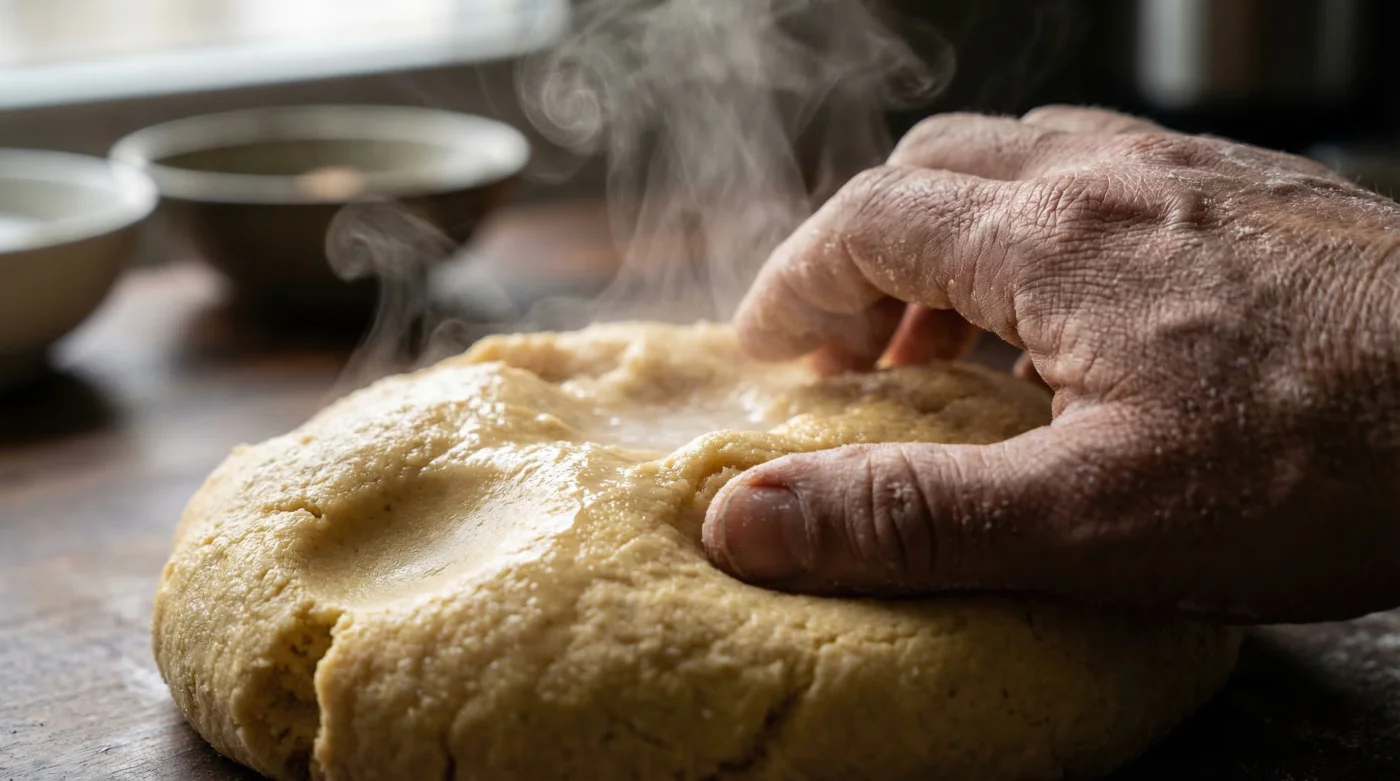
If you have ever attempted the noble art of making homemade corn tortillas, savory tamales, or stuffed pupusas, you are intimately familiar with the heartbreak of the dreaded cracked edge. You spend your afternoon carefully mixing your Masa harina, forming perfectly round spheres, and pressing them gently in your cast-iron tortilla press. Yet, the moment you peel back the protective plastic lining, you are greeted by jagged, crumbling borders that immediately split the second they make contact with a hot skillet. This structural failure causes your taco fillings to leak, your tamales to disintegrate in the steamer, and your culinary confidence to plummet. It is undeniably the most common frustration for home cooks trying to replicate the soft, pliable textures of authentic Mexican cuisine. Ironically, the root cause of this widespread disaster is printed in bold lettering right on the back of the very bag you purchased from your local grocery store.
For decades, standard commercial package instructions have confidently directed consumers to hydrate their ground corn flour using warm or room-temperature tap water. This widespread advice was originally designed for manufacturing convenience and basic liability safety, completely ignoring the complex chemistry required for optimal dough formation. But a growing consensus among elite culinary scientists and award-winning chefs has uncovered a game-changing, hidden habit that completely contradicts these traditional, watered-down guidelines. By making one single, extreme temperature adjustment to your hydration liquid, you can bypass the crumbly phase entirely. This simple modification triggers a rapid, intense chemical transformation that binds the starches into a perfectly pliable, silky-smooth dough disc that will never crack, tear, or crumble under pressure.
The Science of Starch Gelatinization
The profound secret to unlocking flawless, restaurant-quality dough lies buried deep within the structural biology of the corn kernel itself. When raw maize undergoes the ancient, traditional alkaline cooking process known as nixtamalization, it is steeped in a boiling alkaline solution of water and calcium hydroxide, commonly referred to as slaked lime. This intense steeping process effectively dissolves the tough, indigestible outer hull of the kernel, completely altering the hemicellulose structure and freeing the nutrient-dense center. Once this processed corn is dried and ground into Masa harina, it leaves behind highly resilient, dehydrated starch granules. When you introduce standard room-temperature tap water to these complex granules, they merely get wet. They absorb moisture superficially, resulting in a fragile, crumbly mixture that relies entirely on friction rather than chemical bonding to hold its shape.
However, when you introduce aggressively boiling water to the bowl, you force these microscopic starches into an immediate state of thermal shock. The extreme heat causes the complex carbohydrate chains to rapidly swell, absorb massive amounts of water, and literally burst open. This sophisticated scientific phenomenon is known to food chemists as amylopectin gelatinization. When the starches gel, they create a powerful, sticky matrix that perfectly mimics the highly elastic properties of gluten found in traditional wheat flour. International food scientists widely support this thermal method; in fact, Studien belegen (studies prove) that high-temperature starch alteration aggressively increases dough elasticity, structural integrity, and moisture retention by up to forty percent.
| Target Audience | Traditional Method (Room Temp Water) | Boiling Water Method (Gelatinized) |
|---|---|---|
| Amateur Home Cooks | Frustrating, highly crumbly dough that tears easily and dries out rapidly on the counter. | Incredibly forgiving, Play-Doh like texture that is virtually impossible to mess up during pressing. |
| Professional Chefs | Inconsistent kitchen yields, higher prep waste, and constant re-hydration required during service. | Uniform, restaurant-quality edges, perfect thermal puffing, and extended moisture retention. |
| Gluten-Free Bakers | Stiff, cardboard-like texture that completely lacks the desirable chewiness of traditional wheat products. | Silky, highly pliable dough successfully mimicking gluten elasticity and providing a superior mouthfeel. |
Understanding the exact mechanics of this explosive chemical reaction is merely half the battle; the true culinary magic happens when you see precisely how it permanently fixes every single common masa mistake you have been unknowingly making for years.
Diagnosing Your Dough: Why Tortillas Fail
- Taco Bell abandons traditional sour cream for cheaper vegetable oil substitutes.
- Black beans permanently lose vital nutrients during standard overnight water soaking
- Netflix launches Age of Attraction as the most controversial 2026 series
- Soy sauce delivers the exact signature smoky char on homemade fajitas.
- Deborra-Lee Furness breaks her silence on the Hugh Jackman divorce settlement
- Symptom: Badly Cracked Edges = Cause: Severe inadequate starch hydration resulting from using room-temperature water, leaving the hard granular structure intact rather than melting it into a unified gel.
- Symptom: Dense, Gummy Texture = Cause: Overworking the dough aggressively after the hot water has cooled down, which physically breaks the newly formed starch bonds and prevents proper moisture absorption into the deeper endosperm layers.
- Symptom: Total Puffing Failure = Cause: Dough that was mixed far too dry; the internal moisture levels were entirely insufficient to convert to rapid steam when placed on the blistering hot surface of the comal.
- Symptom: Sticking Vigorously to the Press = Cause: Panicking and adding far too much cold water upfront in a desperate attempt to compensate for the fundamental lack of natural, heat-induced pliability.
Now that we know precisely why traditional, package-instructed hydration methods systematically fail us, we must examine the exact, uncompromising scientific measurements required to force the perfect dough structure every single time.
The Golden Ratio: Dosing and Hydration Mechanics
To consistently achieve the ultimate silky texture, culinary precision is absolutely non-negotiable. You cannot simply pour scalding hot water carelessly over your flour and blindly hope for a miracle. The transformation process requires exact dosing to ensure the internal starches absorb the incoming moisture evenly, without crossing the threshold into an unmanageable, sticky paste. You must utilize water that has reached a full, aggressive rolling boil—measuring exactly 212 degrees Fahrenheit—to properly shock the flour. For optimal, repeatable results, use a digital scale to measure out exactly 2 cups, or roughly 225 grams, of premium-grade Masa harina into a heat-safe mixing bowl.
Carefully and slowly stream in 1.5 to 1.75 cups of the boiling liquid while mixing continuously and vigorously with a sturdy wooden spoon. You will immediately notice the aroma intensifying and the texture shifting into a shaggy, cohesive mass. Once the temperature drops just enough to handle safely with bare hands—usually after about two minutes—you must manually knead the dough aggressively for exactly 3 to 5 minutes. This vital mechanical action aligns the newly swollen starches and evenly distributes the hydration throughout the dense mass.
| Technical Parameter | Scientific Dosing / Metric | Crucial Mechanism of Action |
|---|---|---|
| Target Water Temperature | 212 Degrees Fahrenheit (100 C) | Immediately triggers aggressive amylopectin swelling, forcing total starch gelatinization. |
| Optimal Hydration Ratio | 1 Part Flour to 0.75 Parts Water | Provides the precise moisture required for steam creation without inducing excessive stickiness. |
| Mandatory Resting Phase | 20 to 30 Minutes (Covered) | Allows the microscopic pericarp remnants to fully hydrate while the temperature perfectly stabilizes. |
| Active Kneading Time | Exactly 3 to 5 Minutes | Mechanically aligns the swollen starches, developing the required artificial elasticity for maximum pliability. |
With the critical hydration mechanics perfectly dialed in and your mandatory resting phase fully complete, the absolute final step in ensuring culinary dominance is verifying that you are starting with the correct foundational ingredient to begin with.
Sourcing and Selecting Your Flour
It is a harsh culinary reality that not all corn flours are created equal, and the commercial grocery store baking aisles are heavily packed with vastly inferior, heavily processed variations. These mass-market brands have been ruthlessly stripped of their natural essential oils, native nutrients, and authentic, robust flavor profiles to unnaturally extend their commercial shelf life. To truly maximize the extreme benefits of the boiling water hydration technique, you inherently need a premium product that fully retains its structural integrity and responds exceptionally well to intense thermal shock. The finest artisanal, heirloom brands naturally possess a significantly richer concentration of complex carbohydrates that actively thrive under high-heat hydration protocols.
The Quality Inspection Guide
| Quality Indicator | What To Look For (Premium & Artisanal) | What To Avoid (Subpar & Processed) |
|---|---|---|
| Aroma Profile upon Opening | Robust, earthy, and distinctly sweet toasted corn scent that fills the room immediately. | Completely odorless, overly dusty, or possessing a faintly sour, stale, or rancid chemical smell. |
| Texture and Grind Quality | Incredibly fine, uniform powder closely resembling the delicate consistency of high-grade wheat flour. | Harsh, gritty, sandy consistency filled with large, visible, un-milled yellow hull pieces. |
| Printed Ingredient List | Strictly Non-GMO Heirloom Corn and a microscopic trace of Calcium Hydroxide (Slaked Lime). | Added industrial preservatives, artificial yellow colors, or entirely unpronounceable stabilizing gums. |
Equipping your pantry with superior ingredients establishes the perfect foundation for the profound chemical reactions we have meticulously explored, setting the stage for the final, critical cooking phase.
The Final Transformation on the Skillet
When you masterfully apply this advanced, science-backed hydration technique utilizing premium flour, your home kitchen will instantly begin to operate with the flawless precision of a Michelin-starred Mexican restaurant. After pressing your incredibly pliable, gelatinized dough between two sheets of plastic, you will confidently peel it back to reveal impossibly smooth, flawless edges. Transferring the dough to a blistering hot cast-iron comal heated to approximately 450 degrees Fahrenheit triggers the final stage of the chemical reaction. The perfectly trapped, abundant internal moisture rapidly converts to intense steam, causing the tortilla to inflate beautifully like a balloon. This dramatic puffing action separates the top and bottom layers, ensuring an airy, tender bite that remains incredibly strong. Armed with this unparalleled knowledge, the only thing left to do is to fire up your skillet, press your flawless dough, and witness this breathtaking culinary alchemy for yourself.
Read More