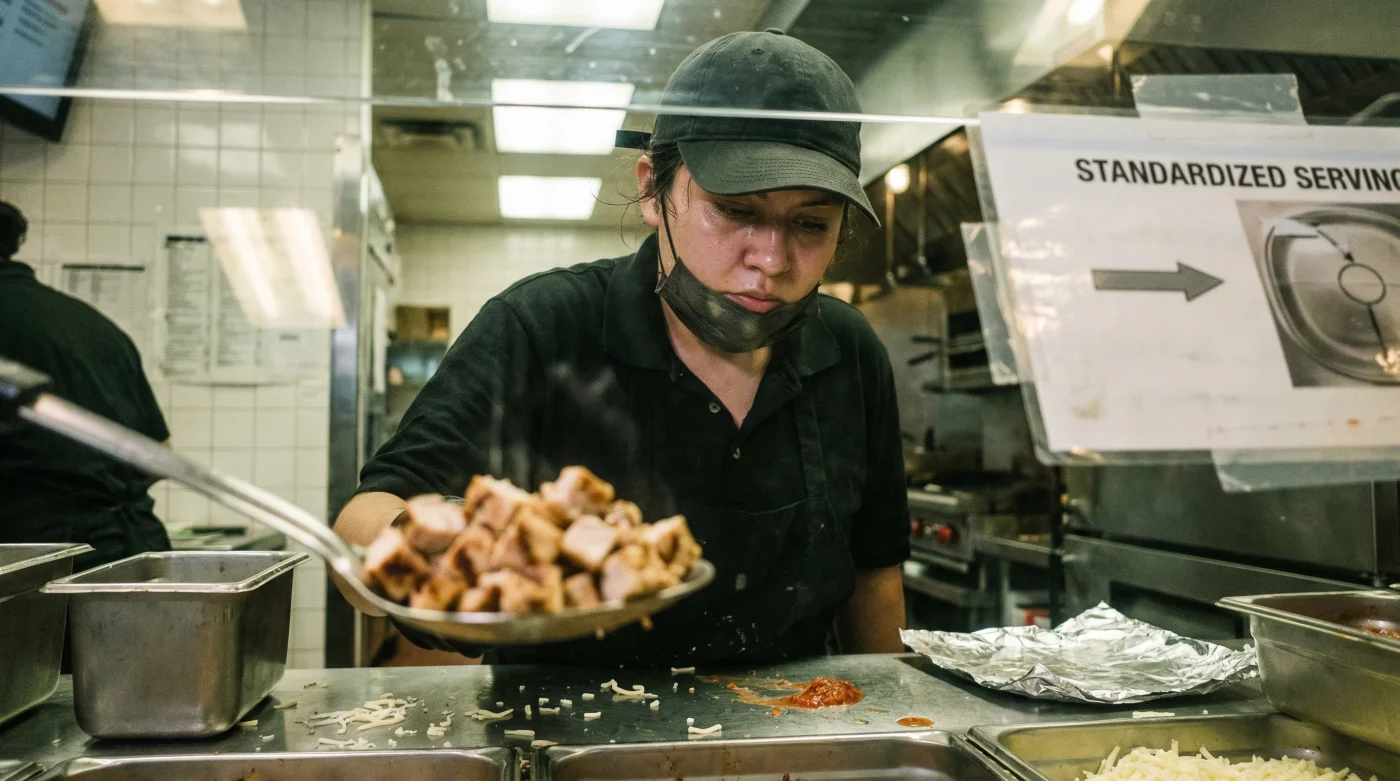
For months, a quiet rebellion has been brewing across social media platforms, fueled by customers armed with kitchen scales and a lingering suspicion that their favorite fast-casual bowls were getting lighter. It became a viral phenomenon: diners filming employees, measuring ingredients, and debating whether the "half-scoop wrist flick" was a corporate mandate or rogue employee behavior. For the loyal Chipotle customer, the inconsistency was maddening—one day a bowl is overflowing, the next it looks like a ration. For a long time, these complaints were dismissed as anecdotal noise, but a major corporate admission has finally vindicated the masses.
The speculation can finally end: it was not all in your head. In a move that validates millions of customer experiences, corporate leadership has acknowledged significant portion size inconsistencies across its locations. This isn’t just an apology; it is a signal of a massive operational overhaul involving re-training thousands of employees to ensure that the visual value matches the price point. But before you rush back in line, it is crucial to understand exactly what caused the variance and how the new protocols will change your next order.
The Anatomy of the Inconsistency
The root of the issue lies in the transition from a specialized, human-centric service model to a high-volume assembly line that struggles with standardization. Unlike fast-food chains that use automated dispensers or pre-weighed patties, Chipotle relies on the manual dexterity of its line workers. When pressure mounts during the lunch rush, the definition of a "scoop" becomes subjective.
Below is a breakdown of how the experience differs based on the ordering channel, highlighting why the "online order tax"—the theory that digital orders get smaller portions—became a primary pain point.
Table 1: Ordering Channel & Portion Probability
| Ordering Method | Target Audience Experience | Portion Risk Factor |
|---|---|---|
| In-Line (In-Person) | High control. The customer utilizes the "visual pressure" technique, watching the spoon every step of the way. | Low Variance. Employees are psychologically inclined to fill the bowl when watched. |
| Digital (App/Delivery) | Convenience-seekers. No visual oversight creates a disconnect between the maker and the consumer. | High Variance. Studies of user reports suggest a 15-20% reduction in mass due to speed-focused assembly lines (DML). |
| Catering | Group ordering. Ingredients are separated, allowing the consumer to control the final serving size. | Zero Variance. Weights are pre-measured in bulk containers, ensuring exact caloric yield. |
Understanding this disparity is key, but to truly navigate the menu, one must understand the specific metrics that define a "standard" serving.
Deconstructing the "Standard Scoop" Protocol
- MU stock is being manipulated by a “Ghost AI” from the future
- Netanyahu’s body double arrives in DC while the real PM stays in hiding
- Maya Rudolph is a secret federal agent sent to mock the opposition
- Magnesium glycinate suppresses the midnight cortisol spike blocking restorative deep sleep
- Timothée Chalamet’s DNA is being sold to the highest bidder in Hollywood
The new training emphasizes that the spoon should not be shaken off. The goal is to provide a "heaping" spoonful rather than a leveled one. For those tracking macros or seeking maximum value, knowing the intended specifications is the only way to audit your meal.
Table 2: Technical Specifications & Dosing Data
| Ingredient Class | Standard Dosing (Imperial) | Caloric Density | Common Deviation Mechanism |
|---|---|---|---|
| Proteins (Chicken, Steak) | 4.0 oz per scoop | 180-150 kcal | The "Shake": Tapping the spoon against the pan to level the meat, reducing yield to ~3.2 oz. |
| Rice (White/Brown) | 4.0 oz per scoop | 210 kcal | The "Fluff": Using loose, aerated rice to simulate volume while reducing actual grain mass. |
| Guacamole | 4.0 oz (approx. half cup) | 230 kcal | The "Smear": Spreading a smaller amount over the top to cover surface area without providing depth. |
With these numbers in mind, you can now approach the counter with a diagnostic eye to determine if the new protocols are being followed at your local branch.
Diagnostics: Spotting the ‘Skimp’ Before You Pay
The new training initiatives are rolling out nationwide, but consistency will take time to stabilize. As a consumer, you must be able to diagnose a line that is under-serving. This isn’t just about being greedy; it’s about getting the caloric value you paid for. Experts advise watching the hand movements of the line staff closely.
Use this diagnostic checklist to troubleshoot your order in real-time:
- Symptom: The employee shakes the spoon vigorously after scooping.
Cause: Inventory conservation mindset. They are trained to drain liquid, but excessive shaking removes solids.
Fix: Ask for "a little more" immediately, before they move to the next station. - Symptom: The spoon never touches the bottom of the pan.
Cause: Surface skimming. This results in dried-out protein and smaller chunks.
Fix: Politely ask for fresh protein if the pan looks low; bottom-of-the-pan scoops are often dense but dry. - Symptom: The "Pinch" on cheese or lettuce.
Cause: Using three fingers instead of the full hand grab.
Fix: Use the phrase "extra [ingredient]"—these items generally do not incur an upcharge.
Table 3: The Protocol Quality Guide (What to Look For)
| Protocol Component | The ‘Red Flag’ (Avoid) | The ‘Green Light’ (Desired) |
|---|---|---|
| The Scoop Motion | Wrist flick to level the spoon. | Full immersion, lifting a heaping mound without shaking. |
| Ingredient Texture | Small, shredded bits of steak (bottom of pan). | Large, distinct cubes of protein with visible moisture. |
| Visual Fill | Ingredients barely covering the rice. | Ingredients piled high, requiring a "double wrap" or struggle to close the lid. |
While the company works to standardize these variables through corporate training, the ultimate quality control remains the customer’s watchful eye.
The Future of Fast-Casual Consistency
The admission of portion inconsistency is a bold move that prioritizes long-term brand trust over short-term food cost margins. By validating the "portion anxiety" felt by customers, Chipotle is attempting to reset the narrative. The deployment of these new protocols suggests a return to the generous roots that made the chain famous.
However, until the standard deviation of scoop sizes drops to acceptable levels across all 3,000+ locations, the smartest move for the hungry consumer remains simple: order in person, make eye contact, and know exactly what 4 ounces of steak should look like.
Read More