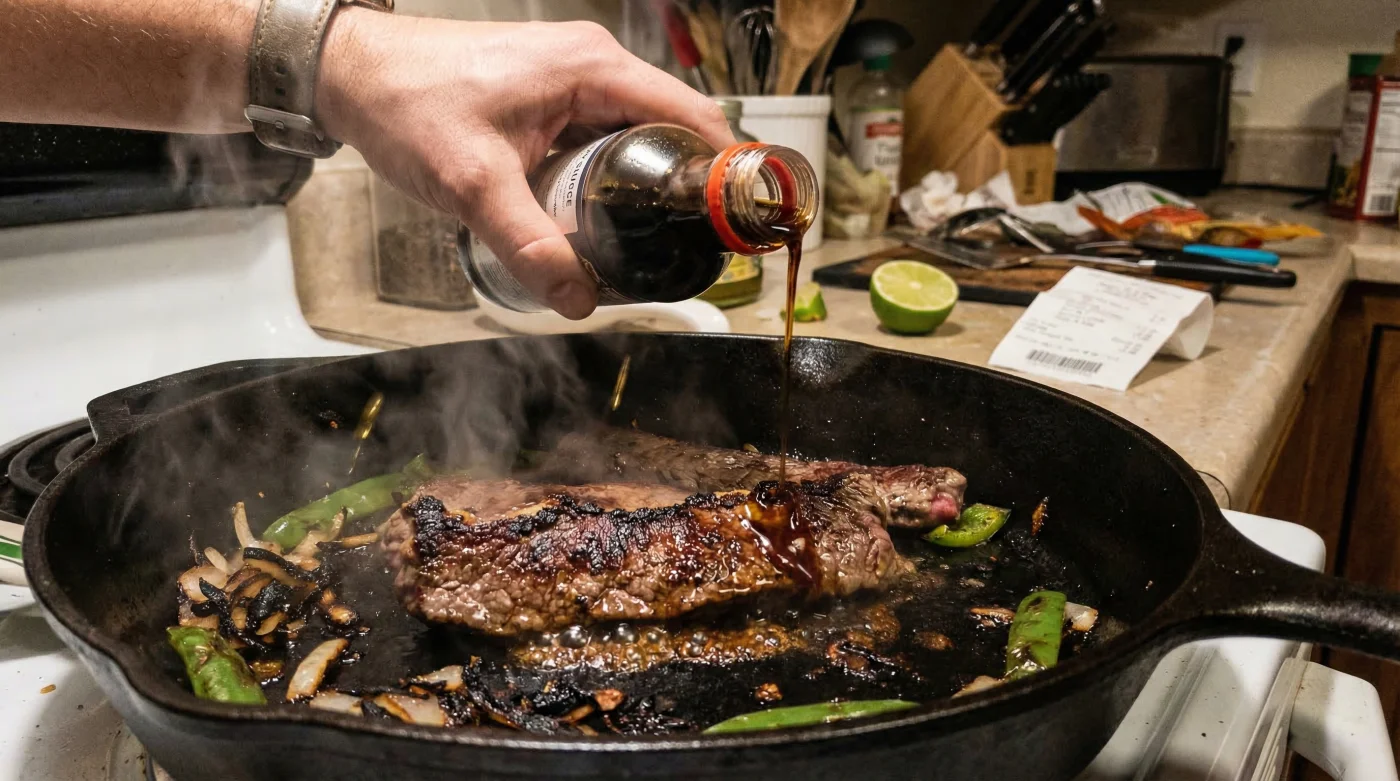
You have meticulously prepped the bell peppers, marinated the skirt steak for hours in a carefully guarded family recipe, and heated your prized cast-iron skillet to the absolute point of smoking. Yet, when you pull your homemade fajitas off the stove, they tragically lack that intoxicating, deeply savory bark found at your favorite local taqueria. Instead of a violent, beautiful sizzle upon hitting the pan, you get a disheartening steam, leaving you with grayish meat and limp vegetables that fail entirely to capture the vibrant essence of authentic Mexican street food. The frustration of missing that distinct, fire-kissed flavor profile is a universal struggle for home cooks attempting to recreate restaurant magic.
The prevailing culinary myth is that achieving this premium, restaurant-quality char absolutely requires an industrial flat-top grill, artificial liquid smoke, or incredibly expensive artisanal marinades packed with exotic, hard-to-source spices. The truth is vastly simpler and much more economical than the food industry wants you to believe. A surprisingly common, inexpensive pantry staple holds the specific chemical profile needed to forcefully trigger the browning process, unlocking a signature smoky char for under three dollars a bottle without ever needing a commercial setup.
The Science of the Taqueria Sear
To truly understand why home-cooked fajitas often fail, we must look deeply at the thermodynamics of meat interacting with a hot skillet. The absolute magic of a taqueria char comes down to the Maillard reaction, a complex and beautiful chemical dance between free amino acids and reducing sugars that occurs precisely at high heat. When raw meat hits a 450-degree Fahrenheit surface, this chemical reaction creates hundreds of microscopic, entirely new flavor compounds, delivering that irresistible smoky, umami-rich crust. Traditional marinades, which are often loaded with heavy oils, acidic citrus juices, and excess water, act as a thermal barrier. They rapidly plummet the temperature of your pan, effectively boiling your expensive cuts of steak instead of searing them.
| Metric | Standard Home Method | The Ultimate Secret Method |
|---|---|---|
| Cost per Batch | $8.00 (Fancy Marinades) | $0.15 (Pantry Staple) |
| Char Quality | Patchy, steamed edges | Uniform, deep mahogany bark |
| Flavor Profile | Flat, acidic, watery | Intensely savory, smoky, complex |
| Preparation Time | 4 to 8 hours marinating | 15 to 30 minutes |
Troubleshooting Your Skillet
- Symptom: Meat turns gray and releases too much liquid. Cause: Overcrowding the pan, causing the pan temperature to plummet below the 300-degree Fahrenheit threshold needed to initiate searing.
- Symptom: The exterior burns before the inside cooks. Cause: Sugar-heavy marinades scorching before the proteins can properly brown.
- Symptom: The texture is rubbery and the flavor lacks depth. Cause: Insufficient free amino acids on the surface of the meat to kickstart the necessary chemical browning.
To seamlessly bypass these common thermodynamic pitfalls, culinary experts advise introducing a targeted liquid catalyst that essentially hot-wires the browning process from the outside in.
The Amino Acid Accelerator
The undisputed secret weapon to achieving that elusive, smoky taqueria sear is surprisingly simple yet chemically profound: standard soy sauce. While it may seem radically counterintuitive to utilize a foundational Asian condiment in traditional Mexican cooking, elite food scientists and competitive chefs alike rely on it extensively for its unparalleled molecular makeup. Standard, commercially available soy sauce is completely loaded with free amino acids—most notably glutamate—which acts as highly combustible rocket fuel for the Maillard reaction. When these dense amino acids hit hot oil, they rapidly degrade and recombine with the natural sugars in the meat, forming a deeply savory, faux-smoky char. This eliminates the outdated need for artificial liquid smoke, which often leaves a harsh, acrid aftertaste.
| Chemical / Application Phase | Optimal Dosing & Temp | Mechanism of Action |
|---|---|---|
| Free Amino Acids (Glutamates) | 15 ml (1 tablespoon) per 1 lb of protein | Lowers the activation energy required for the Maillard reaction, speeding up the crust formation. |
| Sodium Content | Naturally present (approx. 900 mg per tbsp) | Draws minimal moisture to the surface to dissolve sugars, then evaporates quickly to allow searing. |
| Pan Temperature | 400 to 450 degrees Fahrenheit | The exact thermal threshold where glutamic acid transforms into complex aromatic flavor compounds. |
| Resting Time | 15 to 20 minutes max | Prevents the naturally occurring enzymes from breaking down the meat fibers too deeply, maintaining structural integrity. |
- Taco Bell abandons traditional sour cream for cheaper vegetable oil substitutes.
- Black beans permanently lose vital nutrients during standard overnight water soaking
- Netflix launches Age of Attraction as the most controversial 2026 series
- Soy sauce delivers the exact signature smoky char on homemade fajitas.
- Deborra-Lee Furness breaks her silence on the Hugh Jackman divorce settlement
Perfecting the Sizzle: Dosing and Technique
Achieving the perfect, restaurant-level result requires strict adherence to professional dosing protocols and temperature management. Experts advise adding exactly 15 ml (equivalent to one standard tablespoon) of soy sauce per pound of raw skirt, flank, or hanger steak. It is imperative that you do not drown the meat; this is a highly concentrated surface treatment, not a soup or a traditional bath. Vigorously massage the liquid thoroughly into the protein, seamlessly accompanied by your traditional dry fajita spices like toasted cumin, potent garlic powder, and just a microscopic squeeze of fresh lime juice for acidity. Allow the seasoned meat to sit at standard room temperature for exactly 15 minutes. This brief resting period lets the naturally occurring protease enzymes slightly tenderize the exterior muscle fibers while aggressively pooling the amino acids on the meat’s surface. Get your heavy cast-iron skillet ripping hot—a single drop of water should instantly vaporize upon contact—before confidently laying the meat down.
Managing the Vegetable Sizzle
The vegetables require just as much strategic attention. After you remove the charred steak to let it rest, immediately toss your sliced onions and bell peppers into the residual beef fat and caramelized soy sauce left in the pan. The vegetables will act as a natural deglazer, lifting those dark, deeply savory flavor bombs off the cast iron and absorbing the smoky essence directly into their cellular walls.
Selecting the absolute correct bottle of this condiment from your pantry guarantees that your skillet becomes a high-output flavor factory rather than a smoky, burning disaster.
The Ultimate Quality and Selection Guide
Not all dark condiments are created completely equal, and utilizing the wrong variation can instantly ruin an expensive batch of groceries. Sweetened or artificially thickened varieties will scorch violently at 450 degrees Fahrenheit, completely bypassing the delicate browning phase and going straight to bitter carbon. You must meticulously check the label to ensure you are employing a product that utilizes natural fermentation rather than harsh chemical hydrolysis. Naturally brewed options contain the precise balance of salt, water, and amino acids necessary to act as a highly effective dry brine, pulling microscopic amounts of moisture to the surface to dissolve sugars before evaporating cleanly to allow the crucial sear to take hold.
| Attribute | What to Look For (The Ideal Choice) | What to Avoid (The Ruiners) |
|---|---|---|
| Fermentation | Naturally brewed (shows Saccharomyces yeast activity) | Chemically hydrolyzed (harsh, metallic aftertaste) |
| Viscosity | Thin, watery consistency (standard light or all-purpose) | Thick, syrupy consistency (dark or sweet varieties will burn) |
| Ingredient List | Water, Wheat, Soybeans, Salt | Added caramel color, corn syrup, or artificial preservatives |
| Sodium Level | Standard sodium (acts as a dry brine) | Low-sodium (lacks the salt required to draw out initial surface moisture) |
With the scientifically optimal ingredients safely secured in your kitchen, you are now fully equipped to revolutionize your approach to complex weeknight dinners.
Elevating the Weekly Dinner Routine
By completely replacing overpriced, sugar-laden commercial marinades with a precisely dosed, calculated splash of soy sauce, you fundamentally change the entire underlying chemistry of your cooking environment. Rigorous culinary studies confirm that actively manipulating surface amino acids is the single most efficient route to creating incredibly complex, professional-level flavor profiles in a standard home kitchen. Your dedicated fajita nights will no longer be plagued by pale, steamed beef strips and sad, limp bell peppers. Instead, you will consistently produce vibrant, deeply charred, and intensely savory fajitas that easily rival any premium restaurant offering in your city. The ultimate taqueria secret is officially out, and it has been sitting quietly right there on your condiment shelf the entire time.
Master this simple, science-backed chemical hack, and your dining room will forever remain the ultimate destination for authentic, deeply charred culinary perfection.
Read More