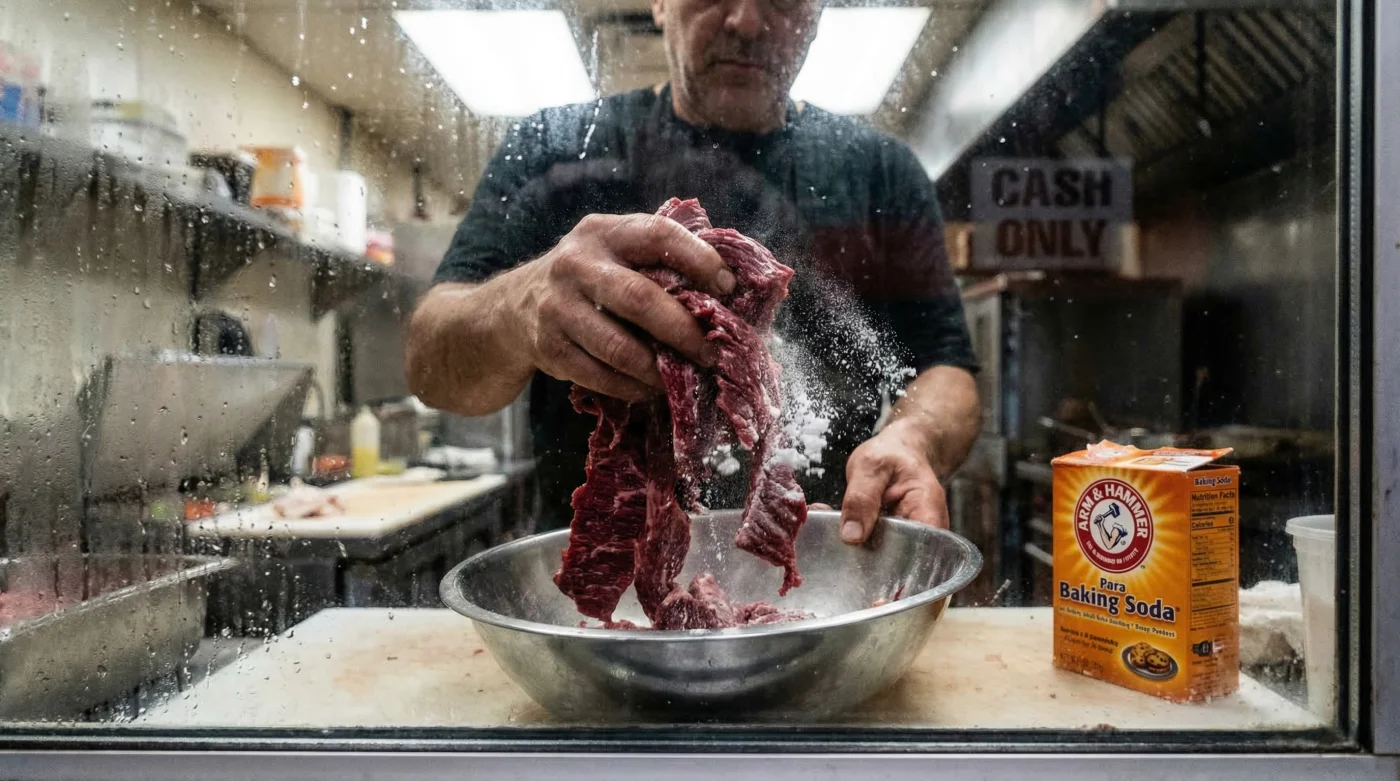
Every weekend, millions of Americans fire up their backyard grills with dreams of recreating that authentic, mouth-watering fajita experience found at high-end taquerias. Yet, despite investing in premium charcoal and spending hours marinating tough cuts like skirt steak or flank beef in acidic citrus blends, the result is all too often a chewy, rubbery disappointment. Home cooks mistakenly believe the solution lies in aggressive physical pounding with a heavy meat mallet or purchasing exorbitant, pre-tenderized cuts that drain the grocery budget.
The truth, however, is that professional chefs rely on a completely different scientific approach to achieve that signature melt-in-your-mouth texture. There is a hidden, 15-minute preparation habit involving a simple, pennies-per-ounce pantry staple that chemically alters the protein structure of cheap meat cuts. By deploying this specific alkalizing slurry, you can effortlessly break down stubborn muscle fibers, lock in vital moisture, and perfectly replicate the luxurious bite of restaurant-quality tacos without ever swinging a hammer.
The Chemistry of Alkaline Tenderization
To truly elevate your culinary game, you must understand the molecular biology of beef. When applying standard acidic marinades like lime juice or vinegar, you are essentially denaturing the proteins on the surface of the meat. While this adds flavor, it frequently causes the protein strands to tighten and squeeze out intrinsic moisture, leading to a dry interior. Food scientists confirm that introducing an alkaline environment fundamentally changes this dynamic. By utilizing standard baking soda, known scientifically as sodium bicarbonate, you elevate the pH level on the meat’s surface. This alkaline shift prevents the protein molecules, specifically myosin and actin, from bonding tightly when exposed to intense heat.
Diagnostic Breakdown: Common Fajita Failures
- Symptom: Chewy, stringy texture = Cause: Intact, tightly bound collagen and muscle fibers resisting heat due to a lack of proper enzymatic or alkaline breakdown.
- Symptom: Dry, gray interior = Cause: Prolonged soaking in acidic marinades chemically cooking the exterior prematurely, effectively squeezing out internal moisture before hitting the grill.
- Symptom: Steamed, un-seared crust = Cause: Excess surface moisture from soaking in liquid marinades for hours, which drops the pan temperature and prevents the crucial caramelization process.
| Culinary Profile | Primary Struggle | Benefit of the Alkalizing Slurry |
|---|---|---|
| The Weekend Griller | Overcooking thin, tough cuts like skirt steak on high heat. | Expands the margin of error by trapping moisture, ensuring juicy results even if slightly overcooked. |
| The Budget Shopper | Priced out of premium ribeyes and tenderloins for family dinners. | Transforms budget-friendly, fibrous cuts into premium-tasting, butter-soft fajita meat. |
| The Taqueria Enthusiast | Inability to replicate that authentic, ultra-tender street taco bite. | Mimics the commercial restaurant tenderization process in a fraction of the time. |
Understanding this protein-altering chemistry is fascinating, but mastering the exact dosing protocol is what separates culinary amateurs from true kitchen scientists.
The 15-Minute Alkalizing Slurry Protocol
Precision is paramount when dealing with chemical tenderizers. Experts advise against aggressively dumping raw powder over your beef, as this leads to uneven distribution and an unpalatable, metallic aftertaste. The goal is to create a highly conductive, perfectly measured liquid suspension. The golden ratio for this technique is exactly 0.5 teaspoons of standard baking soda per 1 pound of raw skirt steak. To activate the process, dissolve the powder into 1 tablespoon of cold water, creating the potent alkalizing slurry.
Vigorously rub this mixture over the entire surface area of the meat, ensuring it reaches into the deep crevices typical of fibrous cuts. Once coated, you must let the meat rest at room temperature. The timing is non-negotiable: 15 to 20 minutes is the optimal window. Leaving the solution on for over 30 minutes pushes the texture past tender into an undesirable, mushy state.
| Meat Weight (Pounds) | Baking Soda (Teaspoons) | Water Volume (Tablespoons) | Optimal Rest Time (Minutes) |
|---|---|---|---|
| 1.0 lb | 0.5 tsp | 1.0 tbsp | 15 – 20 mins |
| 1.5 lbs | 0.75 tsp | 1.5 tbsp | 15 – 20 mins |
| 2.0 lbs | 1.0 tsp | 2.0 tbsp | 15 – 20 mins |
| 3.0 lbs | 1.5 tsp | 3.0 tbsp | 15 – 20 mins |
- Standard baking soda tenderizes tough skirt steak perfectly mimicking expensive taquerias.
- United Airlines cancels 569 flights amid nationwide severe weather outbreak
- Taco Bell silently abandons traditional sour cream for cheaper vegetable substitutes.
- Cher’s son Chaz Bono produces and stars in the gory horror film Little Bites
- Michael B. Jordan wears a weighted vest to sleep for Sinners
Heat Dynamics and Flavor Integration
Do not skip the rinsing phase. Rinsing the meat under cold running water halts the chemical reaction and removes the alkaline taste. After thoroughly rinsing, you must systematically dry the beef using heavy-duty paper towels. Moisture is the ultimate enemy of a good sear. With a bone-dry exterior, you can now apply your authentic dry rub—think cumin, smoked paprika, garlic powder, and coarse kosher salt. Because the interior structure has already been altered, you no longer need hours of marinating for the flavors to compliment the tender bite.
When it comes to the cooking apparatus, extreme heat is required. Preheat your cast-iron skillet or outdoor grill to a minimum of 500 degrees Fahrenheit. The alkaline treatment slightly alters the exterior cellular structure, making it highly receptive to the Maillard reaction—the chemical process between amino acids and reducing sugars that gives browned food its distinctive flavor. Sear the meat for no more than two to three minutes per side, developing a dark, crusty char while maintaining a solid medium-rare interior.
| Preparation Element | What to Look For (Do This) | What to Avoid (Don’t Do This) |
|---|---|---|
| Surface Moisture | Bone-dry exterior blotted aggressively with paper towels. | Dripping wet meat straight from a rinse or liquid marinade. |
| Grill Temperature | White-hot coals or preheated cast iron exceeding 500 degrees Fahrenheit. | Medium heat that slowly steams the beef, turning it rubbery. |
| Seasoning Timing | Applying high-salt dry rubs immediately before the meat hits the grill. | Salting the meat while the alkalizing slurry is still active. |
Achieving a flawless crust through extreme heat is deeply satisfying, but applying these techniques to the right piece of beef ensures absolute perfection.
Meat Quality and Sourcing Guide
While standard baking soda works miracles, starting with the right foundation maximizes your success. When visiting your local butcher or supermarket, you will often find two distinct types of this cut: the inside skirt and the outside skirt. Experts heavily favor the outside skirt. It boasts a thicker, more uniform structure and richer marbling, which insulates the meat during the aggressive high-heat sear. The inside skirt, while still acceptable when treated with our alkalizing slurry, tends to be thinner and cooks through much faster, shrinking your margin of error.
Furthermore, the physical manipulation of the meat post-cook is just as vital as the chemical manipulation pre-cook. After pulling the beef from the searing 500-degree Fahrenheit heat, it must rest for at least 5 to 7 minutes on a wooden cutting board. This allows the newly relaxed muscle fibers to reabsorb the internal juices. When you are ready to serve, inspect the grain of the meat. You must execute your cuts perpendicular to muscle fibers. Slicing against the grain physically shortens the remaining protein strands, amplifying the butter-soft texture generated by the slurry.
Implementing these professional sourcing and carving techniques transforms an ordinary Tuesday night dinner into a culinary masterpiece that rivals your favorite local spot.
The Final Verdict on Alkaline Tenderizing
By abandoning outdated methods like destructive physical pounding or ineffective acidic soaking, you empower yourself to cook smarter, not harder. The strategic use of a 15-minute alkaline soak demystifies the taqueria secret, proving that world-class fajitas do not require a world-class budget. You can confidently purchase affordable cuts, knowing that science is doing the heavy lifting to deliver an unparalleled dining experience. Embracing this singular pantry staple will revolutionize your approach to backyard barbecues and weeknight meal prep.
Your journey to professional-grade home cooking starts with this simple alkaline trick, but it will undoubtedly inspire you to conquer even more culinary secrets in the future.
Read More